



Mall Walking Program Environments, Features, and Participants: A Scoping Review
Supporting Files
Public Domain

-
Aug 13 2015
File Language:
English
Details
-
Journal Article:Preventing Chronic Disease (PCD)
-
Personal Author:Farren, Laura ; Belza, Basia ; Allen, Peg ; Brolliar, Sarah ; Brown, David R. ; Cormier, Marc L. ; Janicek, Sarah ; Jones, Dina L. ; King, Diane K. ; Marquez, David X. ; Rosenberg, Dori E.
-
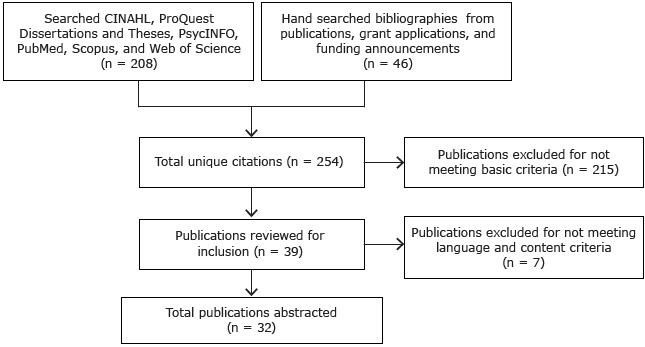
Description:Introduction ; Walking is a preferred and recommended physical activity for middle-aged and older adults, but many barriers exist, including concerns about safety (ie, personal security), falling, and inclement weather. Mall walking programs may overcome these barriers. The purpose of this study was to summarize the evidence on the health-related value of mall walking and mall walking programs. ; Methods ; We conducted a scoping review of the literature to determine the features, environments, and benefits of mall walking programs using the RE-AIM framework (reach, effectiveness, adoption, implementation, and maintenance). The inclusion criteria were articles that involved adults aged 45 years or older who walked in indoor or outdoor shopping malls. Exclusion criteria were articles that used malls as laboratory settings or focused on the mechanics of walking. We included published research studies, dissertations, theses, conference abstracts, syntheses, nonresearch articles, theoretical papers, editorials, reports, policy briefs, standards and guidelines, and nonresearch conference abstracts and proposals. Websites and articles written in a language other than English were excluded. ; Results ; We located 254 articles on mall walking; 32 articles met our inclusion criteria. We found that malls provided safe, accessible, and affordable exercise environments for middle-aged and older adults. Programmatic features such as program leaders, blood pressure checks, and warm-up exercises facilitated participation. Individual benefits of mall walking programs included improvements in physical, social, and emotional well-being. Limited transportation to the mall was a barrier to participation. ; Conclusion ; We found the potential for mall walking programs to be implemented in various communities as a health promotion measure. However, the research on mall walking programs is limited and has weak study designs. More rigorous research is needed to define best practices for mall walking programs’ reach, effectiveness, adoption, implementation, and maintenance.
-
Subjects:
-
Source:Prev Chronic Dis. 12.
-
DOI:
-
ISSN:1545-1151
-
Pubmed ID:26270743
-
Pubmed Central ID:PMC4552141
-
Document Type:
-
Volume:12
-
Download URL:
-
File Type:
 [PDF - 409.55 KB]
 -
Collection(s):
-
Main Document Checksum:urn:sha-512:41d691850ed46bbe7856abe8f030e599d17fe4ca59980252fbc23e5dffa36a02ba4150d1290b7eb2b00d19ef14d3e3b199eceb4fb89c9b65986e3392520c71e4
Supporting Files


File Language:
English
 Was this page helpful?
 Found an issue?

CDC STACKS serves as an archival repository of CDC-published products including
scientific findings, journal articles, guidelines, recommendations, or other public health information authored or
co-authored by CDC or funded partners.
As a repository, CDC STACKS retains documents in their original published format to ensure public access to scientific information.
As a repository, CDC STACKS retains documents in their original published format to ensure public access to scientific information.
You May Also Like
COLLECTION
Preventing Chronic Disease