



Breast Cancer Incidence in a Cohort of U.S. Flight Attendants
Supporting Files

-
3 2015
-
Available in CDC Stacks on 2015-10-01T00:00:00Z
File Language:
English
Details
-
Alternative Title:Am J Ind Med
-
Personal Author:
-
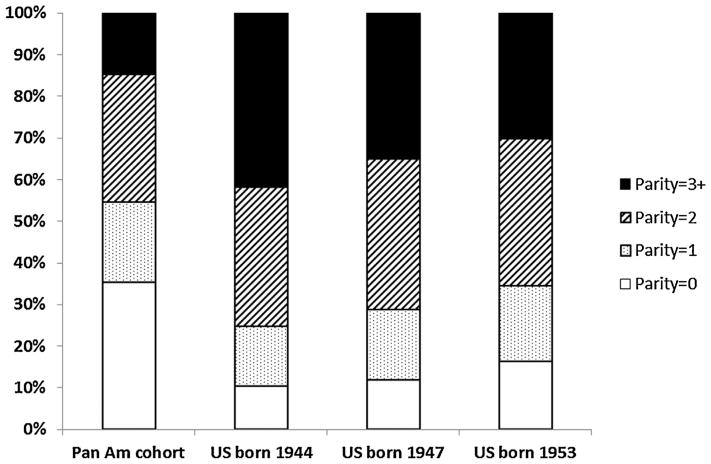
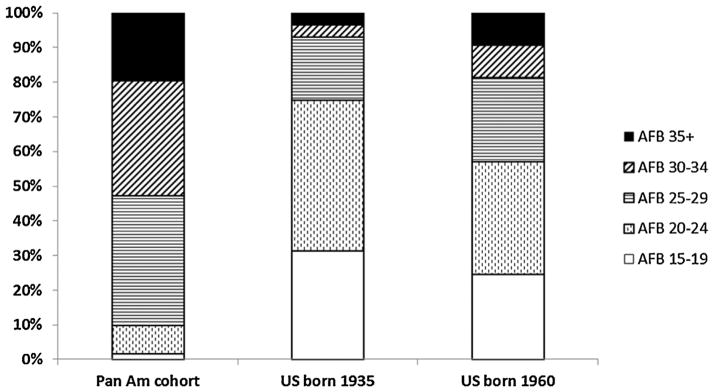
Description:Background ; Flight attendants may have elevated breast cancer incidence (BCI). We evaluated BCI’s association with cosmic radiation dose and circadian rhythm disruption among 6,093 female former U.S. flight attendants. ; Methods ; We collected questionnaire data on BCI and risk factors for breast cancer from 2002–2005. We conducted analyses to evaluate (i) BCI in the cohort compared to the U.S. population; and (ii) exposure-response relations. We applied an indirect adjustment to estimate whether parity and age at first birth (AFB) differences between the cohort and U.S. population could explain BCI that differed from expectation. ; Results ; BCI was elevated but may be explained by lower parity and older AFB in the cohort than among U.S. women. BCI was not associated with exposure metrics in the cohort overall. Significant positive associations with both were observed only among women with parity of three or more. ; Conclusions ; Future cohort analyses may be informative on the role of these occupational exposures and non-occupational risk factors.
-
Subjects:
-
Keywords:
-
Source:Am J Ind Med. 58(3):252-266
-
Pubmed ID:25678455
-
Pubmed Central ID:PMC4566958
-
Document Type:
-
Funding:
-
Place as Subject:
-
Volume:58
-
Issue:3
-
Download URL:
-
File Type:
 [PDF - 729.96 KB]
 -
Collection(s):
-
Main Document Checksum:urn:sha256:eac50e4c1e425cc608700ffab0dfa7784e7f3abcda26306276baee34ac83a471
Supporting Files


File Language:
English
 Was this page helpful?
 Found an issue?


CDC STACKS serves as an archival repository of CDC-published products including
scientific findings, journal articles, guidelines, recommendations, or other public health information authored or
co-authored by CDC or funded partners.
As a repository, CDC STACKS retains documents in their original published format to ensure public access to scientific information.
As a repository, CDC STACKS retains documents in their original published format to ensure public access to scientific information.
You May Also Like
COLLECTION
CDC Public Access