



The Impact of UVB Exposure and Differentiation State of Primary Keratinocytes on Their Interaction with Quantum Dots
Supporting Files
Peer Reviewed

-
2012/10/25
-
Available in CDC Stacks on 2013-11-01T00:00:00Z
File Language:
English
Details
-
Journal Article:Nanotoxicology
-
Personal Author:
-
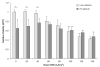
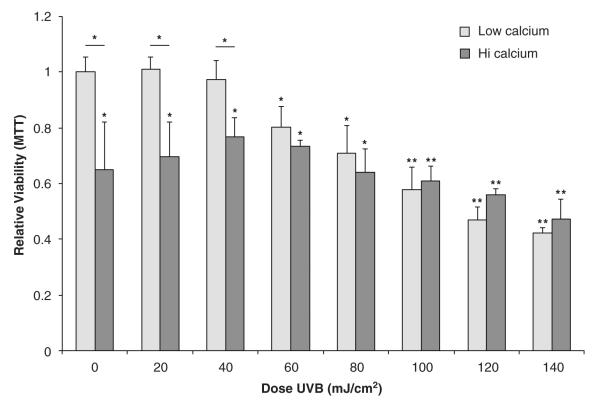
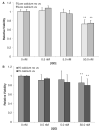
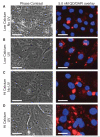
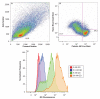
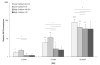
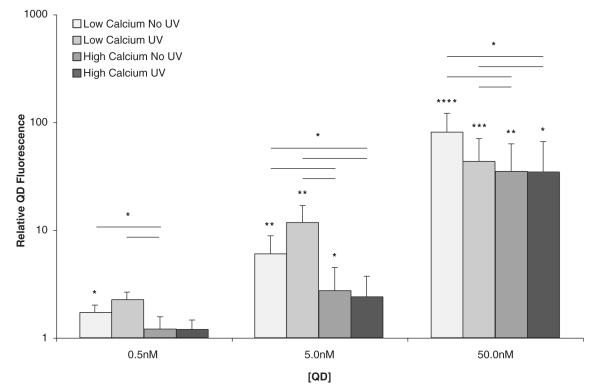
Description:In this study we utilised an in vitro model system to gain insight into the potential cellular interactions that quantum dot (QD) nanoparticles may experience while transiting the viable skin epidermis, and we consider the effects of UVB exposure. UVB skin exposure is known to induce a skin barrier defect that facilitates QD stratum corneum penetration. Primary human keratinocytes were cultured in low and high calcium to induce basal and differentiated phenotypes, respectively. Results suggest that differentiation state plays a role in keratinocyte response to UVB exposure and exposure to negatively charged CdSe/ZnS core/shell QD. QD cell uptake increased with QD dose but association with differentiated cells was significantly lower than the basal keratinocyte phenotype. Differentiated keratinocytes were also less sensitive to the cytotoxic effects of UVB exposure. We did not observe an effect of UVB preexposure on QD cytotoxicity level despite the fact that fluorescent microscopy and flow cytometry data suggest that UVB may slightly increase QD uptake in the basal cell phenotype. The implications of these findings for assessing potential risk of human skin exposure are discussed. Description provided by NIOSH
-
Subjects:
-
Keywords:
-
Source:Nanotoxicology 2013 Nov; 7(7):1244-1254
-
ISSN:1743-5390
-
Pubmed ID:22998293
-
Pubmed Central ID:PMC3779483
-
Document Type:
-
Funding:
-
Genre:
-
Place as Subject:
-
CIO:
-
Topic:
-
Location:
-
Pages in Document:19 pdf pages
-
Volume:7
-
Issue:7
-
NIOSHTIC Number:nn:20044286
-
Contact Point Address:Lisa A. DeLouise, Department of Dermatology, University of Rochester, Rochester, NY 14642 USA
-
Email:Lisa_DeLouise@urmc.rochester.edu
-
Federal Fiscal Year:2014
-
Performing Organization:University of Rochester, New York
-
Peer Reviewed:True
-
Download URL:
-
File Type:
 [PDF - 1.21 MB]
 -
Collection(s):
-
Main Document Checksum:urn:sha-512:593ab9274ebcc1c8f19eb4e31d72de9c682688fa926da67b372a206377b43826a1290c791157a196595aaf9c21f82cc1d657ef014351dab2398ab2dcd26cbdb7
Supporting Files


File Language:
English
 Was this page helpful?
 Found an issue?





CDC STACKS serves as an archival repository of CDC-published products including
scientific findings, journal articles, guidelines, recommendations, or other public health information authored or
co-authored by CDC or funded partners.
As a repository, CDC STACKS retains documents in their original published format to ensure public access to scientific information.
As a repository, CDC STACKS retains documents in their original published format to ensure public access to scientific information.
You May Also Like