



Whole Blood Gene Expression Analyses in Patients With Single Versus Recurrent Venous Thromboembolism
Supporting Files

-
12 2011 ; 12-2011
-
Available in CDC Stacks on July 29, 2013, 12:00 AM
File Language:
English
Details
-
Alternative Title:Thromb Res
-
Personal Author:
-
Description:Introduction
Venous thromboembolism may recur in up to 30% of patients with a spontaneous venous thromboembolism after a standard course of anticoagulation. Identification of patients at risk for recurrent venous thromboembolism would facilitate decisions concerning the duration of anticoagulant therapy.
Objectives
In this exploratory study, we investigated whether whole blood gene expression data could distinguish subjects with single venous thromboembolism from subjects with recurrent venous thromboembolism.
Methods
40 adults with venous thromboembolism (23 with single event and 17 with recurrent events) on warfarin were recruited. Individuals with antiphospholipid syndrome or cancer were excluded. Plasma and serum samples were collected for biomarker testing, and PAXgene tubes were used to collect whole blood RNA samples.
Results
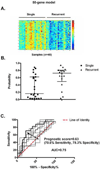
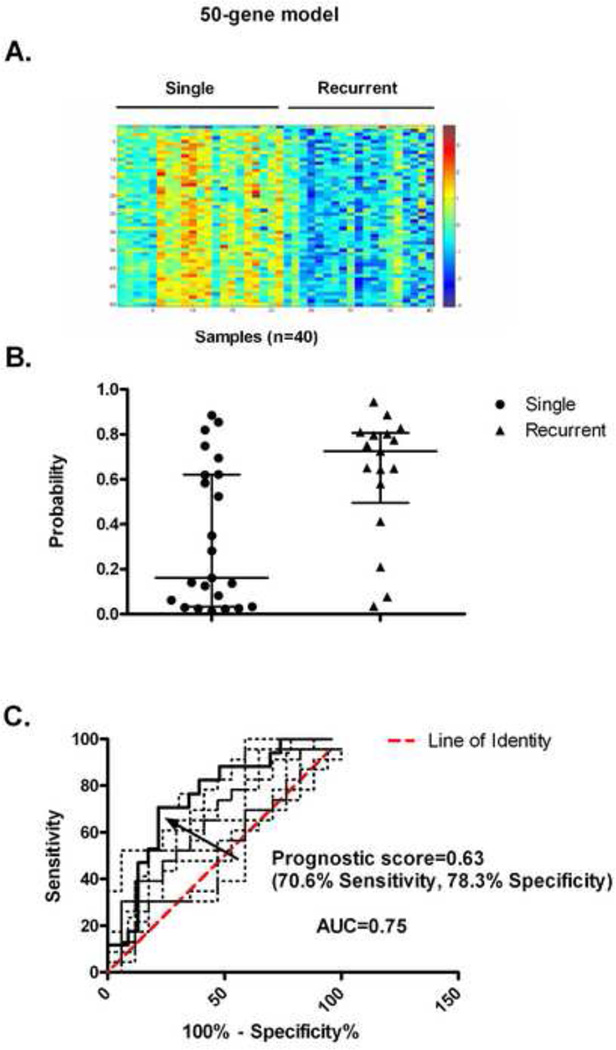
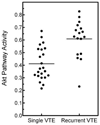
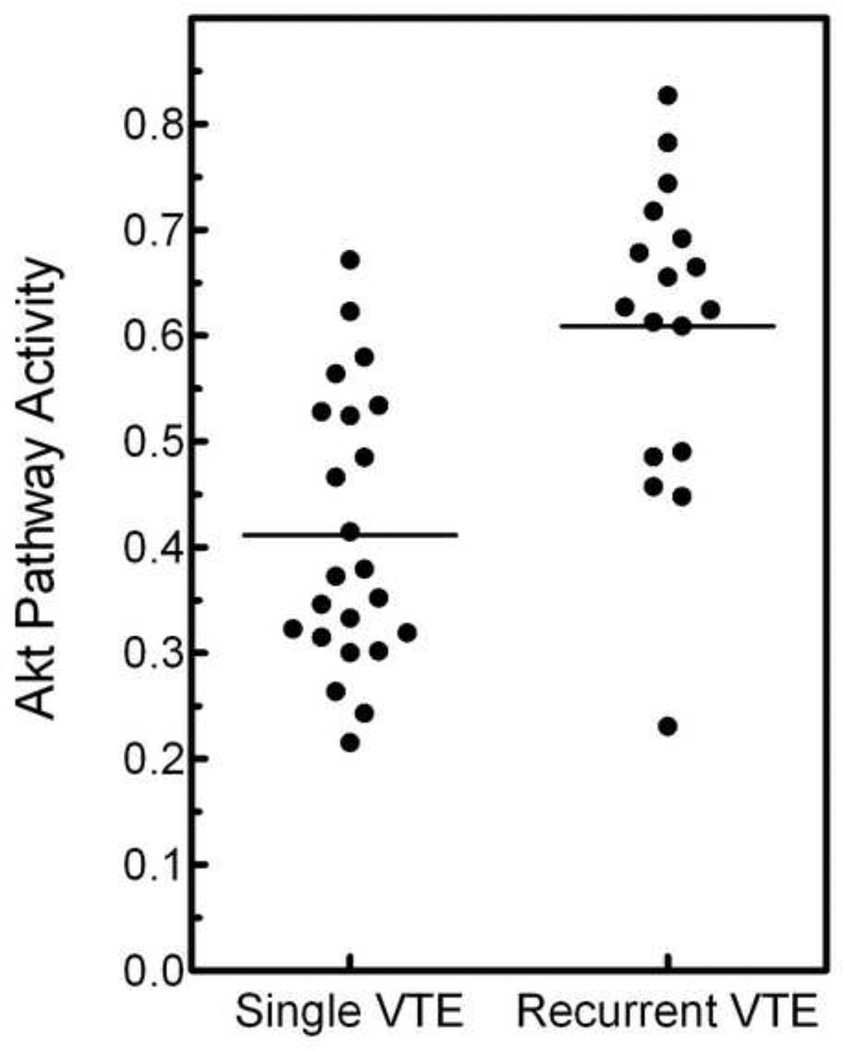
D-dimer levels were significantly higher in patients with recurrent venous thromboembolism, but P-selectin and thrombin-antithrombin complex levels were similar in the two groups. Comparison of gene expression data from the two groups provided us with a 50 gene probe model that distinguished these two groups with good receiver operating curve characteristics (AUC 0.75). This model includes genes involved in mRNA splicing and platelet aggregation. Pathway analysis between subjects with single and recurrent venous thromboembolism revealed that the Akt pathway was up-regulated in the recurrent venous thromboembolism group compared to the single venous thromboembolism group.
Conclusions
In this exploratory study, gene expression profiles of whole blood appear to be a useful strategy to distinguish subjects with single venous thromboembolism from those with recurrent venous thromboembolism. Prospective studies with additional patients are needed to validate these results. -
Keywords:
-
Source:Thromb Res. 2011; 128(6):536-540
-
Pubmed ID:21737128
-
Pubmed Central ID:PMC3726737
-
Document Type:
-
Funding:U01 DD000014/DD/NCBDD CDC HHSUnited States/ ; T32 HL007538/HL/NHLBI NIH HHSUnited States/ ; R21 DK080994/DK/NIDDK NIH HHSUnited States/ ; R21DK080994/DK/NIDDK NIH HHSUnited States/ ; T32-HL007538/HL/NHLBI NIH HHSUnited States/ ; U54-HL077878/HL/NHLBI NIH HHSUnited States/ ; UO1-DD000014/DD/NCBDD CDC HHSUnited States/ ; U54 HL077878/HL/NHLBI NIH HHSUnited States/
-
Volume:128
-
Issue:6
-
Download URL:
-
File Type:
 [PDF - 1.11 MB]
 -
Collection(s):
-
Main Document Checksum:urn:sha256:78b4452904c69b4f55bda68c9cbc1ed4dccfc6ad1f1b30c3212fc66a2aa57693
Supporting Files


File Language:
English
 Was this page helpful?
 Found an issue?

CDC STACKS serves as an archival repository of CDC-published products including
scientific findings, journal articles, guidelines, recommendations, or other public health information authored or
co-authored by CDC or funded partners.
As a repository, CDC STACKS retains documents in their original published format to ensure public access to scientific information.
As a repository, CDC STACKS retains documents in their original published format to ensure public access to scientific information.
You May Also Like
COLLECTION
CDC Public Access