



Associations between maternal genotypes and metabolites implicated in congenital heart defects
Supporting Files

-
September 27 2012 ; 11-2012
-
Available in CDC Stacks on November 01, 2013, 12:00 AM
File Language:
English
Details
-
Alternative Title:Mol Genet Metab
-
Personal Author:
-
Description:Background
The development of non-syndromic congenital heart defects (CHDs) involves a complex interplay of genetics, metabolism, and lifestyle. Previous studies have implicated maternal single nucleotide polymorphisms (SNPs) and altered metabolism in folate-related pathways as CHD risk factors.
Objective
We sought to discover associations between maternal SNPs and metabolites involved in the homocysteine, folate, and transsulfuration pathways, and determine if these associations differ between CHD cases and controls.
Design
Genetic, metabolic, demographic, and lifestyle information was available for 335 mothers with CHD-affected pregnancies and 263 mothers with unaffected pregnancies. Analysis was conducted on 1160 SNPs, 13 plasma metabolites, and 2 metabolite ratios. A two-stage multiple linear regression was fitted to each combination of SNP and metabolite/ratio.
Results
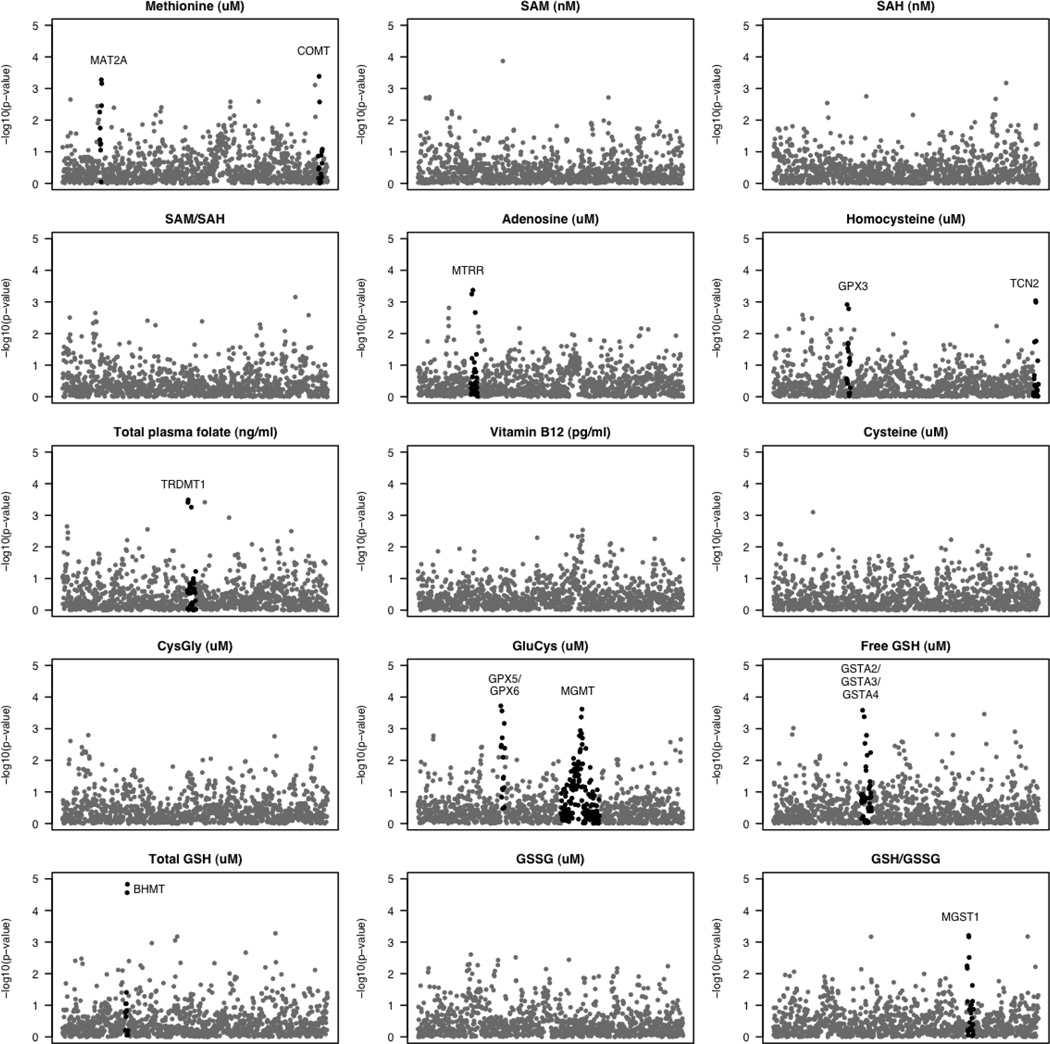
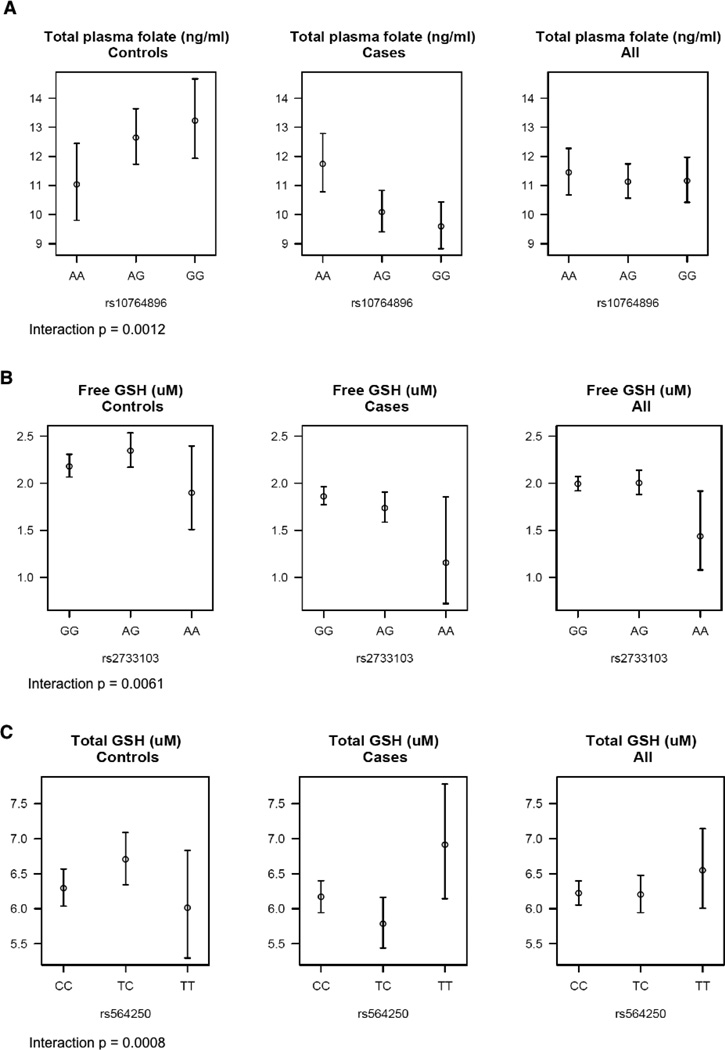
We identified 4 SNPs in the methionine adenosyltransferase II alpha (MAT2A) gene that were associated with methionine levels. Three SNPs in tRNA aspartic acid methyltransferase 1 (TRDMT1) gene were associated with total plasma folate levels. Glutamylcysteine (GluCys) levels were associated with multiple SNPs within the glutathione peroxidase 6 (GPX6) and O-6-methylguanine-DNA methyltransferase (MGMT) genes. The regression model revealed interactions between genotype and case-control status in the association of total plasma folate, total glutathione (GSH), and free GSH, to SNPs within the MGMT, 5,10-methenyltetrahydrofolate synthetase (MTHFS), and catalase (CAT) genes, respectively.
Conclusions
Our study provides further evidence that genetic variation within folate-related pathways accounts for inter-individual variability in key metabolites. We identified specific SNP-metabolite relationships that differed in mothers with CHD-affected pregnancies, compared to controls. Our results underscore the importance of multifactorial studies to define maternal CHD risk. -
Subjects:
- Article
- Adult
- Asymptomatic Diseases
- Carbon-Nitrogen Ligases
- Case-Control Studies
- Catalase
- DNA (Cytosine-5-)-Methyltransferases
- DNA Modification Methylases
- DNA Repair Enzymes
- Female
- Folic Acid
- Genotype
- Glutathione
- Glutathione Peroxidase
- Heart Defects, Congenital
- Homocysteine
- Humans
- Life Style
- Male
- Methionine
- Methionine Adenosyltransferase
- Polymorphism, Single Nucleotide
- Risk
- Tumor Suppressor Proteins
-
Source:Mol Genet Metab. 2012; 107(3):596-604
-
Pubmed ID:23059056
-
Pubmed Central ID:PMC3523122
-
Document Type:
-
Funding:
-
Volume:107
-
Issue:3
-
Download URL:
-
File Type:
 [PDF - 1.53 MB]
 -
Collection(s):
-
Main Document Checksum:urn:sha256:385813e4d2be6ccd8b05c42071376cb4a5c1bf323a5787fdd648df1097a5e201
Supporting Files


File Language:
English
 Was this page helpful?
 Found an issue?

CDC STACKS serves as an archival repository of CDC-published products including
scientific findings, journal articles, guidelines, recommendations, or other public health information authored or
co-authored by CDC or funded partners.
As a repository, CDC STACKS retains documents in their original published format to ensure public access to scientific information.
As a repository, CDC STACKS retains documents in their original published format to ensure public access to scientific information.
You May Also Like
COLLECTION
CDC Public Access