


Adsorption of Surfactant Lipids by Single-Walled Carbon Nanotubes in Mouse Lung upon Pharyngeal Aspiration: Role in Uptake by Macrophages
Supporting Files

-
5 22 2012
-
File Language:
English
Details
-
Alternative Title:ACS Nano
-
Personal Author:Kapralov, Alexander A. ; Feng, Wei Hong ; Amoscato, Andrew A. ; Yanamala, Naveena ; Balasubramanian, Krishnakumar ; Winnica, Daniel E. ; Kisin, Elena R. ; Kotchey, Gregg P. ; Gou, Pingping ; Sparvero, Louis J. ; Ray, Prabir ; Mallampalli, Rama K. ; Klein-Seetharaman, Judith ; Fadeel, Bengt ; Star, Alexander ; Shvedova, Anna A. ; Kagan, Valerian E.
-
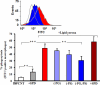
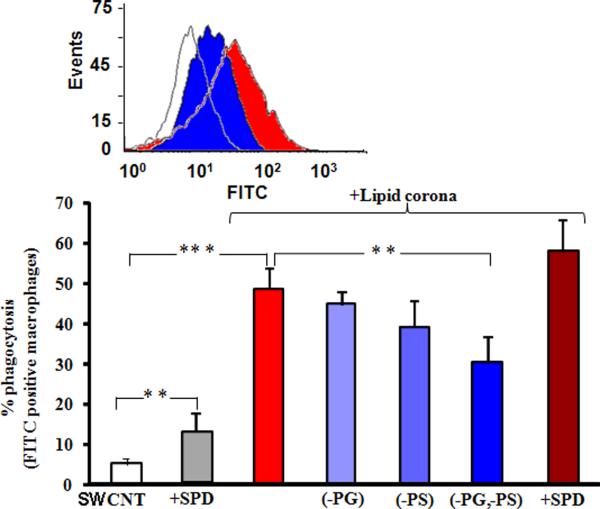
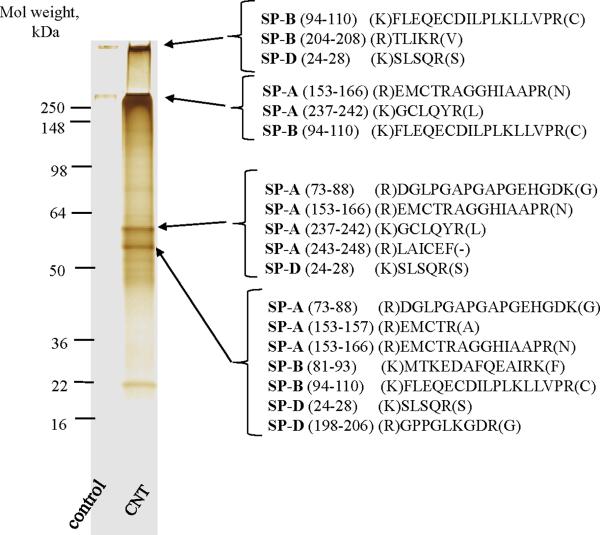
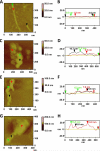
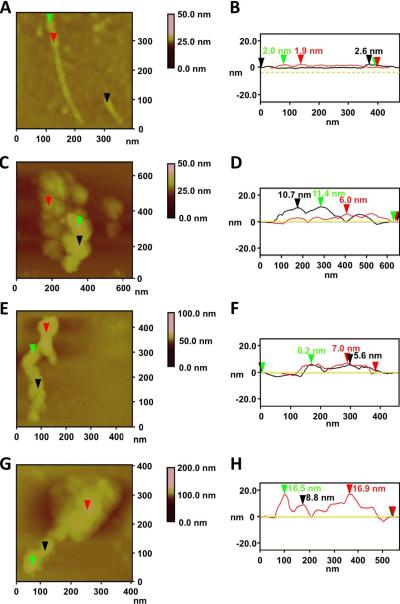
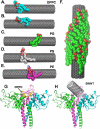
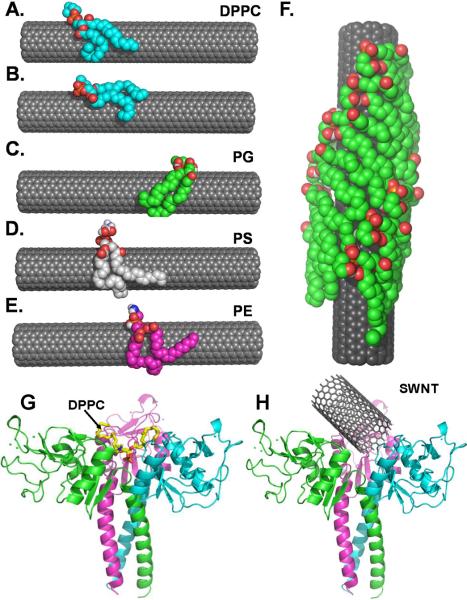
Description:The pulmonary route represents one of the most important portals of entry for nanoparticles into the body. However, the in vivo interactions of nanoparticles with biomolecules of the lung have not been sufficiently studied. Here, using an established mouse model of pharyngeal aspiration of single-walled carbon nanotubes (SWCNTs), we recovered SWCNTs from the bronchoalveolar lavage fluid (BALf), purified them from possible contamination with lung cells, and examined the composition of phospholipids adsorbed on SWCNTs by liquid chromatography mass spectrometry (LC-MS) analysis. We found that SWCNTs selectively adsorbed two types of the most abundant surfactant phospholipids: phosphatidylcholines (PC) and phosphatidylglycerols (PG). Molecular speciation of these phospholipids was also consistent with pulmonary surfactant. Quantitation of adsorbed lipids by LC-MS along with the structural assessments of phospholipid binding by atomic force microscopy and molecular modeling indicated that the phospholipids (∼108 molecules per SWCNT) formed an uninterrupted "coating" whereby the hydrophobic alkyl chains of the phospholipids were adsorbed onto the SWCNT with the polar head groups pointed away from the SWCNT into the aqueous phase. In addition, the presence of surfactant proteins A, B, and D on SWCNTs was determined by LC-MS. Finally, we demonstrated that the presence of this surfactant coating markedly enhanced the in vitro uptake of SWCNTs by macrophages. Taken together, this is the first demonstration of the in vivo adsorption of the surfactant lipids and proteins on SWCNTs in a physiologically relevant animal model.
-
Subjects:
-
Source:ACS Nano. 6(5):4147-4156
-
Pubmed ID:22463369
-
Pubmed Central ID:PMC3358590
-
Document Type:
-
Funding:R01 HL070755/HL/NHLBI NIH HHSUnited States/ ; R01 OH008282/OH/NIOSH CDC HHSUnited States/ ; U19 AI068021/AI/NIAID NIH HHSUnited States/ ; P30 CA047904/CA/NCI NIH HHSUnited States/ ; HL094488/HL/NHLBI NIH HHSUnited States/ ; R01 HL094488/HL/NHLBI NIH HHSUnited States/ ; R01ES019304/ES/NIEHS NIH HHSUnited States/ ; U19AI068021/AI/NIAID NIH HHSUnited States/ ; OH008282/OH/NIOSH CDC HHSUnited States/ ; HL70755/HL/NHLBI NIH HHSUnited States/ ; R01 ES019304/ES/NIEHS NIH HHSUnited States/ ; ES021068-01/ES/NIEHS NIH HHSUnited States/ ; R01 HL070755-08/HL/NHLBI NIH HHSUnited States/
-
Volume:6
-
Issue:5
-
Collection(s):
-
Main Document Checksum:urn:sha256:b8eba68ea8fcc5974004aba79a3a3cffe5a2e42d431cca810a902dd274cc6fee
-
Download URL:
-
File Type:
 [PDF
- 1.83 MB
]
[PDF
- 1.83 MB
]
Supporting Files


File Language:
English
ON THIS PAGE



CDC STACKS serves as an archival repository of CDC-published products including
scientific findings,
journal articles, guidelines, recommendations, or other public health information authored or
co-authored by CDC or funded partners.
As a repository, CDC STACKS retains documents in their original published format to ensure public access to scientific information.
As a repository, CDC STACKS retains documents in their original published format to ensure public access to scientific information.
You May Also Like
COLLECTION
CDC Public Access