



Loom sensitive neurons link computation to action in the Drosophila visual system
Supporting Files

-
Feb 02 2012
-
Available in CDC Stacks on 2013-03-06T00:00:00Z
File Language:
English
Details
-
Alternative Title:Curr Biol
-
Personal Author:
-
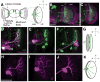
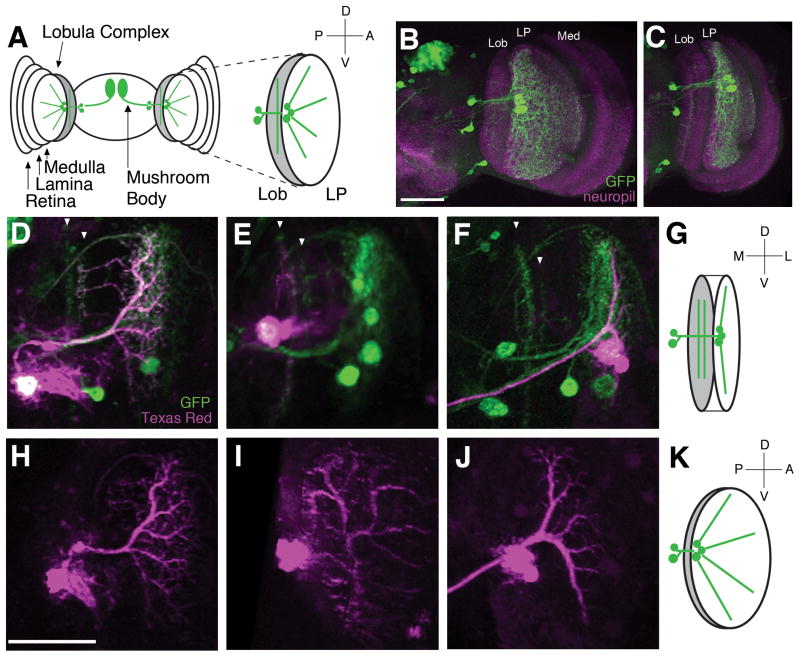
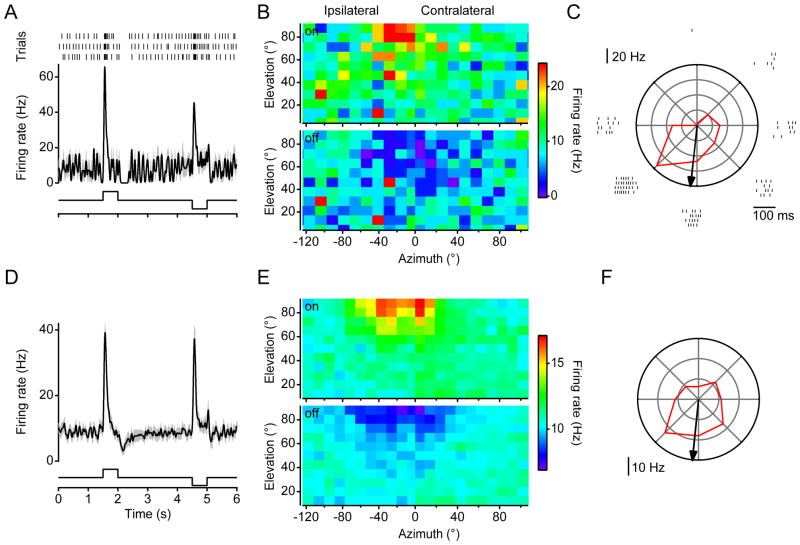
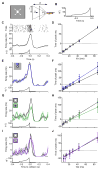
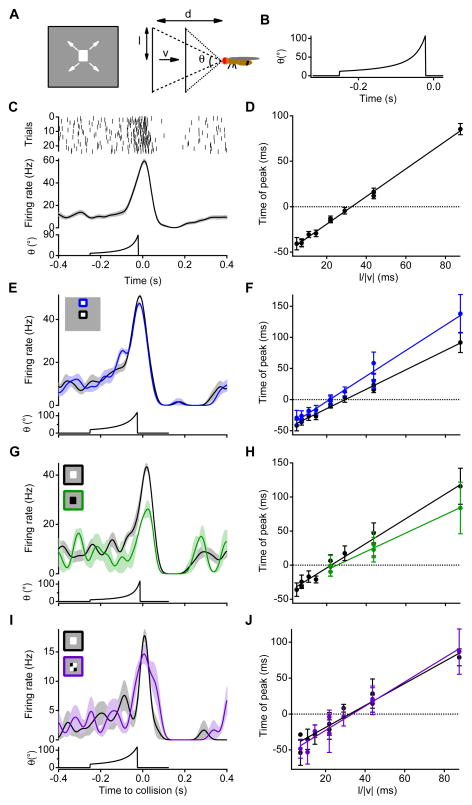
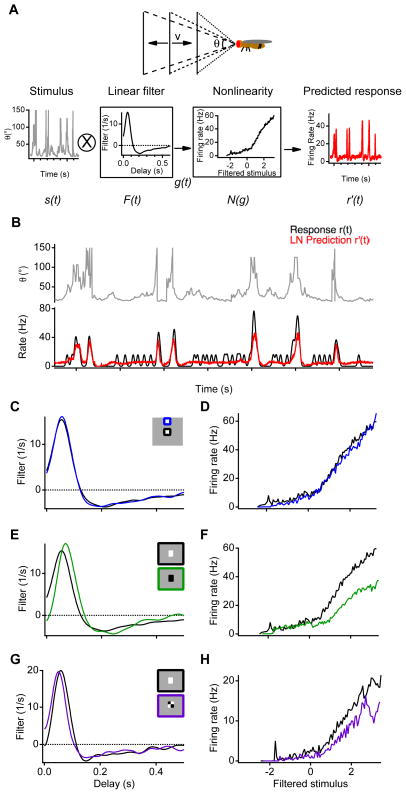
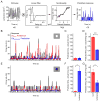
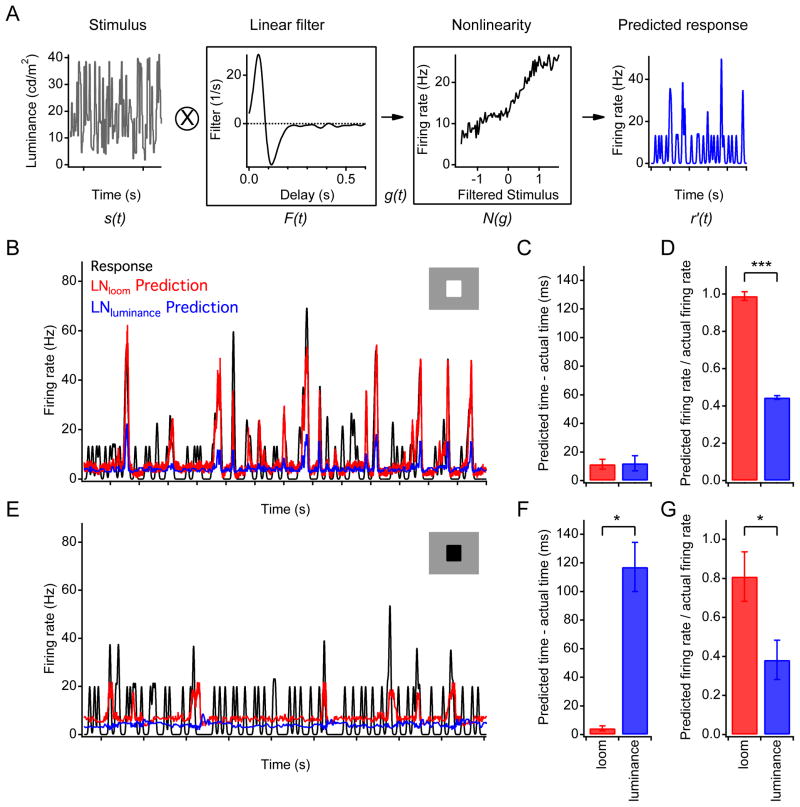
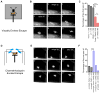
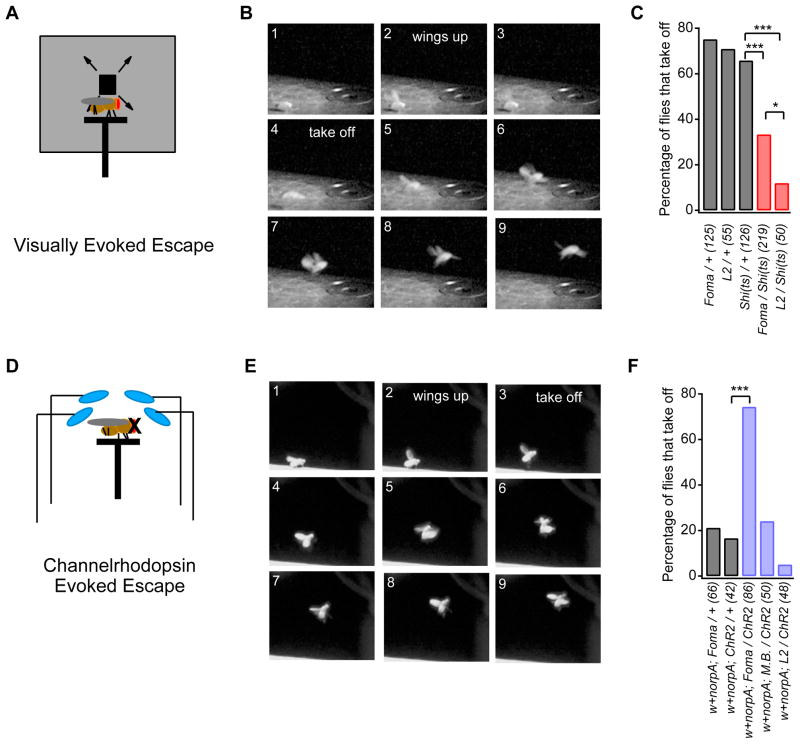
Description:Background ; Many animals extract specific cues from rich visual scenes to guide appropriate behaviors. Such cues include visual motion signals produced both by self movement and by moving objects in the environment. The complexity of these signals requires neural circuits to link particular patterns of motion to specific behavioral responses. ; Results ; Through electrophysiological recordings, we characterize genetically identified neurons in the optic lobe of Drosophila that are specifically tuned to detect motion signals produced by looming objects on a collision course with the fly. Using a genetic manipulation to specifically silence these neurons, we demonstrate that signals from these cells are important for flies to efficiently initiate the loom escape response. Moreover, through targeted expression of Channelrhodopsin in these cells, in flies that are blind, we reveal that optogenetic stimulation of these neurons is typically sufficient to elicit escape, even in the absence of any visual stimulus. ; Conclusions ; In this compact nervous system, a small group of neurons that extract a specific visual cue from local motion inputs serve to trigger the ethologically appropriate behavioral response.
-
Subjects:
-
Source:Curr Biol. 2012; 22(5):353-362.
-
Pubmed ID:22305754
-
Pubmed Central ID:PMC3298569
-
Document Type:
-
Funding:
-
Volume:22
-
Issue:5
-
Download URL:
-
File Type:
 [PDF - 1.72 MB]
 -
Collection(s):
-
Main Document Checksum:urn:sha256:f594f3af4505127bde2a07d87d9910389538934bc8d35b349e91dfe6f4964912
Supporting Files


File Language:
English
 Was this page helpful?
 Found an issue?

CDC STACKS serves as an archival repository of CDC-published products including
scientific findings, journal articles, guidelines, recommendations, or other public health information authored or
co-authored by CDC or funded partners.
As a repository, CDC STACKS retains documents in their original published format to ensure public access to scientific information.
As a repository, CDC STACKS retains documents in their original published format to ensure public access to scientific information.
You May Also Like
COLLECTION
CDC Public Access