


Amygdala atrophy is prominent in early Alzheimer's disease and relates to symptom severity
Supporting Files

-
Sep 14 2011
-
File Language:
English
Details
-
Alternative Title:Psychiatry Res
-
Personal Author:
-
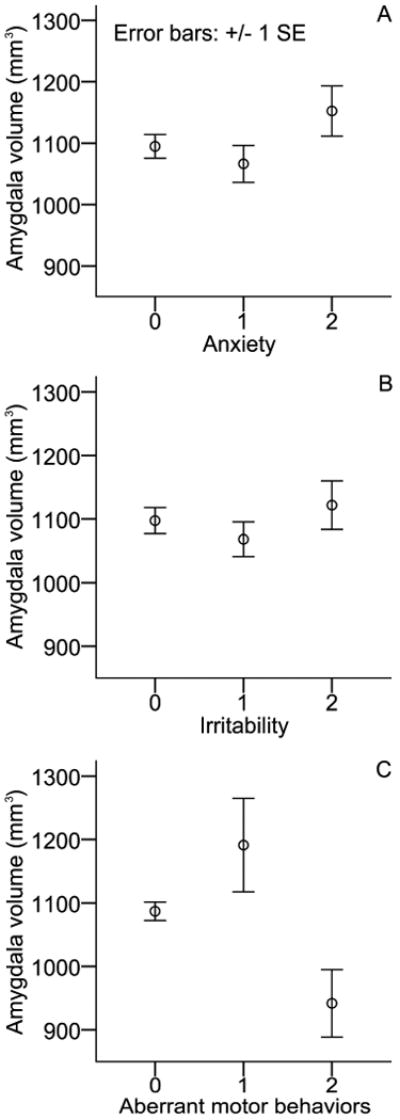
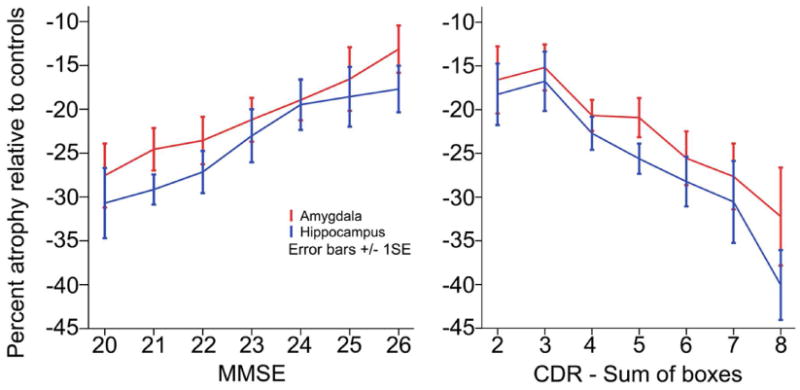
Description:Despite numerous studies on the role of medial temporal lobe structures in Alzheimer's disease (AD), the magnitude and clinical significance of amygdala atrophy have been relatively sparsely investigated. In this study, we used magnetic resonance imaging (MRI) to compare the level of amygdala atrophy to that of the hippocampus in very mild and mild AD subjects in two large samples (Sample 1 n=90; Sample 2 n=174). Using a series of linear regression analyses, we investigated whether amygdala atrophy is related to global cognitive functioning (Clinical Dementia Rating Sum of Boxes: CDR-SB; Mini Mental State Examination: MMSE) and neuropsychiatric status. Results indicated that amygdala atrophy was comparable to hippocampal atrophy in both samples. MMSE and CDR-SB were strongly related to amygdala atrophy, with amygdala atrophy predicting MMSE scores as well as hippocampal atrophy, but predicting CDR-SB scores less robustly. Amygdala atrophy was related to aberrant motor behavior, with potential relationships to anxiety and irritability. These results suggest that the magnitude of amygdala atrophy is comparable to that of the hippocampus in the earliest clinical stages of AD, and is related to global illness severity. There also appear to be specific relationships between the level of amygdala atrophy and neuropsychiatric symptoms that deserve further investigation.
-
Subjects:
-
Source:Psychiatry Res. 2010; 194(1):7-13.
-
Pubmed ID:21920712
-
Pubmed Central ID:PMC3185127
-
Document Type:
-
Funding:DP10D003312/DP/NCCDPHP CDC HHS/United States ; K01 AG030514/AG/NIA NIH HHS/United States ; P01 AG003991/AG/NIA NIH HHS/United States ; P01 AG003991-29/AG/NIA NIH HHS/United States ; P01-AG003991/AG/NIA NIH HHS/United States ; P30 AG010129/AG/NIA NIH HHS/United States ; P50 AG005134/AG/NIA NIH HHS/United States ; P50 AG005134-29/AG/NIA NIH HHS/United States ; P50 AG005681/AG/NIA NIH HHS/United States ; P50 AG005681-29/AG/NIA NIH HHS/United States ; P50-AG05134/AG/NIA NIH HHS/United States ; P50-AG05681/AG/NIA NIH HHS/United States ; R01 AG029411/AG/NIA NIH HHS/United States ; R01 AG029411-05/AG/NIA NIH HHS/United States ; R01-AG029411/AG/NIA NIH HHS/United States ; R01-AG030311/AG/NIA NIH HHS/United States ; R01-MH56584/MH/NIMH NIH HHS/United States ; R21 AG029840/AG/NIA NIH HHS/United States ; R21 AG029840-02/AG/NIA NIH HHS/United States ; R21-AG029840/AG/NIA NIH HHS/United States ; U01 AG024904/AG/NIA NIH HHS/United States ; U01 AG024904-07/AG/NIA NIH HHS/United States ; U24 RR021382/RR/NCRR NIH HHS/United States ; U24 RR021382-05/RR/NCRR NIH HHS/United States ; U24-RR021382/RR/NCRR NIH HHS/United States
-
Volume:194
-
Issue:1
-
Collection(s):
-
Main Document Checksum:urn:sha256:aaa94b1d5b653329706afbeb6fc2fdc1c881ce72c03671606061dab91ce03921
-
Download URL:
-
File Type:
 [PDF
- 653.31 KB
]
[PDF
- 653.31 KB
]
Supporting Files


File Language:
English
ON THIS PAGE



CDC STACKS serves as an archival repository of CDC-published products including
scientific findings,
journal articles, guidelines, recommendations, or other public health information authored or
co-authored by CDC or funded partners.
As a repository, CDC STACKS retains documents in their original published format to ensure public access to scientific information.
As a repository, CDC STACKS retains documents in their original published format to ensure public access to scientific information.
You May Also Like
COLLECTION
CDC Public Access