


Detecting Associations between Early-Life DDT Exposures and Childhood Growth Patterns: A Novel Statistical Approach
Supporting Files

-
Jun 30 2015
-
File Language:
English
Details
-
Alternative Title:PLoS One
-
Personal Author:
-
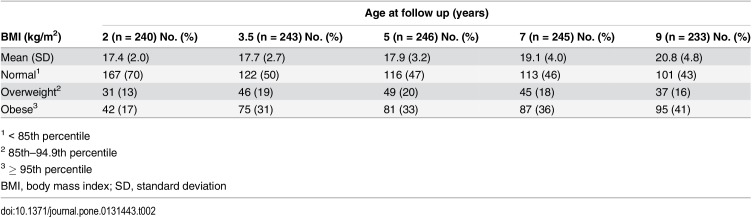
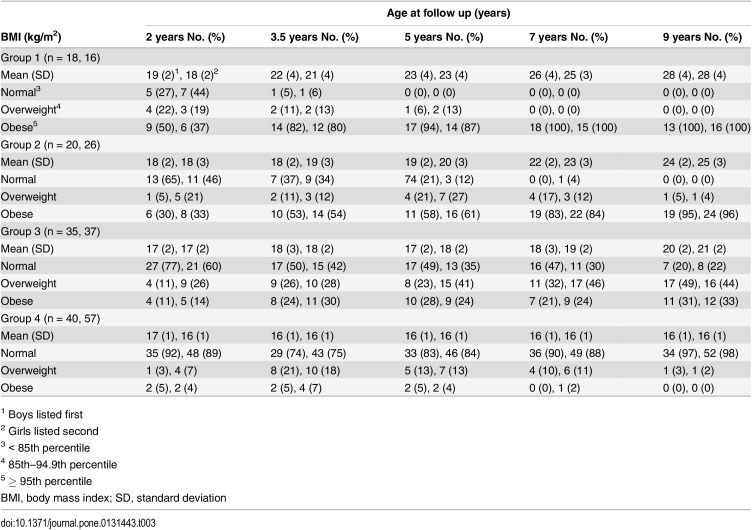
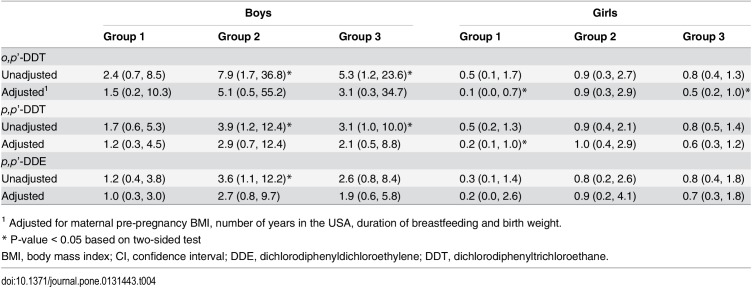
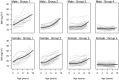
Description:It has been hypothesized that environmental exposures at key development periods such as in utero play a role in childhood growth and obesity. To investigate whether in utero exposure to endocrine-disrupting chemicals, dichlorodiphenyltrichloroethane (DDT) and its metabolite, dichlorodiphenyldichloroethane (DDE), is associated with childhood physical growth, we took a novel statistical approach to analyze data from the CHAMACOS cohort study. To model heterogeneity in the growth patterns, we used a finite mixture model in combination with a data transformation to characterize body mass index (BMI) with four groups and estimated the association between exposure and group membership. In boys, higher maternal concentrations of DDT and DDE during pregnancy are associated with a BMI growth pattern that is stable until about age five followed by increased growth through age nine. In contrast, higher maternal DDT exposure during pregnancy is associated with a flat, relatively stable growth pattern in girls. This study suggests that in utero exposure to DDT and DDE may be associated with childhood BMI growth patterns, not just BMI level, and both the magnitude of exposure and sex may impact the relationship.
-
Subjects:
-
Source:PLoS One. 2015; 10(6).
-
Pubmed ID:26125556
-
Pubmed Central ID:PMC4488365
-
Document Type:
-
Funding:
-
Volume:10
-
Issue:6
-
Collection(s):
-
Main Document Checksum:urn:sha256:70f168237c3cfea2a2958cd576bf999367d0d5be40bd6b0f60d8b41c4939c336
-
Download URL:
-
File Type:
 [PDF
- 459.79 KB
]
[PDF
- 459.79 KB
]
Supporting Files


File Language:
English
ON THIS PAGE




CDC STACKS serves as an archival repository of CDC-published products including
scientific findings,
journal articles, guidelines, recommendations, or other public health information authored or
co-authored by CDC or funded partners.
As a repository, CDC STACKS retains documents in their original published format to ensure public access to scientific information.
As a repository, CDC STACKS retains documents in their original published format to ensure public access to scientific information.
You May Also Like
COLLECTION
CDC Public Access