



Engineering artificial cells by combining HeLa-based cell-free expression and ultra-thin double emulsion template
Supporting Files

-
Apr 08 2015
-
Available in CDC Stacks on 2015-08-05T00:00:00Z
Details
-
Alternative Title:Methods Cell Biol
-
Personal Author:
-
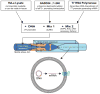
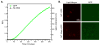
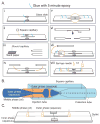
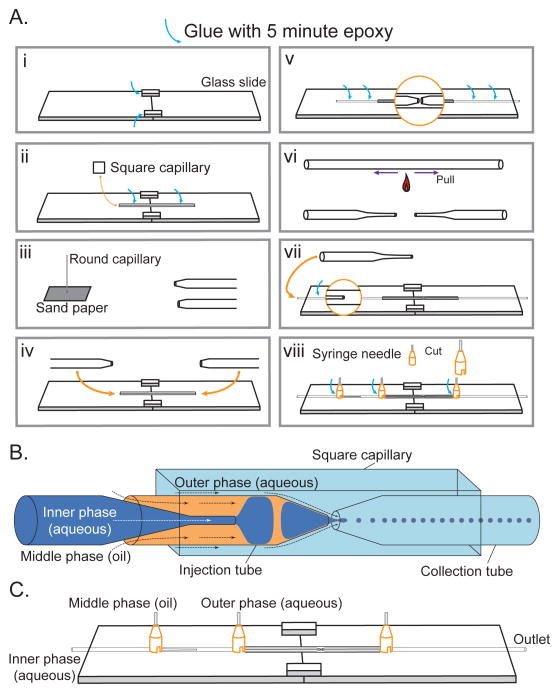
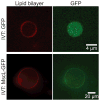
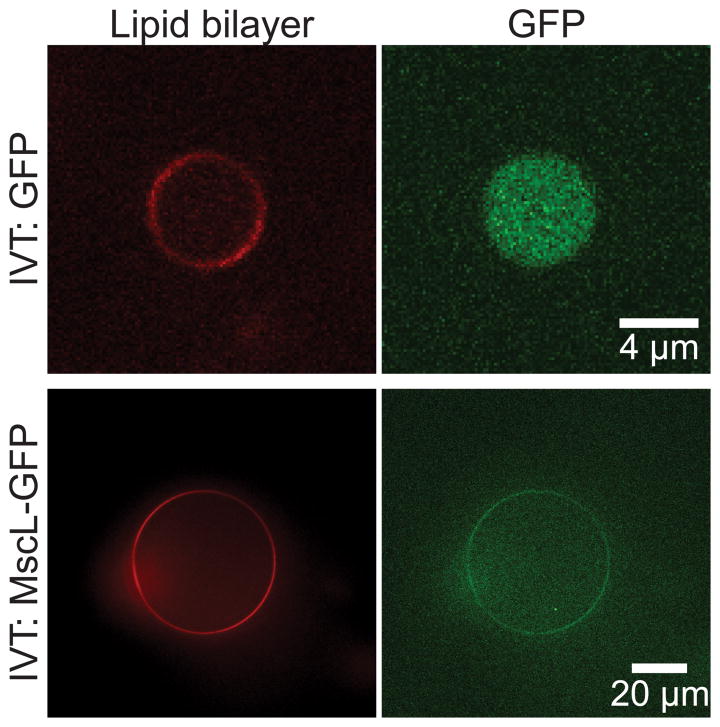
Description:Generation of artificial cells provides the bridge needed to cover the gap between studying the complexity of biological processes in whole cells and studying these same processes in an in vitro reconstituted system. Artificial cells are defined as the encapsulation of biologically active material in a biological or synthetic membrane. Here, we describe a robust and general method to produce artificial cells for the purpose of mimicking one or more behaviors of a cell. A microfluidic double emulsion system is used to encapsulate a mammalian cell-free expression system that is able to express membrane proteins into the bilayer or soluble proteins inside the vesicles. The development of a robust platform that allows the assembly of artificial cells is valuable in understanding subcellular functions and emergent behaviors in a more cell-like environment as well as for creating novel signaling pathways to achieve specific cellular behaviors.
-
Subjects:
-
Source:Methods Cell Biol. 128:303-318.
-
Pubmed ID:25997354
-
Pubmed Central ID:PMC4526213
-
Document Type:
-
Funding:
-
Volume:128
-
Download URL:
-
File Type:
 [PDF - 1.13 MB]
 -
Collection(s):
-
Main Document Checksum:urn:sha256:75d2337361c14abac77f08bf60a4e15b02be2130f234dee484eb633186a2bd37
Supporting Files


 Was this page helpful?
 Found an issue?



CDC STACKS serves as an archival repository of CDC-published products including
scientific findings, journal articles, guidelines, recommendations, or other public health information authored or
co-authored by CDC or funded partners.
As a repository, CDC STACKS retains documents in their original published format to ensure public access to scientific information.
As a repository, CDC STACKS retains documents in their original published format to ensure public access to scientific information.
You May Also Like
COLLECTION
CDC Public Access