i
Molecular mechanism of resolving trinucleotide repeat hairpin by helicases
-
May 21 2015
-
-
Source: Structure. 2015; 23(6):1018-1027.
 [PDF-1.56 MB]
Details:
-
Alternative Title:Structure
-
Personal Author:
-
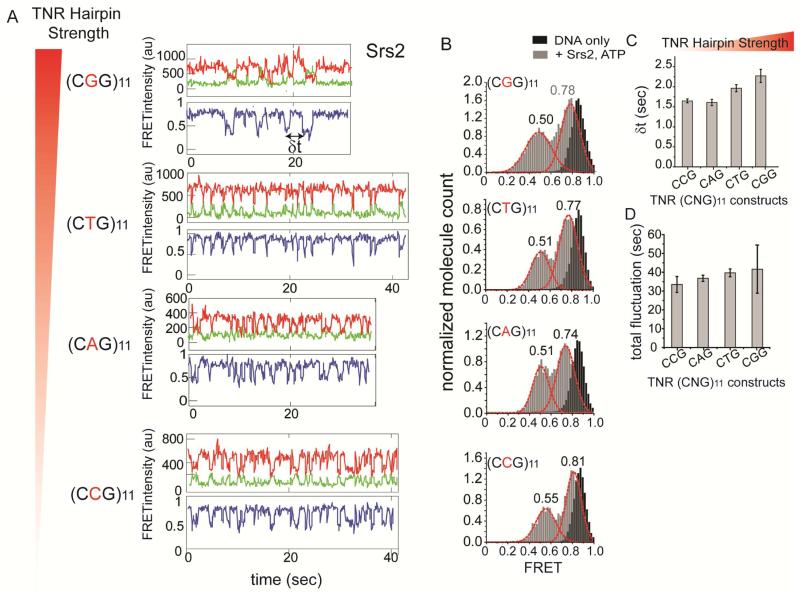
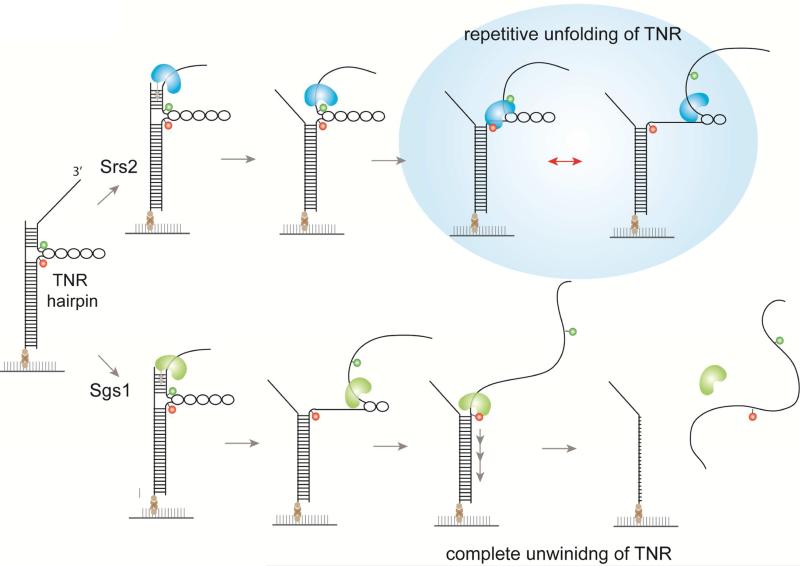
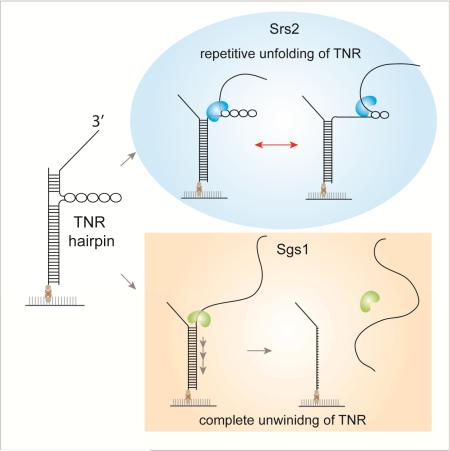
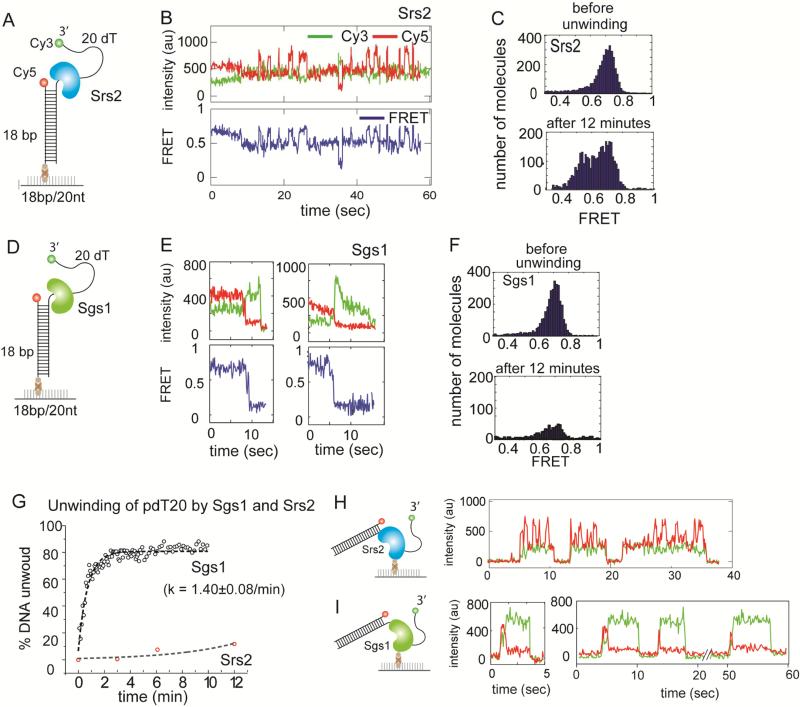
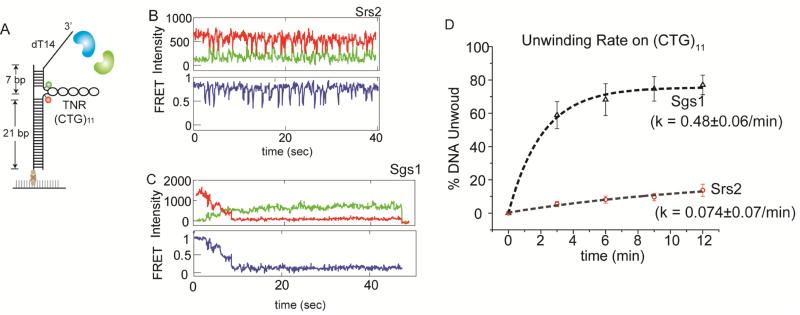
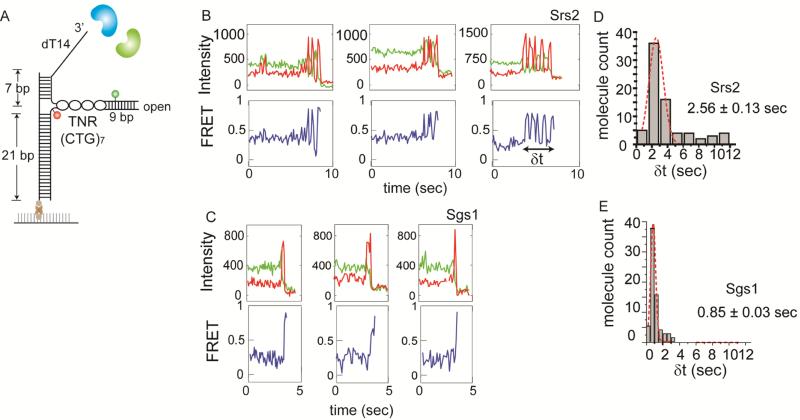
Description:Trinucleotide repeat (TNR) expansion is the root cause for many known congenital neurological and muscular disorders in human including Huntington's disease, fragile X syndrome, and Friedreich's ataxia. The stable secondary hairpin structures formed by TNR may trigger fork stalling during replication, causing DNA polymerase slippage and TNR expansion. Srs2 and Sgs1 are two helicases in yeast that resolve TNR hairpins during DNA replication and prevent genome expansion. Using single-molecule fluorescence, we investigated the unwinding mechanism by which Srs2 and Sgs1 resolves TNR hairpin and compared it with unwinding of duplex DNA. While Sgs1 unwinds both structures indiscriminately, Srs2 displays repetitive unfolding of TNR hairpin without fully unwinding it. Such activity of Srs2 shows dependence on the folding strength and the total length of TNR hairpin. Our results reveal a disparate molecular mechanism of Srs2 and Sgs1 that may contribute differently to efficient resolving of the TNR hairpin.
-
Subjects:
-
Source:
-
Pubmed ID:26004439
-
Pubmed Central ID:PMC4456222
-
Document Type:
-
Funding:
-
Collection(s):
-
Main Document Checksum:
-
Download URL:
-
File Type: