


Telomeric overhang length determines structural dynamics and accessibility to telomerase and ALT associated proteins
Supporting Files

-
May 15 2014
-
Details
-
Alternative Title:Structure
-
Personal Author:
-
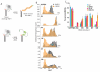
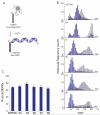
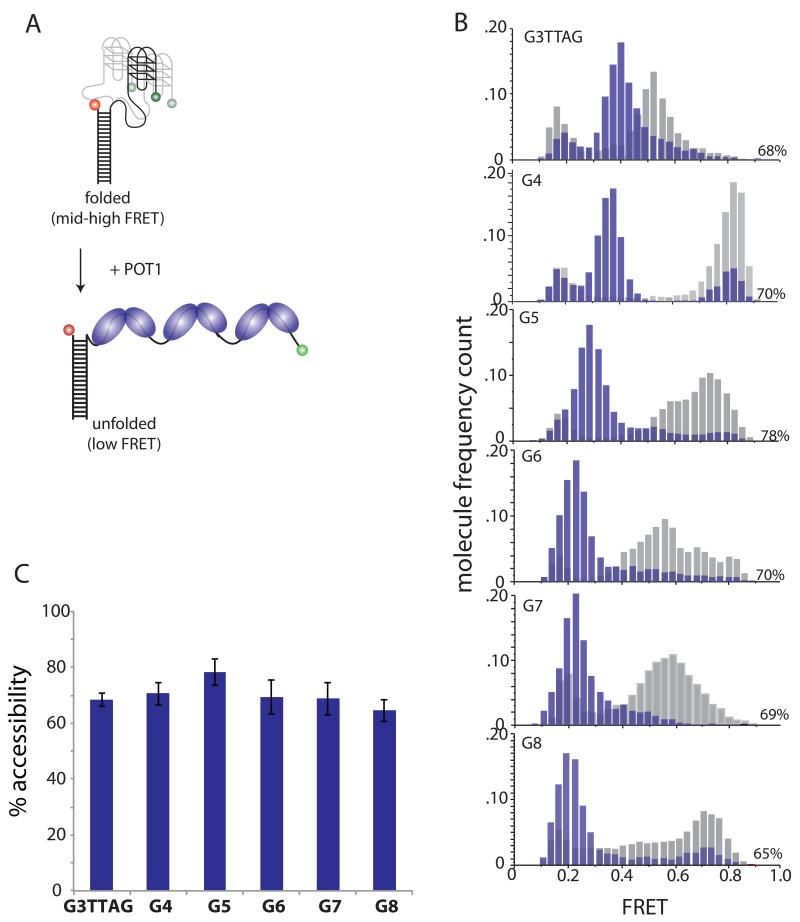
Description:The G-rich single-stranded DNA at the 3' end of human telomeres can self-fold into G-quaduplex (GQ). However, telomere lengthening by telomerase or the recombination-based alternative lengthening of telomere (ALT) mechanism requires protein loading on the overhang. Using single-molecule fluorescence spectroscopy, we discovered that lengthening the telomeric overhang also increased the rate of dynamic exchanges between structural conformations. Overhangs with five to seven TTAGGG repeats, compared with four repeats, showed much greater dynamics and accessibility to telomerase binding and activity and loading of the ALT-associated proteins RAD51, WRN, and BLM. Although the eight repeats are highly dynamic, they can fold into two GQs, which limited protein accessibility. In contrast, the telomere-specific protein POT1 is unique in that it binds independently of repeat number. Our results suggest that the telomeric overhang length and dynamics may contribute to the regulation of telomere extension via telomerase action and the ALT mechanism.
-
Subjects:
-
Source:Structure. 2014; 22(6):842-853.
-
Pubmed ID:24836024
-
Pubmed Central ID:PMC4067947
-
Document Type:
-
Funding:343 NIH 1 DP2 GM105453 A/DP/NCCDPHP CDC HHS/United States ; DP2 GM105453/GM/NIGMS NIH HHS/United States ; ES0515052/ES/NIEHS NIH HHS/United States ; F30 CA174323/CA/NCI NIH HHS/United States ; R01 ES015052/ES/NIEHS NIH HHS/United States ; R01 ES015632/ES/NIEHS NIH HHS/United States ; R01GM65484/GM/NIGMS NIH HHS/United States ; UL1 TR000142/TR/NCATS NIH HHS/United States
-
Volume:22
-
Issue:6
-
Collection(s):
-
Main Document Checksum:urn:sha256:a57c568f0f0e9f3f01ba31788a3881cffcf8b140408e47b194ad01b9156d4fa9
-
Download URL:
-
File Type:
 [PDF
- 1.44 MB
]
[PDF
- 1.44 MB
]
Supporting Files


ON THIS PAGE




CDC STACKS serves as an archival repository of CDC-published products including
scientific findings,
journal articles, guidelines, recommendations, or other public health information authored or
co-authored by CDC or funded partners.
As a repository, CDC STACKS retains documents in their original published format to ensure public access to scientific information.
As a repository, CDC STACKS retains documents in their original published format to ensure public access to scientific information.
You May Also Like
COLLECTION
CDC Public Access