


Evaluation of DNA extraction methods for the detection of Cytomegalovirus in dried blood spots
Supporting Files

-
Mar 17 2015
-
Details
-
Alternative Title:J Clin Virol
-
Personal Author:
-
Description:Background
Dried blood spots (DBS) are collected universally from newborns and may be valuable for the diagnosis of congenital Cytomegalovirus (CMV) infection. The reported analytical sensitivity for DBS testing compared to urine or saliva varies greatly across CMV studies. The purpose of this study was to directly compare the performance of various DNA extraction methods for identification of CMV in DBS including those used most often in CMV studies.
Study design
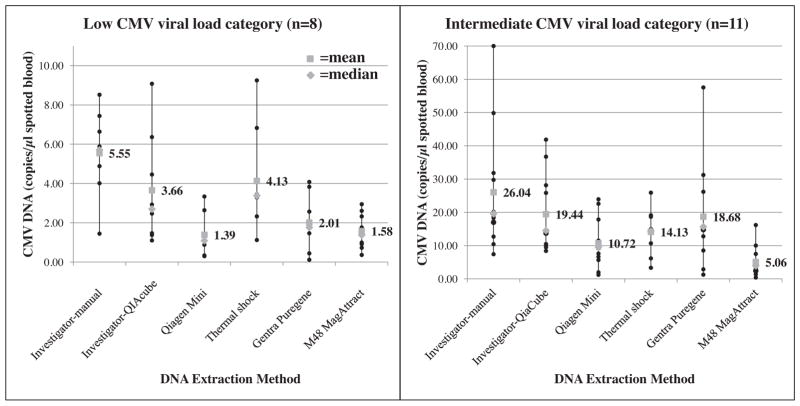
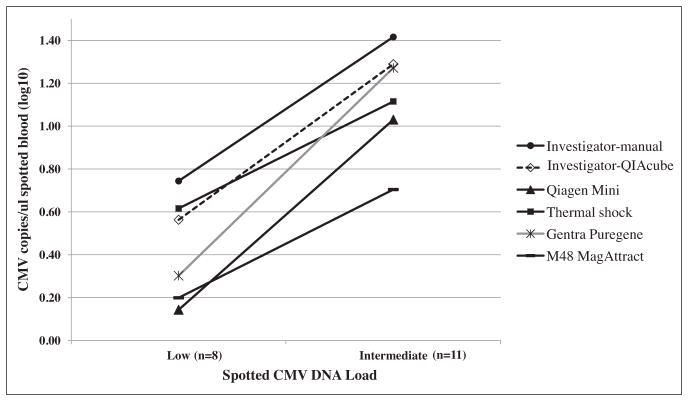
Whatman® Grade 903 filter paper cards were spotted with blood samples from 25 organ transplant recipients who had confirmed CMV viremia. Six DNA extraction methods were compared for relative yield of viral and cellular DNA: 2 manual solution-based methods (Gentra Puregene, thermal shock), 2 manual silica column-based methods (QIAamp DNA Mini, QIAamp DNA Investigator), and 2 automated methods (M48 MagAttract Mini, QIAcube Investigator). DBS extractions were performed in triplicate followed by real-time quantitative PCR (qPCR).
Results
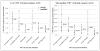
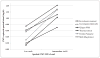
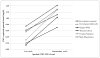
For extraction of both viral and cellular DNA, two methods (QIAamp DNA Investigator and thermal shock) consistently gave the highest yields, and two methods (M48 MagAttract Mini and QIAamp DNA Mini) consistently gave the lowest yields. There was an average 3-fold difference in DNA yield between the highest and lowest yield methods.
Conclusion
The choice of DNA extraction method is a major factor in the ability to detect low levels of CMV in DBS and can largely account for the wide range of DBS sensitivities reported in studies to date.
-
Subjects:
-
Source:J Clin Virol. 66:95-99.
-
Pubmed ID:25866346
-
Pubmed Central ID:PMC4517665
-
Document Type:
-
Funding:
-
Volume:66
-
Collection(s):
-
Main Document Checksum:urn:sha256:bdcf3a64eadbb5852ace3f5a882d13e074f6c117b04ea556ce64fea92c145b3c
-
Download URL:
-
File Type:
 [PDF
- 389.97 KB
]
[PDF
- 389.97 KB
]
Supporting Files


ON THIS PAGE


CDC STACKS serves as an archival repository of CDC-published products including
scientific findings,
journal articles, guidelines, recommendations, or other public health information authored or
co-authored by CDC or funded partners.
As a repository, CDC STACKS retains documents in their original published format to ensure public access to scientific information.
As a repository, CDC STACKS retains documents in their original published format to ensure public access to scientific information.
You May Also Like
COLLECTION
CDC Public Access