


Triggering Interventions for Influenza: The ALERT Algorithm
Supporting Files

-
Nov 19 2014
-
File Language:
English
Details
-
Alternative Title:Clin Infect Dis
-
Personal Author:
-
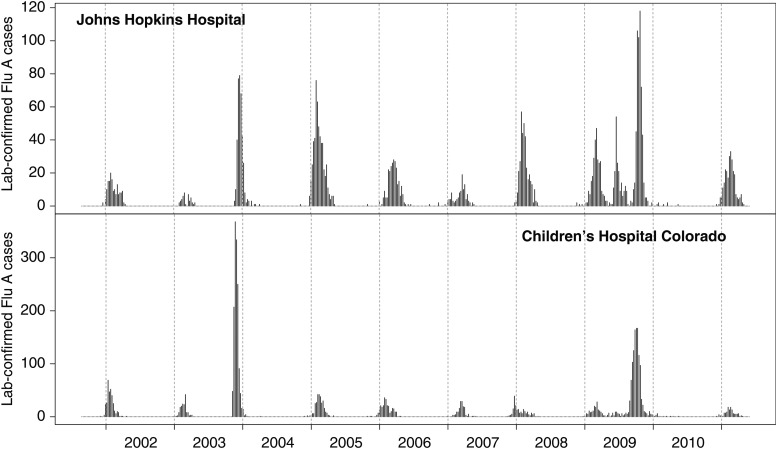
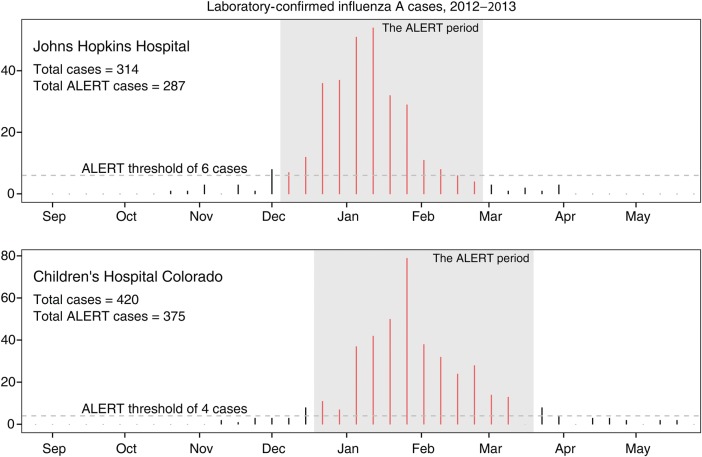
Description:Early, accurate predictions of the onset of influenza season enable targeted implementation of control efforts. Our objective was to develop a tool to assist public health practitioners, researchers, and clinicians in defining the community-level onset of seasonal influenza epidemics.|Using recent surveillance data on virologically confirmed infections of influenza, we developed the Above Local Elevated Respiratory Illness Threshold (ALERT) algorithm, a method to identify the period of highest seasonal influenza activity. We used data from 2 large hospitals that serve Baltimore, Maryland and Denver, Colorado, and the surrounding geographic areas. The data used by ALERT are routinely collected surveillance data: weekly case counts of laboratory-confirmed influenza A virus. The main outcome is the percentage of prospective seasonal influenza cases identified by the ALERT algorithm.|When ALERT thresholds designed to capture 90% of all cases were applied prospectively to the 2011-2012 and 2012-2013 influenza seasons in both hospitals, 71%-91% of all reported cases fell within the ALERT period.|The ALERT algorithm provides a simple, robust, and accurate metric for determining the onset of elevated influenza activity at the community level. This new algorithm provides valuable information that can impact infection prevention recommendations, public health practice, and healthcare delivery.
-
Subjects:
-
Source:Clin Infect Dis. 2014; 60(4):499-504.
-
Pubmed ID:25414260
-
Pubmed Central ID:PMC4304363
-
Document Type:
-
Funding:
-
Place as Subject:
-
Volume:60
-
Issue:4
-
Collection(s):
-
Main Document Checksum:urn:sha256:f834db3958b92f32d404a6b1a4e772ddacf9801b3f6bafe359e9965d2ce17ae5
-
Download URL:
-
File Type:
 [PDF
- 264.44 KB
]
[PDF
- 264.44 KB
]
Supporting Files
-
html


File Language:
English
ON THIS PAGE

CDC STACKS serves as an archival repository of CDC-published products including
scientific findings,
journal articles, guidelines, recommendations, or other public health information authored or
co-authored by CDC or funded partners.
As a repository, CDC STACKS retains documents in their original published format to ensure public access to scientific information.
As a repository, CDC STACKS retains documents in their original published format to ensure public access to scientific information.
You May Also Like
COLLECTION
CDC Public Access