



Multivalent Microtubule Recognition by Tubulin Tyrosine Ligase-Like Family Glutamylases
Supporting Files

-
May 07 2015
-
Available in CDC Stacks on May 21, 2016, 12:00 AM
Details
-
Alternative Title:Cell
-
Personal Author:
-
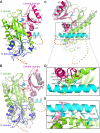
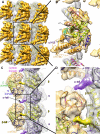
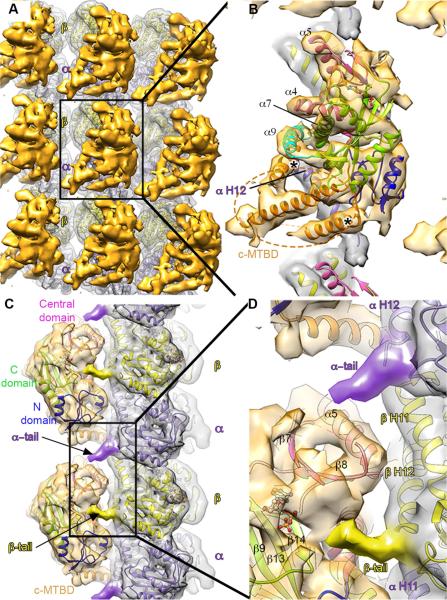
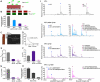
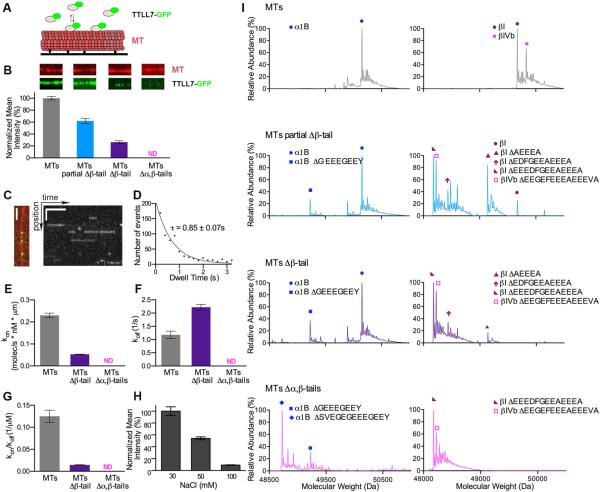
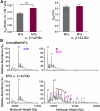
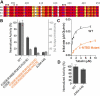
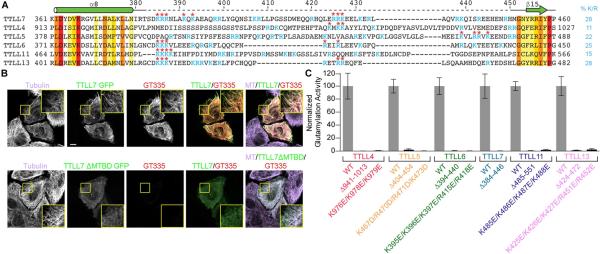
Description:Glutamylation, the most prevalent tubulin posttranslational modification, marks stable microtubules and regulates recruitment and activity of microtubule- interacting proteins. Nine enzymes of the tubulin tyrosine ligase-like (TTLL) family catalyze glutamylation. TTLL7, the most abundant neuronal glutamylase, adds glutamates preferentially to the β-tubulin tail. Coupled with ensemble and single-molecule biochemistry, our hybrid X-ray and cryo-electron microscopy structure of TTLL7 bound to the microtubule delineates a tripartite microtubule recognition strategy. The enzyme uses its core to engage the disordered anionic tails of α- and β-tubulin, and a flexible cationic domain to bind the microtubule and position itself for β-tail modification. Furthermore, we demonstrate that all single-chain TTLLs with known glutamylase activity utilize a cationic microtubule-binding domain analogous to that of TTLL7. Therefore, our work reveals the combined use of folded and intrinsically disordered substrate recognition elements as the molecular basis for specificity among the enzymes primarily responsible for chemically diversifying cellular microtubules.
-
Subjects:
-
Source:Cell. 2015; 161(5):1112-1123.
-
Pubmed ID:25959773
-
Pubmed Central ID:PMC4465277
-
Document Type:
-
Funding:GM095573/GM/NIGMS NIH HHS/United States ; P41 GM103310/GM/NIGMS NIH HHS/United States ; DP2 EB020402/EB/NIBIB NIH HHS/United States ; DP2 EB020402/DP/NCCDPHP CDC HHS/United States ; ZIA NS003122-04/Intramural NIH HHS/United States ; R01 GM052468/GM/NIGMS NIH HHS/United States ; P41GM103310/GM/NIGMS NIH HHS/United States ; R01 GM095573/GM/NIGMS NIH HHS/United States ; R37 GM052468/GM/NIGMS NIH HHS/United States
-
Volume:161
-
Issue:5
-
Download URL:
-
File Type:
 [PDF - 1.61 MB]
 -
Collection(s):
-
Main Document Checksum:urn:sha256:3db329c61432ec5be7e06352cd243bfac3aff42f11dc0dcfd0327219ff72ec9b
Supporting Files


 Was this page helpful?
 Found an issue?






CDC STACKS serves as an archival repository of CDC-published products including
scientific findings, journal articles, guidelines, recommendations, or other public health information authored or
co-authored by CDC or funded partners.
As a repository, CDC STACKS retains documents in their original published format to ensure public access to scientific information.
As a repository, CDC STACKS retains documents in their original published format to ensure public access to scientific information.
You May Also Like
COLLECTION
CDC Public Access