


The Influence of Gender and Self-Efficacy on Healthy Eating in a Low-Income Urban Population Affected by Structural Changes to the Food Environment
Supporting Files

-
Mar 27 2014
-
File Language:
English
Details
-
Alternative Title:J Obes
-
Personal Author:
-
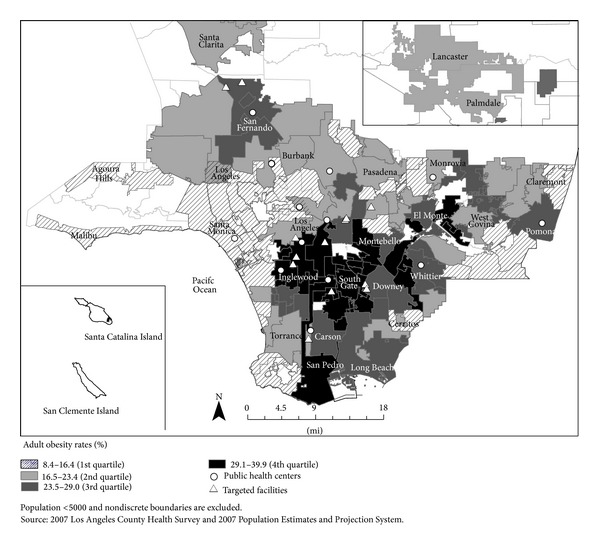
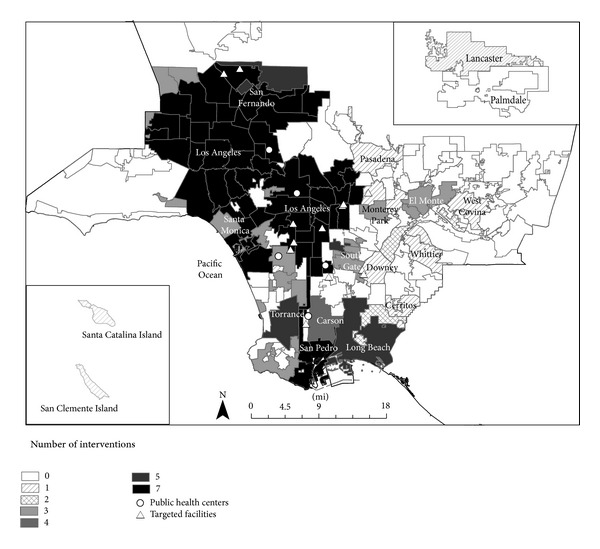
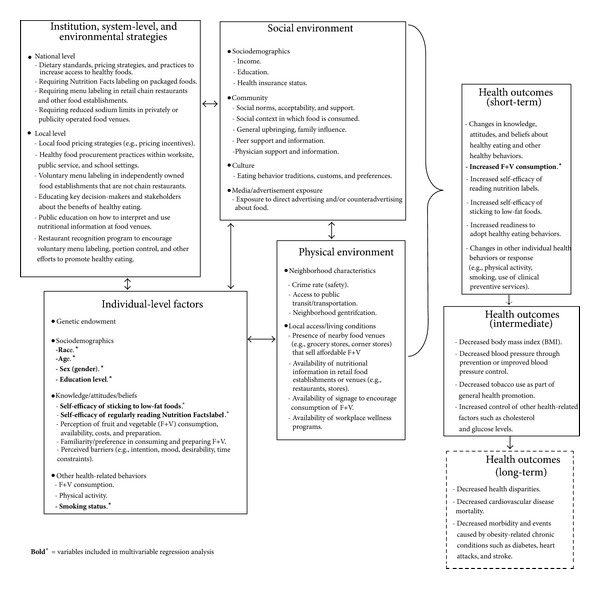
Description:Although U.S. obesity prevention efforts have begun to implement a variety of system and environmental change strategies to address the underlying socioecological barriers to healthy eating, factors which can impede or facilitate community acceptance of such interventions are often poorly understood. This is due, in part, to the paucity of subpopulation health data that are available to help guide local planning and decision-making. We contribute to this gap in practice by examining area-specific health data for a population targeted by federally funded nutrition interventions in Los Angeles County. Using data from a local health assessment that collected information on sociodemographics, self-reported health behaviors, and objectively measured height, weight, and blood pressure for a subset of low-income adults (n = 720), we compared health risks and predictors of healthy eating across at-risk groups using multivariable modeling analyses. Our main findings indicate being a woman and having high self-efficacy in reading Nutrition Facts labels were strong predictors of healthy eating (P < 0.05). These findings suggest that intervening with women may help increase the reach of these nutrition interventions, and that improving self-efficacy in healthy eating through public education and/or by other means can help prime at-risk groups to accept and take advantage of these food environment changes.
-
Subjects:
-
Source:J Obes. 2014; 2014.
-
Pubmed ID:24800064
-
Pubmed Central ID:PMC3985319
-
Document Type:
-
Funding:
-
Place as Subject:
-
Volume:2014
-
Collection(s):
-
Main Document Checksum:urn:sha256:500f749244c48f499381132cd862b75c1933e6b0f310fb071c21d2d634b091ad
-
Download URL:
-
File Type:
 [PDF
- 1.85 MB
]
[PDF
- 1.85 MB
]
Supporting Files


File Language:
English
ON THIS PAGE




CDC STACKS serves as an archival repository of CDC-published products including
scientific findings,
journal articles, guidelines, recommendations, or other public health information authored or
co-authored by CDC or funded partners.
As a repository, CDC STACKS retains documents in their original published format to ensure public access to scientific information.
As a repository, CDC STACKS retains documents in their original published format to ensure public access to scientific information.
You May Also Like
COLLECTION
CDC Public Access