


One size does not fit all: evaluating an intervention to reduce antibiotic prescribing for acute bronchitis
Supporting Files

-
Nov 04 2013
-
File Language:
English
Details
-
Alternative Title:BMC Health Serv Res
-
Personal Author:
-
Description:Background
Overuse of antibiotics for upper respiratory tract infections (URIs) and acute bronchitis is a persistent and vexing problem. In the U.S., more than half of all patients with upper respiratory tract infections and acute bronchitis are treated with antibiotics annually, despite the fact that most cases are viral in etiology and are not responsive to antibiotics. Interventions aiming to reduce unnecessary antibiotic prescribing have had mixed results, and successes have been modest. The objective of this evaluation is to use mixed methods to understand why a multi-level intervention to reduce antibiotic prescribing for acute bronchitis among primary care providers resulted in measurable improvement in only one third of participating clinicians.
Methods
Clinician perspectives on print-based and electronic intervention strategies, and antibiotic prescribing more generally, were elicited through structured telephone surveys at high and low performing sites after the first year of intervention at the Geisinger Health System in Pennsylvania (n = 29).
Results
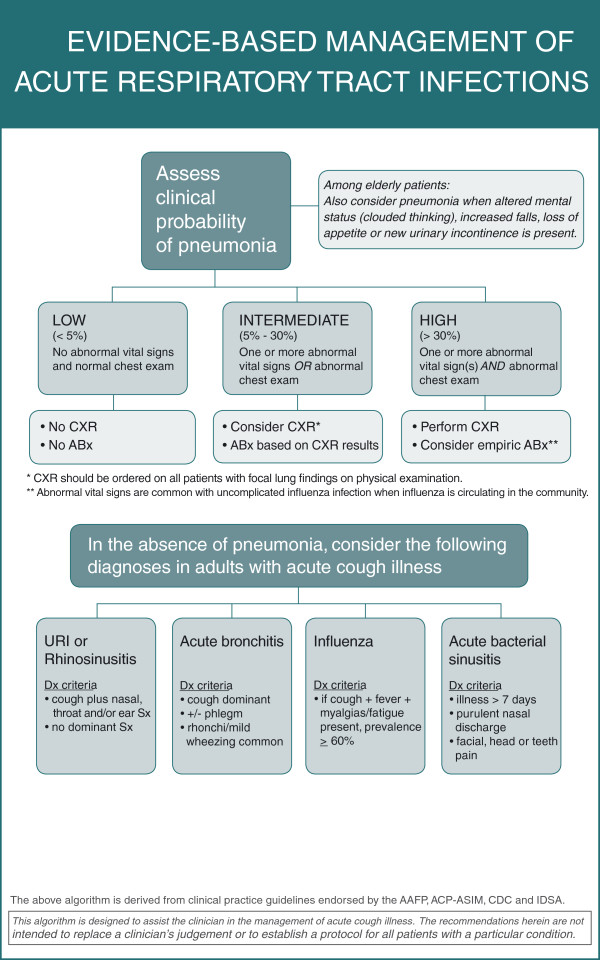
Compared with a survey on antibiotic use conducted 10 years earlier, clinicians demonstrated greater awareness of antibiotic resistance and how it is impacted by individual prescribing decisions—including their own. However, persistent perceived barriers to reducing prescribing included patient expectations, time pressure, and diagnostic uncertainty, and these factors were reported as differentially undermining specific intervention components’ effectiveness. An exam room poster depicting a diagnostic algorithm was the most popular strategy.
Conclusions
Future efforts to reduce antibiotic prescribing should address multi-level barriers identified by clinicians and tailor strategies to differences at individual clinician and group practice levels, focusing in particular on changing how patients and providers make decisions together about antibiotic use.
-
Subjects:
-
Source:BMC Health Serv Res. 2013; 13:462.
-
Pubmed ID:24188573
-
Pubmed Central ID:PMC4228248
-
Document Type:
-
Funding:
-
Place as Subject:
-
Volume:13
-
Collection(s):
-
Main Document Checksum:urn:sha256:75b2ad0d642a9235cb4af05b60e6225734e3aba1e57c915a8e39663f848fc7c9
-
Download URL:
-
File Type:
 [PDF
- 248.92 KB
]
[PDF
- 248.92 KB
]
Supporting Files


File Language:
English
ON THIS PAGE


CDC STACKS serves as an archival repository of CDC-published products including
scientific findings,
journal articles, guidelines, recommendations, or other public health information authored or
co-authored by CDC or funded partners.
As a repository, CDC STACKS retains documents in their original published format to ensure public access to scientific information.
As a repository, CDC STACKS retains documents in their original published format to ensure public access to scientific information.
You May Also Like
COLLECTION
CDC Public Access