



Maresin-1 Reduces the Pro-Inflammatory Response of Bronchial Epithelial Cells to Organic Dust
Supporting Files

-
2013/05/10
-
File Language:
English
Details
-
Journal Article:Respiratory Research
-
Personal Author:
-
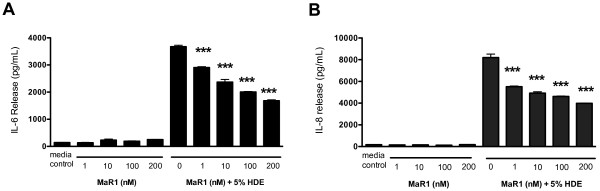
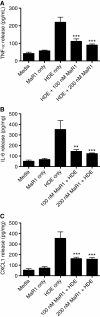
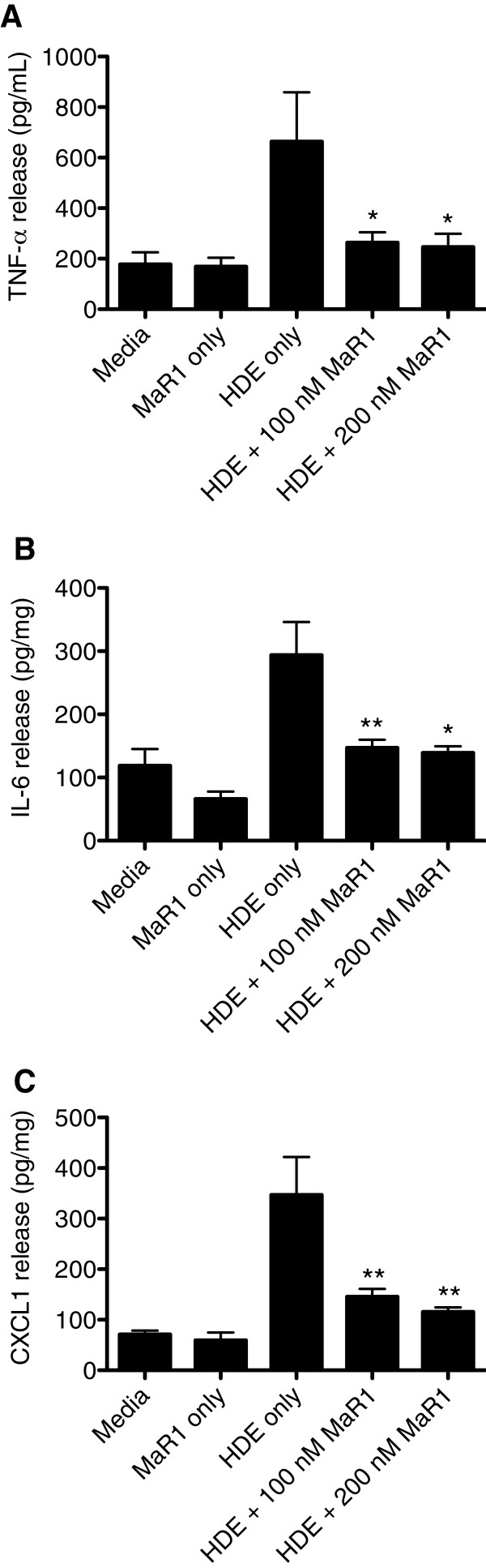
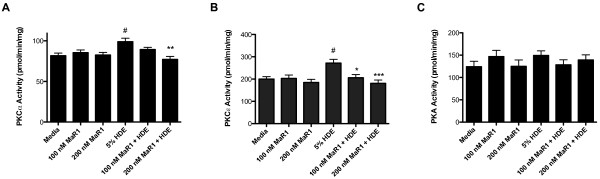
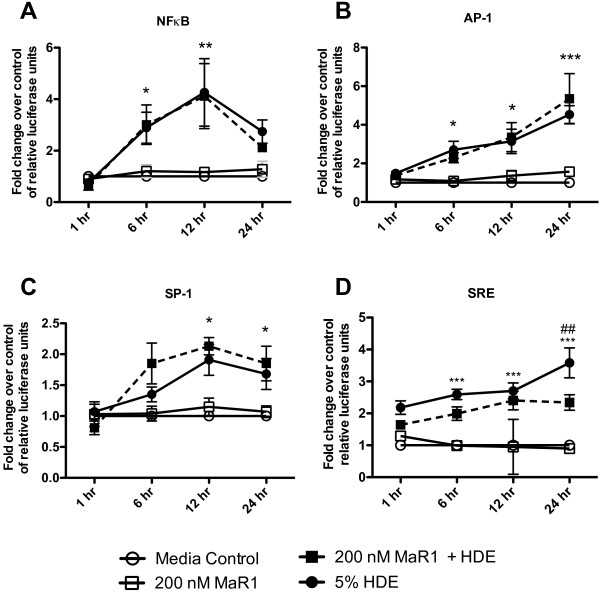
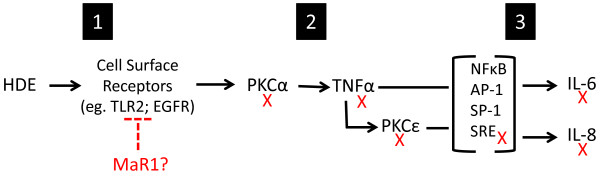
Description:BACKGROUND: Exposure to organic dust causes detrimental airway inflammation. Current preventative and therapeutic measures do not adequately treat resulting disease, necessitating novel therapeutic interventions. Recently identified mediators derived from polyunsaturated fatty acids exhibit anti-inflammatory and pro-resolving actions. We tested the potential of one of these mediators, maresin-1 (MaR1), in reducing organic dust-associated airway inflammation. METHODS: As bronchial epithelial cells (BECs) are pivotal in initiating organic dust-induced inflammation, we investigated the in vitro effects of MaR1 on a human BEC cell line (BEAS-2B). Cells were pretreated for 1 hour with 0-200 nM MaR1, followed by 1-24 hour treatment with 5% hog confinement facility-derived organic dust extract (HDE). Alternatively, a mouse lung slice model was utilized in supportive cytokine studies. Supernatants were harvested and cytokine levels determined via enzyme-linked immunosorbent assays. Epithelial cell protein kinase C (PKC) isoforms a and ?, and PKA activities were assessed via radioactivity assays, and NF?B and MAPK-related signaling mechanisms were investigated using luciferase vector reporters. RESULTS: MaR1 dose-dependently reduced IL-6 and IL-8 production following HDE treatment of BECs. MaR1 also reduced HDE-stimulated cytokine release including TNF-a in a mouse lung slice model when given before or following HDE treatment. Previous studies have established that HDE sequentially activates epithelial PKCa and PKC? at 1 and 6 hours, respectively that regulated TNF-a, IL-6, and IL-8 release. MaR1 pretreatment abrogated these HDE-induced PKC activities. Furthermore, HDE treatment over a 24-hour period revealed temporal increases in NFkB, AP-1, SP-1, and SRE DNA binding activities, using luciferase reporter assays. MaR1 pretreatment did not alter the activation of NFkB, AP-1, or SP-1, but did reduce the activation of DNA binding at SRE. CONCLUSIONS: These observations indicate a role for MaR1 in attenuating the pro-inflammatory responses of BECs to organic dust extract, through a mechanism that does not appear to rely on reduced NFkB, AP-1, or SP-1-related signaling, but may be mediated partly through SRE-related signaling. These data offer insights for a novel mechanistic action of MaR1 in bronchial epithelial cells, and support future in vivo studies to test MaR1's utility in reducing the deleterious inflammatory effects of environmental dust exposures. [Description provided by NIOSH]
-
Subjects:
-
Keywords:
-
Source:Respir Res 2013 May; 14:51
-
ISSN:1465-9921
-
Pubmed ID:23663457
-
Pubmed Central ID:PMC3668181
-
Document Type:
-
Funding:
-
Genre:
-
Place as Subject:
-
CIO:
-
Topic:
-
Location:
-
Pages in Document:10 pdf pages
-
Volume:14
-
NIOSHTIC Number:nn:20046026
-
Email:dromberg@unmc.edu
-
Federal Fiscal Year:2013
-
NORA Priority Area:
-
Performing Organization:University of Nebraska Medical Center, Omaha, Nebraska
-
Peer Reviewed:True
-
Collection(s):
-
Main Document Checksum:urn:sha-512:fec0b9204ff5c89802c5dd1089484a2b053d52981dd893e88828c3b3dde263112119b8fde68b6ed48efdb3ec2422eeca5fe09a6c827c3cfc75594fcded545cfe
-
Download URL:
-
File Type:
 [PDF
- 410.83 KB
]
[PDF
- 410.83 KB
]
Supporting Files


File Language:
English
 Was this page helpful?
 Found an issue?





CDC STACKS serves as an archival repository of CDC-published products including
scientific findings,
journal articles, guidelines, recommendations, or other public health information authored or
co-authored by CDC or funded partners.
As a repository, CDC STACKS retains documents in their original published format to ensure public access to scientific information.
As a repository, CDC STACKS retains documents in their original published format to ensure public access to scientific information.
You May Also Like