


Characteristics and Survival of Patients with End Stage Renal Disease and Spina Bifida in the United States Renal Data System
Supporting Files

-
Aug 25 2014
-
File Language:
English
Details
-
Alternative Title:J Urol
-
Personal Author:
-
Description:Purpose
We describe the characteristics, treatments and survival of patients with spina bifida in whom end stage renal disease developed from 2004 through 2008 in the United States Renal Data System.
Materials and Methods
We used ICD-9-CM code 741.* to identify individuals with spina bifida using hospital inpatient data from 1977 to 2010, and physician and facility claims from 2004 to 2008. We constructed a 5:1 comparison group of patients with end stage renal disease without spina bifida matched by age at first end stage renal disease service, gender and race/ethnicity. We assessed the risk of mortality and of renal transplantation while on dialysis using multivariate cause specific proportional hazards survival analysis. We also compared survival after the first renal transplant from the first end stage renal disease service to August 2011.
Results
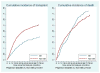
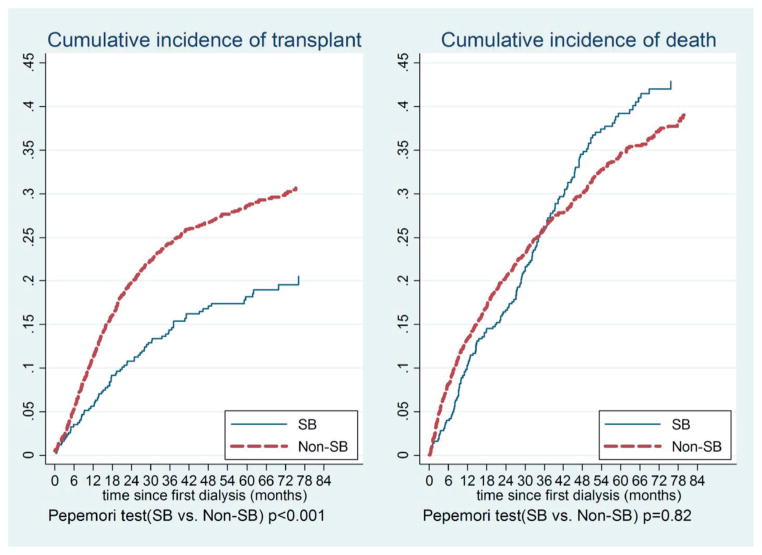
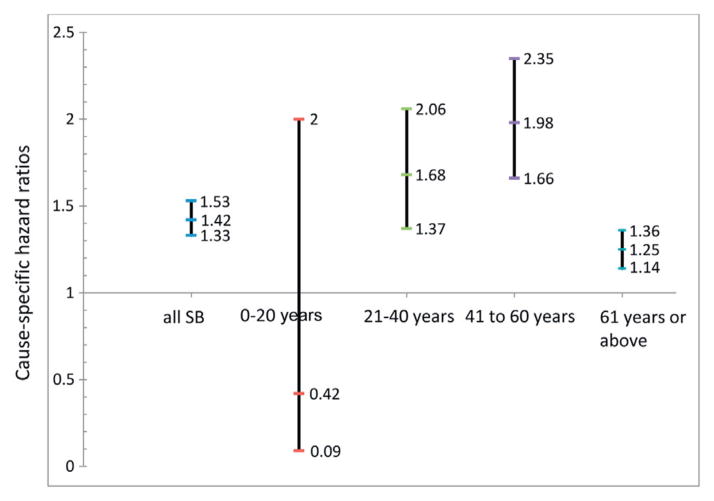
We identified 439 patients with end stage renal disease and spina bifida in whom end stage renal disease developed at an average younger age than in patients without spina bifida (41 vs 62 years, p <0.001) and in whom urological issues were the most common primary cause of end stage renal disease. Compared to patients with end stage renal disease without spina bifida those who had spina bifida showed a similar mortality hazard on dialysis and after transplantation. However, patients with end stage renal disease without spina bifida were more likely to undergo renal transplantation than patients with spina bifida (HR 1.51, 95% CI 1.13–2.03). Hospitalizations related to urinary tract infections were positively associated with the risk of death on dialysis in patients with end stage renal disease and spina bifida (HR 1.42, 95% CI 1.33–1.53).
Conclusions
Spina bifida was not associated with increased mortality in patients with end stage renal disease on dialysis or after renal transplantation. Proper urological and bladder management is imperative in patients with spina bifida, particularly in adults.
-
Subjects:
-
Source:J Urol. 2015; 193(2):558-564.
-
Pubmed ID:25167993
-
Pubmed Central ID:PMC4481865
-
Document Type:
-
Funding:
-
Place as Subject:
-
Volume:193
-
Issue:2
-
Collection(s):
-
Main Document Checksum:urn:sha256:32192cf5f19092cc01fa2dee47594e020e44eab099305886ffbf87c9cc75b91b
-
Download URL:
-
File Type:
 [PDF
- 498.67 KB
]
[PDF
- 498.67 KB
]
Supporting Files


File Language:
English
ON THIS PAGE




CDC STACKS serves as an archival repository of CDC-published products including
scientific findings,
journal articles, guidelines, recommendations, or other public health information authored or
co-authored by CDC or funded partners.
As a repository, CDC STACKS retains documents in their original published format to ensure public access to scientific information.
As a repository, CDC STACKS retains documents in their original published format to ensure public access to scientific information.
You May Also Like
COLLECTION
CDC Public Access