


Macacine Herpesvirus 1 in Long-Tailed Macaques, Malaysia, 2009–2011
Supporting Files
Public Domain

-
Jul 2015
-
File Language:
English
Details
-
Alternative Title:Emerg Infect Dis
-
Personal Author:
-
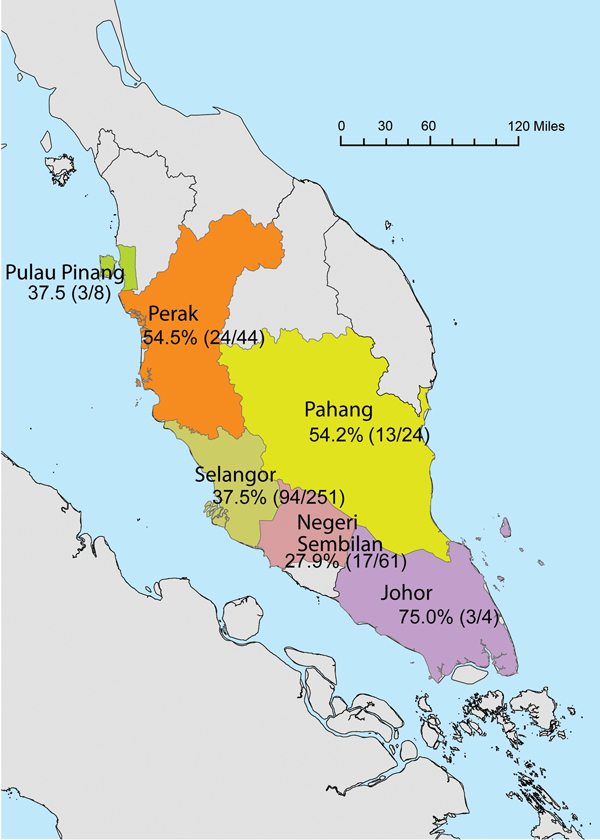
Description:Macacine herpesvirus 1 (MaHV1; B virus) naturally infects macaques (Macaca spp.) and can cause fatal encephalitis in humans. In Peninsular Malaysia, wild macaques are abundant, and translocation is used to mitigate human-macaque conflict. Most adult macaques are infected with MaHV1, although the risk for transmission to persons who handle them during capture and translocation is unknown. We investigated MaHV1 shedding among 392 long-tailed macaques (M. fascicularis) after capture and translocation by the Department of Wildlife and National Parks in Peninsular Malaysia, during 2009-2011. For detection of MaHV1 DNA, PCR was performed on urogenital and oropharyngeal swab samples. Overall, 39% of macaques were shedding MaHV1 DNA; rates of DNA detection did not differ between sample types. This study demonstrates that MaHV1 was shed by a substantial proportion of macaques after capture and transport and suggests that persons handling macaques under these circumstances might be at risk for exposure to MaHV1.
-
Subjects:
-
Source:Emerg Infect Dis. 21(7):1107-1113
-
Pubmed ID:26080081
-
Pubmed Central ID:PMC4480374
-
Document Type:
-
Volume:21
-
Issue:7
-
Collection(s):
-
Main Document Checksum:urn:sha256:74df0db797c8ffcd188760b06d670fa5854397f2ae88e8ee482d1ef0f609f791
-
Download URL:
-
File Type:
 [PDF
- 964.75 KB
]
[PDF
- 964.75 KB
]
Supporting Files


File Language:
English
ON THIS PAGE

CDC STACKS serves as an archival repository of CDC-published products including
scientific findings,
journal articles, guidelines, recommendations, or other public health information authored or
co-authored by CDC or funded partners.
As a repository, CDC STACKS retains documents in their original published format to ensure public access to scientific information.
As a repository, CDC STACKS retains documents in their original published format to ensure public access to scientific information.
You May Also Like
COLLECTION
Emerging Infectious Diseases