


Mosquitoes Inoculate High Doses of West Nile Virus as They Probe and Feed on Live Hosts
Supporting Files

-
Sep 14 2007
-
File Language:
English
Details
-
Alternative Title:PLoS Pathog
-
Personal Author:
-
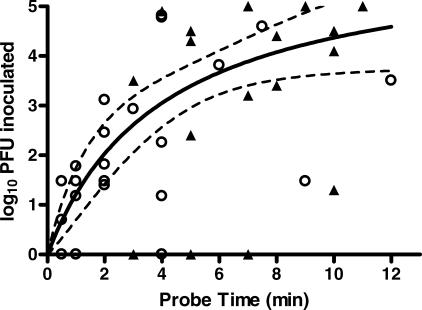
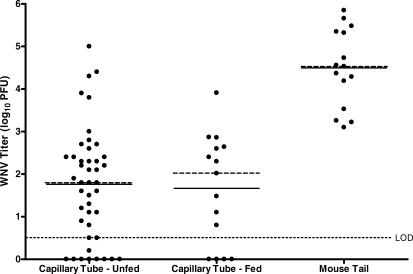
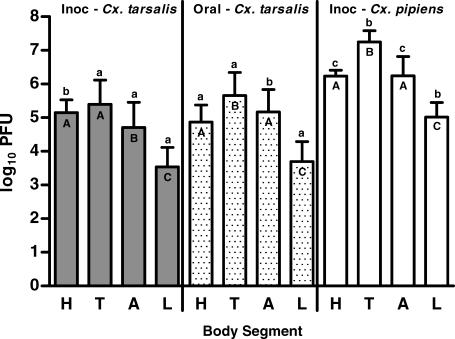
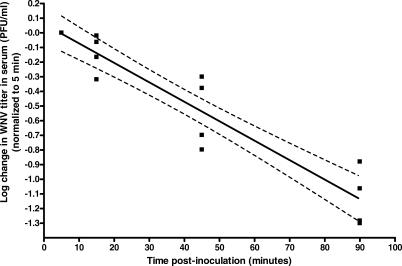
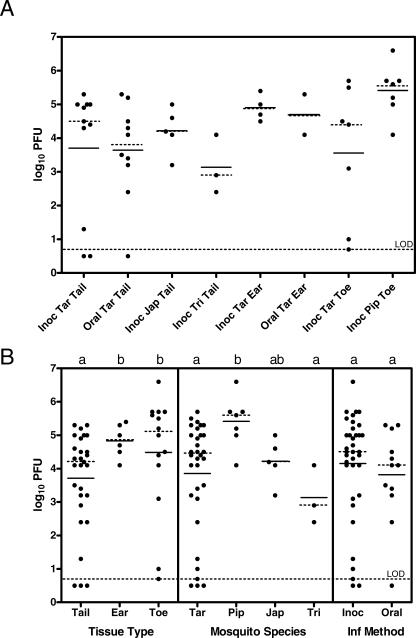
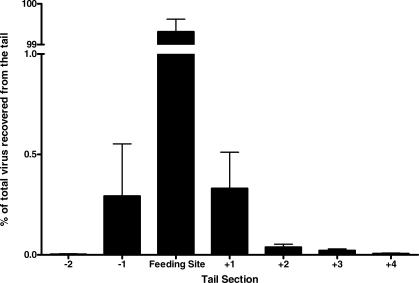
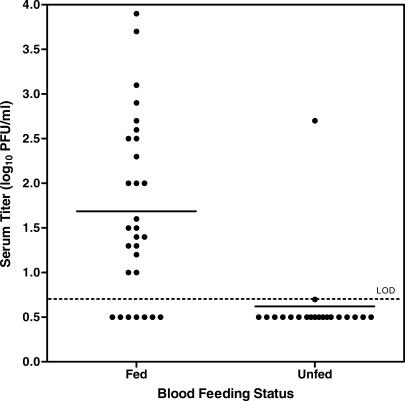
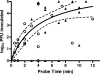
Description:Since it was first introduced into the United States in 1999, West Nile virus (WNV) has caused significant disease in humans, horses, and other animals. WNV is transmitted to humans and other vertebrate hosts by female mosquitoes as they take a blood meal. Currently, the amount of virus inoculated by mosquitoes while feeding on live hosts is unknown, and accurate estimates are critical so that appropriate challenge doses can be used in vaccine and viral pathogenesis studies. Here, we use a novel technique to determine the dose of WNV inoculated by mosquitoes as they probe and feed on the peripheral tissues of live animals. We found that mosquitoes inoculate high doses of virus into host tissues; these doses are 10 to 1,000 times higher than previous estimates obtained with assays that do not allow mosquitoes to probe or feed naturally. We also found that mosquitoes inoculate low doses of virus directly into the blood while blood feeding. Direct introduction of virus into the blood may alter viral tropism and cause low rates of infection in co-feeding mosquitoes. Our study provides new insights into the transmission of an emerging viral pathogen and the interaction of virus with its mosquito vector and vertebrate host.
-
Subjects:
-
Source:PLoS Pathog. 2007; 3(9).
-
Document Type:
-
Funding:
-
Volume:3
-
Issue:9
-
Collection(s):
-
Main Document Checksum:urn:sha256:5718362e2582ae926df9ec69536d409288f3ea73b4ecd5b393fb21a368d7d53c
-
Download URL:
-
File Type:
 [PDF
- 196.76 KB
]
[PDF
- 196.76 KB
]
Supporting Files


File Language:
English
ON THIS PAGE




CDC STACKS serves as an archival repository of CDC-published products including
scientific findings,
journal articles, guidelines, recommendations, or other public health information authored or
co-authored by CDC or funded partners.
As a repository, CDC STACKS retains documents in their original published format to ensure public access to scientific information.
As a repository, CDC STACKS retains documents in their original published format to ensure public access to scientific information.
You May Also Like
COLLECTION
CDC Public Access