


Quantitative trait analysis of the development of pulmonary tolerance to inhaled zinc oxide in mice
Supporting Files

-
Jul 18 2005
Details
-
Alternative Title:Respir Res
-
Personal Author:
-
Description:Background
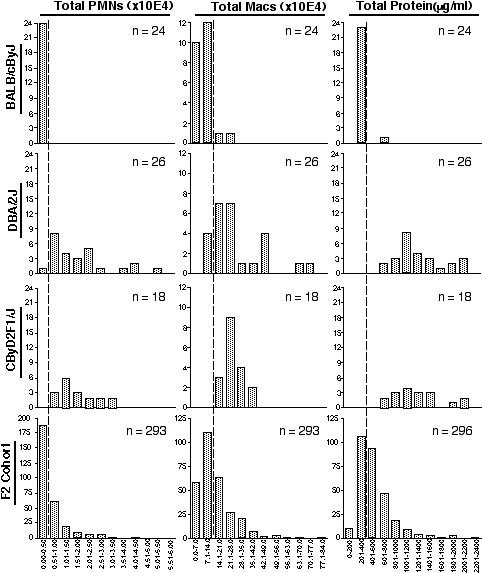
Individuals may develop tolerance to the induction of adverse pulmonary effects following repeated exposures to inhaled toxicants. Previously, we demonstrated that genetic background plays an important role in the development of pulmonary tolerance to inhaled zinc oxide (ZnO) in inbred mouse strains, as assessed by polymorphonuclear leukocytes (PMNs), macrophages, and total protein in bronchoalveolar lavage (BAL) phenotypes. The BALB/cByJ (CBy) and DBA/2J (D2) strains were identified as tolerant and non-tolerant, respectively. The present study was designed to identify candidate genes that control the development of pulmonary tolerance to inhaled ZnO.
Methods
Genome-wide linkage analyses were performed on a CByD2F2 mouse cohort phenotyped for BAL protein, PMNs, and macrophages following 5 consecutive days of exposure to 1.0 mg/m3 inhaled ZnO for 3 hours/day. A haplotype analysis was carried out to determine the contribution of each quantitative trait locus (QTL) and QTL combination to the overall BAL protein phenotype. Candidate genes were identified within each QTL interval using the positional candidate gene approach.
Results
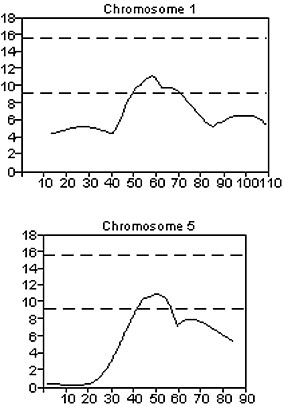
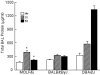
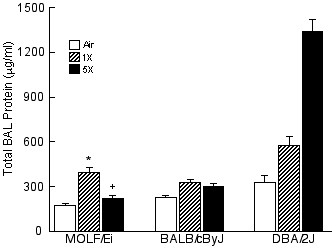
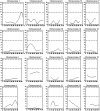
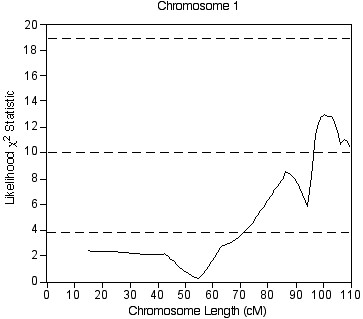
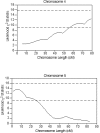
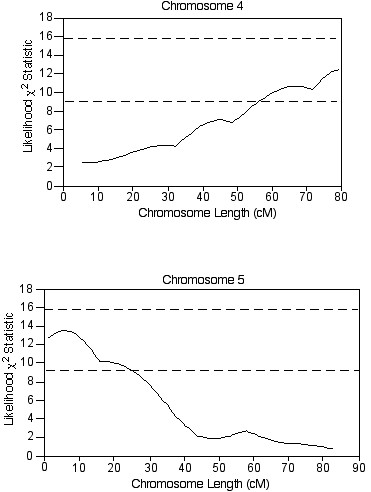
A significant quantitative trait locus (QTL) on chromosome 1, as well as suggestive QTLs on chromosomes 4 and 5, for the BAL protein phenotype, was established. Suggestive QTLs for the BAL PMN and macrophage phenotypes were also identified on chromosomes 1 and 5, respectively. Analysis of specific haplotypes supports the combined effect of three QTLs in the overall protein phenotype. Toll-like receptor 5 (Tlr5) was identified as an interesting candidate gene within the significant QTL for BAL protein on chromosome 1. Wild-derived Tlr5-mutant MOLF/Ei mice were tolerant to BAL protein following repeated ZnO exposure.
Conclusion
Genetic background is an important influence in the acquisition of pulmonary tolerance to BAL protein, PMNs, and macrophages following ZnO exposure. Promising candidate genes exist within the identified QTL intervals that would be good targets for additional studies, including Tlr5. The implications of tolerance to health risks in humans are numerous, and this study furthers the understanding of gene-environment interactions that are likely to be important factors from person-to-person in regulating the development of pulmonary tolerance to inhaled toxicants.
-
Subjects:
-
Source:Respir Res. 2005; 6(1):73.
-
Document Type:
-
Funding:
-
Volume:6
-
Issue:1
-
Collection(s):
-
Main Document Checksum:urn:sha256:cf16265396b5cf4cfc0a5d1a1d27fa8429d14ec586f2fdea23ef09e74b19d8aa
-
Download URL:
-
File Type:
 [PDF
- 367.56 KB
]
[PDF
- 367.56 KB
]
Supporting Files


ON THIS PAGE






CDC STACKS serves as an archival repository of CDC-published products including
scientific findings,
journal articles, guidelines, recommendations, or other public health information authored or
co-authored by CDC or funded partners.
As a repository, CDC STACKS retains documents in their original published format to ensure public access to scientific information.
As a repository, CDC STACKS retains documents in their original published format to ensure public access to scientific information.
You May Also Like
COLLECTION
CDC Public Access