



National Tuberculosis Genotyping and Surveillance Network: Analysis of the Genotype Database
Multi-Language
Supporting Files
Public Domain

-
Nov 2002
File Language:
Details
-
Alternative Title:Emerg Infect Dis
-
Personal Author:
-
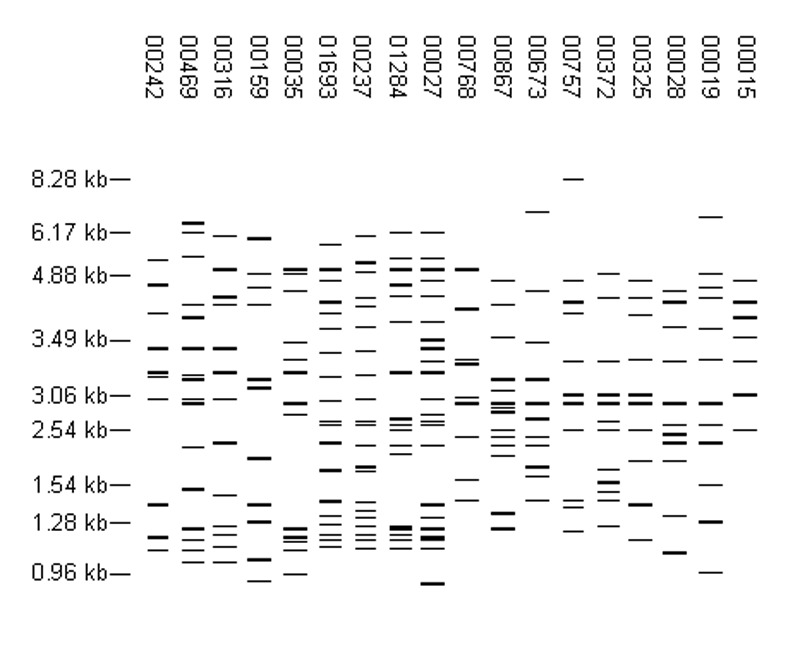
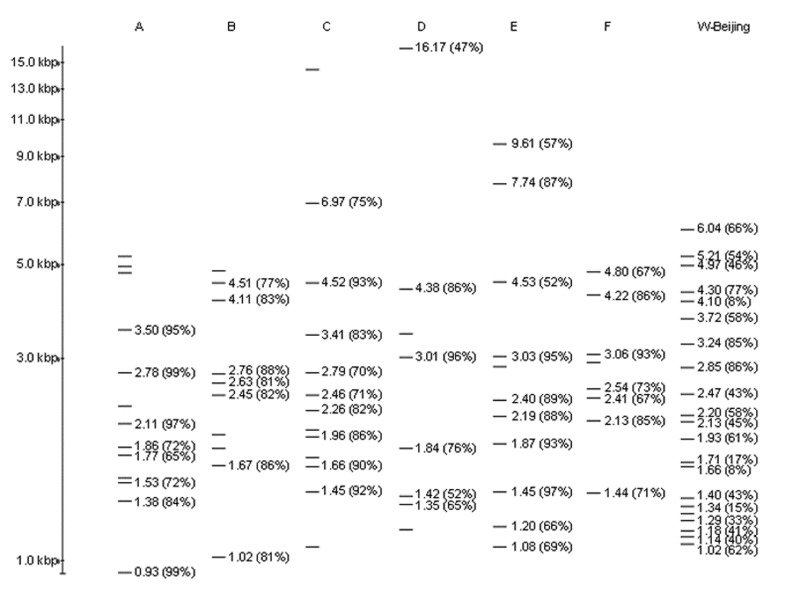
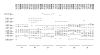
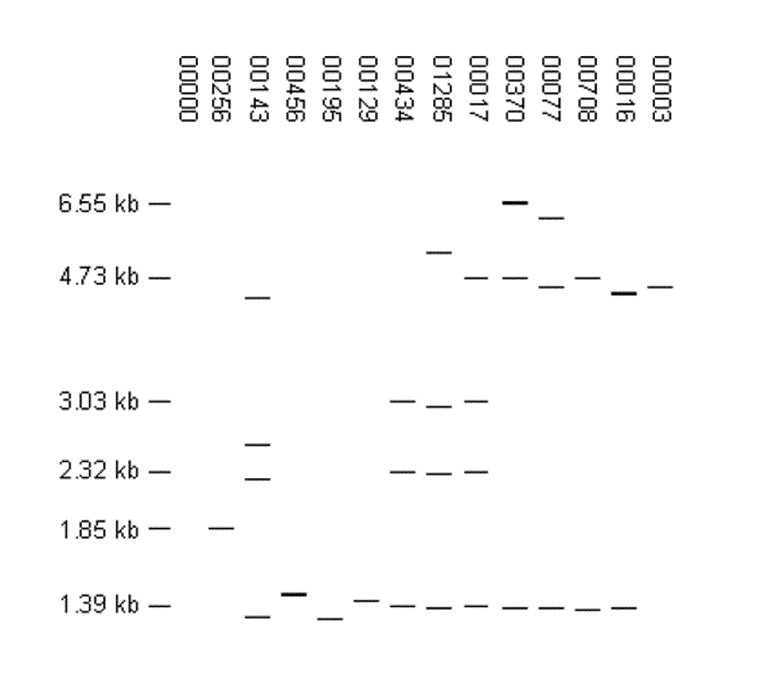
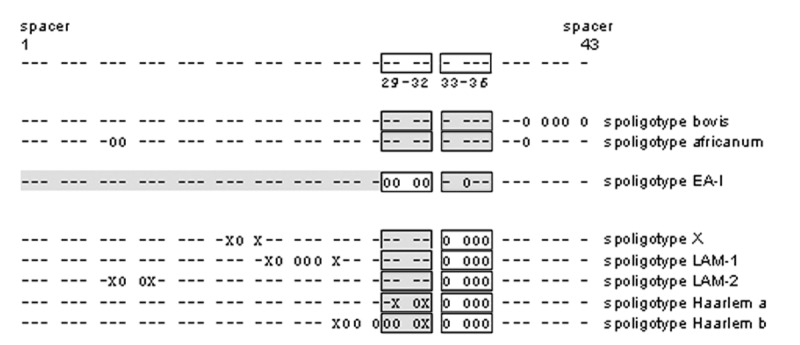
Description:As part of the National Tuberculosis and Genotyping Surveillance Network, isolates obtained from all new cases of tuberculosis occurring in seven geographically separate surveillance sites from 1996 through 2000 were genotyped. A total of 10883 isolates were fingerprinted by the IS6110-restriction fragment length polymorphism method, yielding 6128 distinct patterns. Low-copy isolates (those with six or fewer bands) were also spoligotyped. The distribution of specific genotype clusters was examined. Databases were also examined for families of related genotypes. Analysis of IS6110 patterns showed 497 patterns related to the W-Beijing family; these patterns represent 946 (9%) of all isolates in the study. Six new sets of related fingerprint patterns were also proposed for isolates containing 6-15 copies of IS6110. These fingerprint sets contain up to 251 patterns and 414 isolates; together, they contain 21% of isolates in this copy number range. These sets of fingerprints may represent endemic strains distributed across the United States.
-
Subjects:
-
Source:Emerg Infect Dis. 8(11):1294-1302.
-
Document Type:
-
Corporate as Subject:
-
Place as Subject:
-
Location:
-
Volume:8
-
Issue:11
-
Download URL:
-
File Type:
 [PDF - 820.90 KB]
 -
Collection(s):
-
Main Document Checksum:urn:sha-512:cd756c277eba4c6c931a7f91f198500f5d1a183474dea9e60cc3b895c81563d9f046b270a2e801a2eb3a3db0e5e01644202cddd229bf57cec448c7e2ed800d3f
Supporting Files


File Language:
 Was this page helpful?
 Found an issue?




CDC STACKS serves as an archival repository of CDC-published products including
scientific findings, journal articles, guidelines, recommendations, or other public health information authored or
co-authored by CDC or funded partners.
As a repository, CDC STACKS retains documents in their original published format to ensure public access to scientific information.
As a repository, CDC STACKS retains documents in their original published format to ensure public access to scientific information.
You May Also Like
COLLECTION
Emerging Infectious Diseases