


Acute Silica Toxicity: Attenuation by Amiodarone-Induced Pulmonary Phospholipidosis
Supporting Files

-
1994/04/01
File Language:
English
Details
-
Journal Article:Environmental Health Perspectives
-
Personal Author:
-
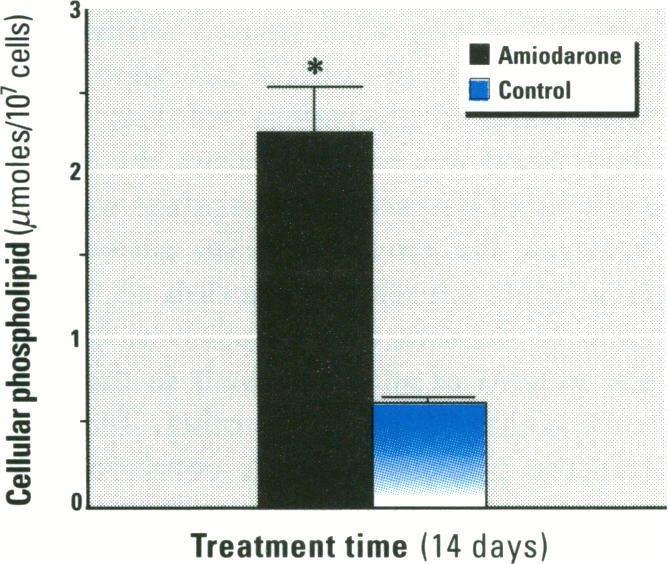
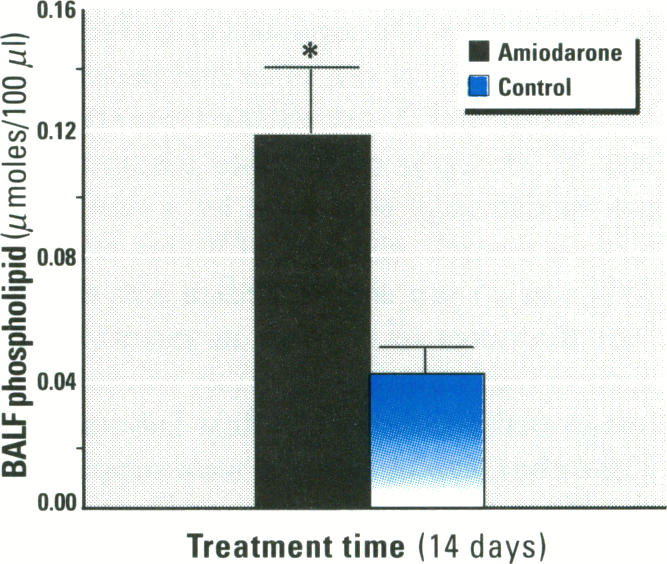
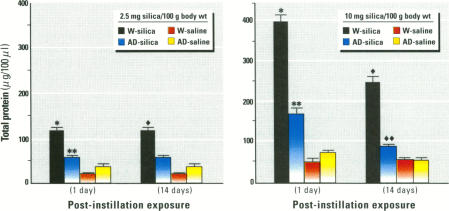
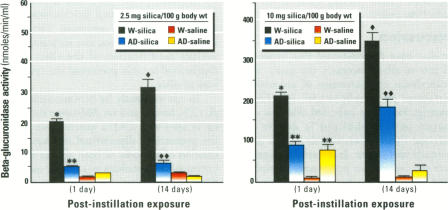
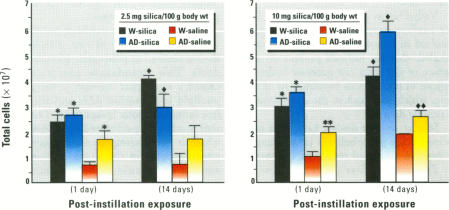
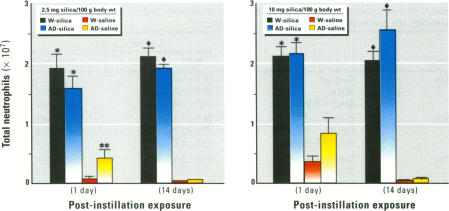
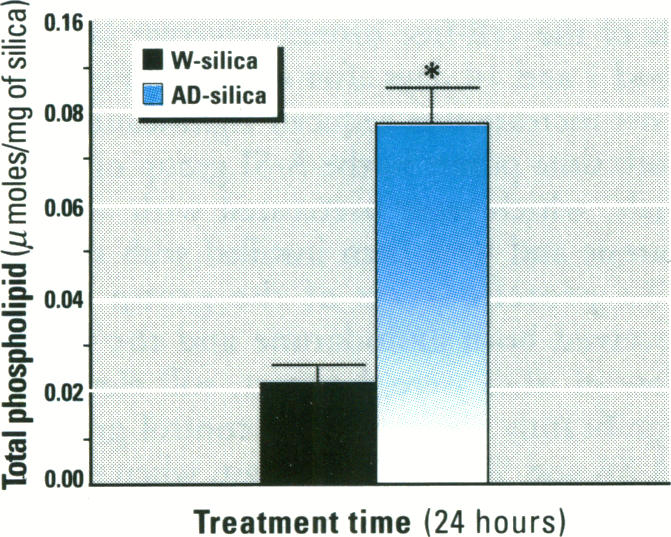
Description:The effect of amiodarone (1951253) (AD) on silica (14808607) induced pulmonary toxicity was studied in rats. Male Fischer-344-rats were gavaged daily with 0 or 150mg/kg AD for 14 days. Selected rats were killed after day 14. Lavagate and recovered alveolar macrophages were assayed for total phospholipids. The macrophages were analyzed for AD and desethylamiodarone (DAD). Other AD treated or untreated rats were instilled intratracheally with 0, 2.5, or 10mg per 100 grams (mg/100g) silica dust having a mean particle size of less than 5 micrometers. One or 14 days after silica instillation, the rats were killed. The extent of lung damage was assessed by determining changes in lavagate cellularity, total protein content, and beta- glucuronidase (bGlu) activity. Alveolar macrophages were recovered by lavage from rats that had been instilled with 0 or 150mg/kg AD for 14 days (phospholipidotic macrophages). They were incubated with 0 or 0.5mg per milliliter native or Survanta coated silica for 24, 48, or 72 hours. Cytotoxicity was assessed by determining decreases in cell viability using the trypan-blue exclusion test. Fourteen days treatment with AD resulted in substantial accumulations of AD and DAD and significant increases in total phospholipids in alveolar macrophages recovered by lavage. Lavagate total phospholipid content was also significantly increased. AD inhibited the silica induced increases in lavagate total protein content and bGlu activity. The greatest effect was seen in rats instilled with 2.5g/100g silica. Silica induced increases in lavagate total cellularity and neutrophil counts were not affected by AD. In-vitro, silica significantly decreased the viability of naive and phospholipidotic macrophages at all time points. Survanta coated silica significantly decreased the viability of naive macrophages. Survanta coated silica caused only slight decreases in the viability of phospholipidotic macrophages. The authors conclude that AD induces pulmonary phospholipidosis that attenuates silica pulmonary toxicity. The mechanism of the attenuating effect of phospholipidosis may involve increases in extracellular phospholipids in the air spaces and an AD mediated inhibition of pulmonary phospholipases. [Description provided by NIOSH]
-
Subjects:
-
Keywords:
-
Source:Environ Health Perspect 1994 Apr; 102(4):372-378
-
ISSN:0091-6765
-
Pubmed ID:7925177
-
Pubmed Central ID:PMC1566962
-
Document Type:
-
Funding:
-
Genre:
-
Place as Subject:
-
CIO:
-
Topic:
-
Location:
-
Pages in Document:7 pdf pages
-
Volume:102
-
Issue:4
-
NIOSHTIC Number:nn:00220729
-
Contact Point Address:Department of Pharmacology and Toxicology, Robert C. Byrd Health Sciences Center, West Virginia University, Morgantown, WV 26506
-
CAS Registry Number:
-
Federal Fiscal Year:1994
-
NORA Priority Area:
-
Performing Organization:Center to Protect Workers' Rights
-
Peer Reviewed:True
-
Collection(s):
-
Main Document Checksum:urn:sha-512:e8c223d22fe5970a0255a037ff74545375d66809961716d1cb85b6ab2362731c576f51cc1725fe4ce05fc18f9dbda63aca08d0e68cd16ca5626fb0993209cf3d
-
Download URL:
-
File Type:
 [PDF
- 3.02 MB
]
[PDF
- 3.02 MB
]
Supporting Files


File Language:
English
ON THIS PAGE






CDC STACKS serves as an archival repository of CDC-published products including
scientific findings,
journal articles, guidelines, recommendations, or other public health information authored or
co-authored by CDC or funded partners.
As a repository, CDC STACKS retains documents in their original published format to ensure public access to scientific information.
As a repository, CDC STACKS retains documents in their original published format to ensure public access to scientific information.
You May Also Like