



Epidemiology of Urban Canine Rabies, Santa Cruz, Bolivia, 1972–1997
Supporting Files
Public Domain

-
May 2002
File Language:
English
Details
-
Alternative Title:Emerg Infect Dis
-
Personal Author:
-
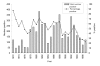
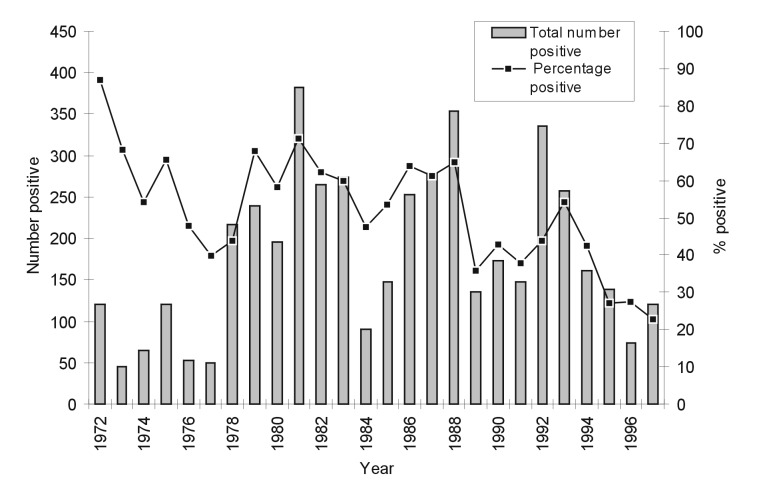
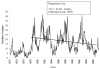
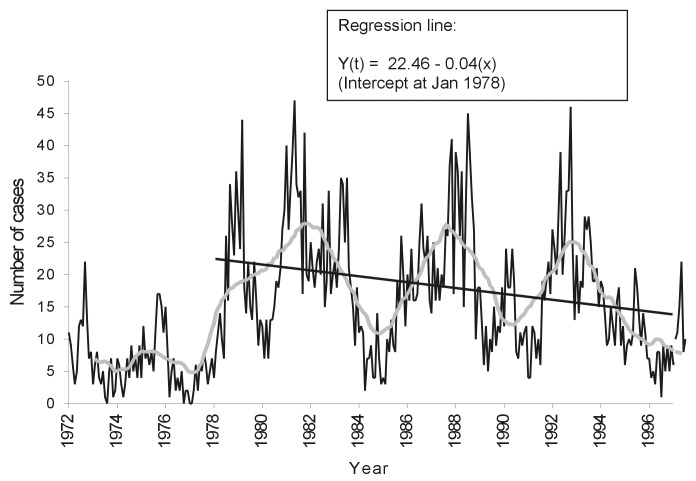
Description:We analyzed laboratory data from 1972 to 1997 from Santa Cruz, Bolivia, to determine risk factors for laboratory canine samples' testing positive for Rabies virus (RABV). Of 9,803 samples, 50.7% tested positive for RABV; the number of cases and the percentage positive has dropped significantly since 1978. A 5- to 6-year cycle in rabies incidence was clearly apparent, though no seasonality was noted. Male dogs had significantly increased odds of testing positive for RABV (odds ratio OR=1.14), as did 1- to 2-year-old dogs (OR=1.73); younger and older dogs were at lower risk. Samples submitted from the poorer suburbs of the city were more likely to test positive for RABV (OR=1.71). Knowledge of the distribution of endemic canine rabies in an urban area will help focus control measures in a resource-poor environment.
-
Subjects:
-
Source:Emerg Infect Dis. 8(5):458-461.
-
Document Type:
-
Place as Subject:
-
Volume:8
-
Issue:5
-
Download URL:
-
File Type:
 [PDF - 230.11 KB]
 -
Collection(s):
-
Main Document Checksum:urn:sha-512:1f8279ea84e37a502c1deba319a6c16d5d1bf8596b8a224671e84309e9c57db5f87a84f535c86858e366b89bed4bdbcc2e8eafd9b21bf19cddc5bc60737f0252
Supporting Files


File Language:
English
 Was this page helpful?
 Found an issue?

CDC STACKS serves as an archival repository of CDC-published products including
scientific findings, journal articles, guidelines, recommendations, or other public health information authored or
co-authored by CDC or funded partners.
As a repository, CDC STACKS retains documents in their original published format to ensure public access to scientific information.
As a repository, CDC STACKS retains documents in their original published format to ensure public access to scientific information.
You May Also Like
COLLECTION
Emerging Infectious Diseases