



Molecular speciation and dynamics of oxidized triacylglycerols in lipid droplets: Mass spectrometry and coarse-grained simulations
Supporting Files

-
August 10 2014 ; 11-2014
-
Available in CDC Stacks on 2015-11-01T00:00:00Z
File Language:
English
Details
-
Alternative Title:Free Radic Biol Med
-
Personal Author:
-
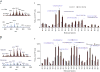
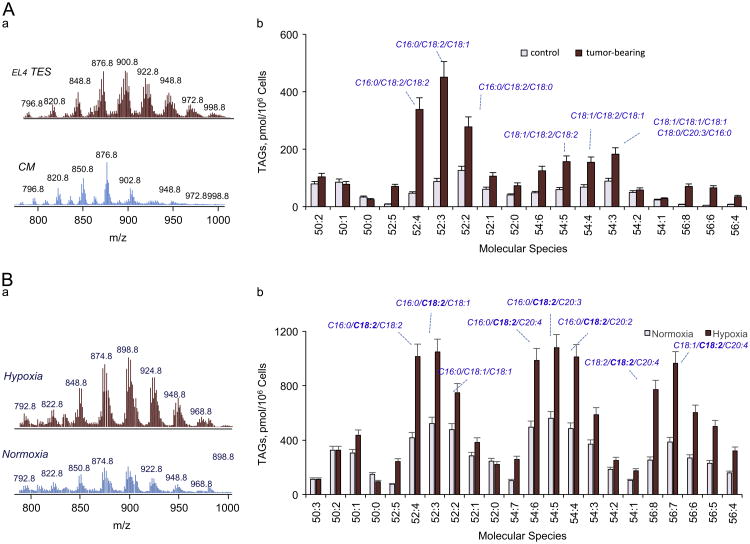
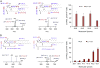
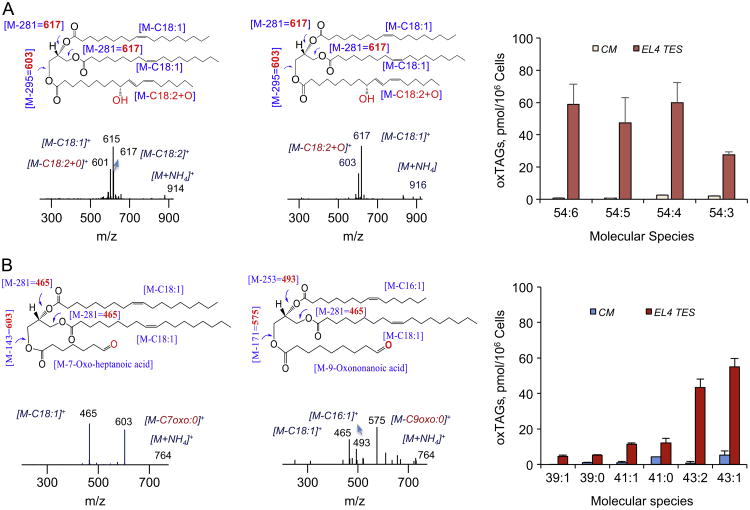
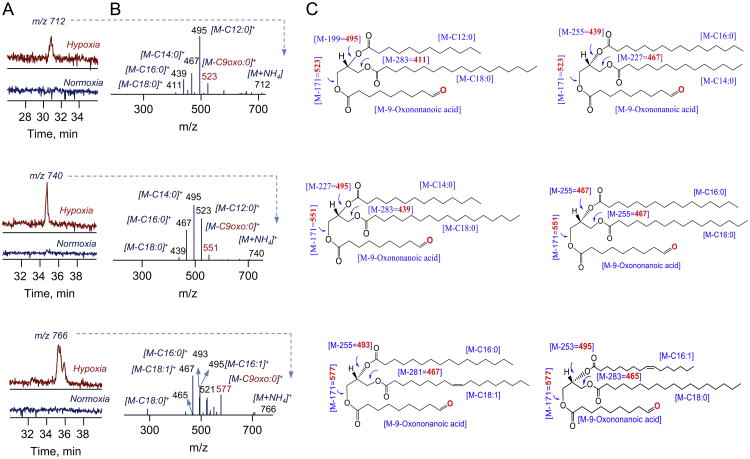
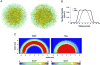
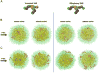
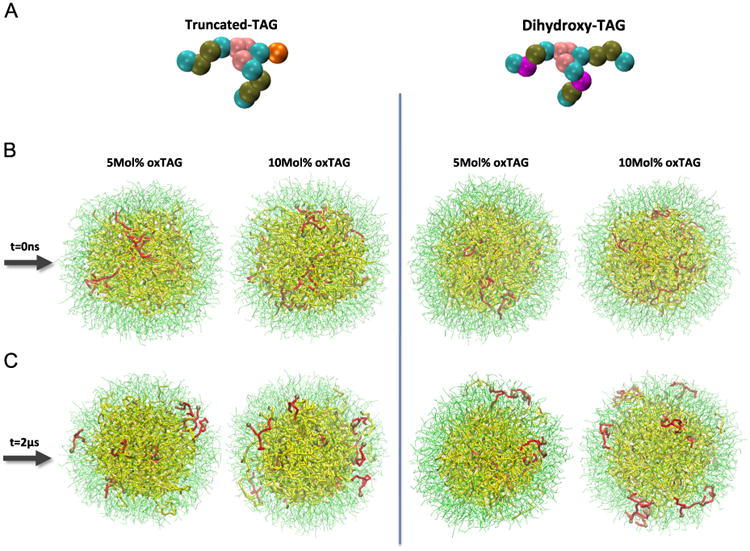
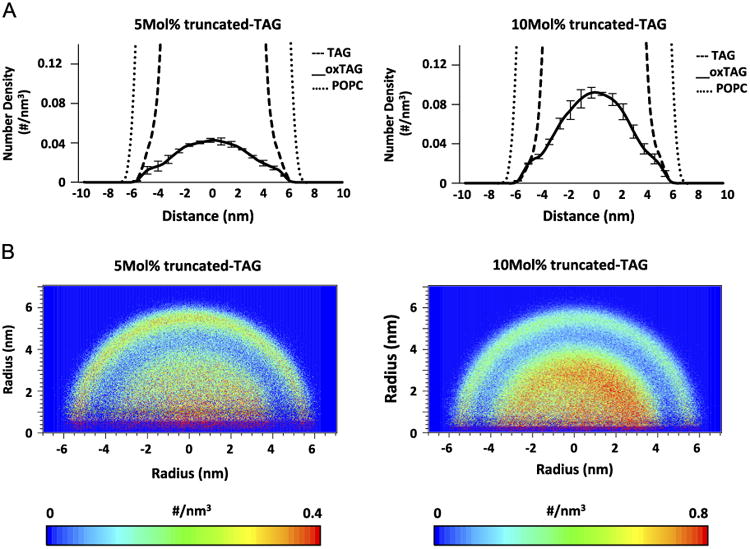
Description:Lipid droplets (LDs) are ubiquitous and physiologically active organelles regulating storage and mobilization of lipids in response to metabolic demands. Among the constituent LD neutral lipids, such as triacylglycerols, cholesterol esters, and free fatty acids, oxidizable polyunsaturated molecular species may be quite abundant, yet the structural and functional roles of their oxidation products have not been studied. Our previous work documented the presence of these peroxidized species in LDs. Assuming that hydrophilic oxygen-containing functionalities may markedly change the hydrophobic/hydrophilic molecular balance, here we utilized computational modeling to test the hypothesis that lipid peroxidation causes redistribution of lipids between the highly hydrophobic core and the polar surface (phospho)lipid monolayer-the area enriched with integrated enzymatic machinery. Using quantitative liquid chromatography/mass spectrometry, we characterized molecular speciation of oxTAGs in LDs of dendritic cells in cancer and hypoxic trophoblasts cells as two cellular models associated with dyslipidemia. Among the many types of oxidized lipids identified, we found that oxidatively truncated forms and hydroxyl derivatives of TAGs were the prevailing oxidized lipid species in LDs in both cell types. Using coarse-grained molecular dynamics (CG-MD) simulations we established that lipid oxidation changed their partitioning whereby oxidized lipids migrated into the outer monolayer of the LD, where they can affect essential metabolic pathways and undergo conversions, possibly leading to the formation of oxygenated lipid mediators.
-
Subjects:
- Article
- Lipid droplet
- Neutral lipids
- Lipid oxidation
- Hypoxia
- Cancer
- Chromatography, Liquid
- Colonic Neoplasms
- Humans
- Hydrophobic and Hydrophilic Interactions
- Lipid Droplets
- Lipids
- Lymphoma
- Molecular Dynamics Simulation
- Oxidation-Reduction
- Spectrometry, Mass, Matrix-Assisted Laser Desorption-Ionization
- Triglycerides
- Trophoblasts
- Tumor Cells, Cultured
-
Source:Free Radic Biol Med. 76:53-60
-
Pubmed ID:25110833
-
Pubmed Central ID:PMC4276254
-
Document Type:
-
Funding:R01 CA165065/CA/NCI NIH HHS/United States ; R01 ES020693/ES/NIEHS NIH HHS/United States ; R01 OH008282/OH/NIOSH CDC HHS/United States ; U19 AI068021/AI/NIAID NIH HHS/United States ; R01CA165065/CA/NCI NIH HHS/United States ; R01 NS076511/NS/NINDS NIH HHS/United States ; U19AI068021/AI/NIAID NIH HHS/United States ; OH008282/OH/NIOSH CDC HHS/United States ; R01 ES011597/ES/NIEHS NIH HHS/United States ; P01 HL114453/HL/NHLBI NIH HHS/United States ; R01ES020693/ES/NIEHS NIH HHS/United States ; R01ES011597/ES/NIEHS NIH HHS/United States ; P01 NS059806/NS/NINDS NIH HHS/United States ; P01HD069316/HD/NICHD NIH HHS/United States ; P01 HD069316/HD/NICHD NIH HHS/United States ; P01HL114453/HL/NHLBI NIH HHS/United States
-
Volume:76
-
Download URL:
-
File Type:
 [PDF - 1.02 MB]
 -
Collection(s):
-
Main Document Checksum:urn:sha256:86d377864832b58559231ddc93efd3e2e1a6edfd6b156cafdd107ab833165743
Supporting Files


File Language:
English
 Was this page helpful?
 Found an issue?




CDC STACKS serves as an archival repository of CDC-published products including
scientific findings, journal articles, guidelines, recommendations, or other public health information authored or
co-authored by CDC or funded partners.
As a repository, CDC STACKS retains documents in their original published format to ensure public access to scientific information.
As a repository, CDC STACKS retains documents in their original published format to ensure public access to scientific information.
You May Also Like
COLLECTION
CDC Public Access