



Autonomic nervous system activity of preschool-age children who stutter
Supporting Files

-
9 2014 ; 9-2014
-
Available in CDC Stacks on September 01, 2015, 12:00 AM
File Language:
English
Details
-
Alternative Title:J Fluency Disord
-
Personal Author:
-
Description:Purpose
The purpose of this study was to investigate potential differences in autonomic nervous system (ANS) activity to emotional stimuli between preschool-age children who do (CWS) and do not stutter (CWNS).
Methods
Participants were 20 preschool-age CWS (15 male) and 21 preschool-age CWNS (11 male). Participants were exposed to two emotion-inducing video clips (negative and positive) with neutral clips used to establish pre-and post-arousal baselines, and followed by age-appropriate speaking tasks. Respiratory sinus arrhythmia (RSA) – often used as an index of parasympathetic activity – and skin conductance level (SCL) – often used as an index of sympathetic activity – were measured while participants listened to/watched the audio-video clip presentation and performed a speaking task.
Results
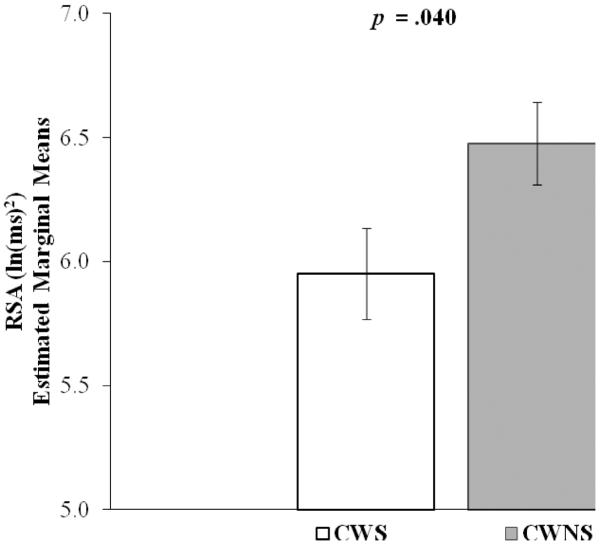
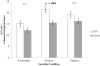
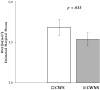
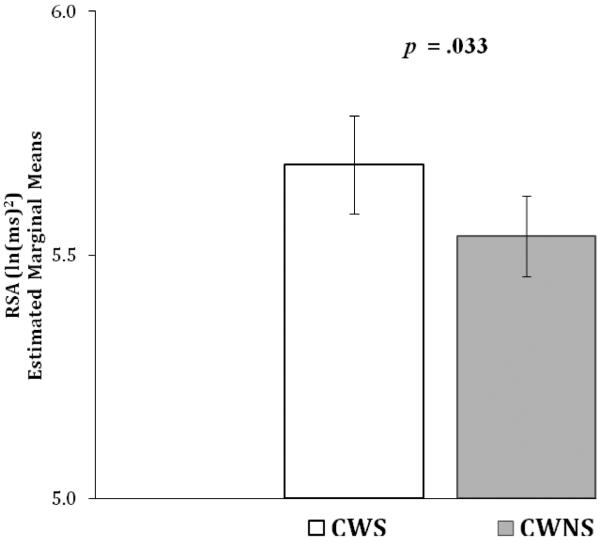
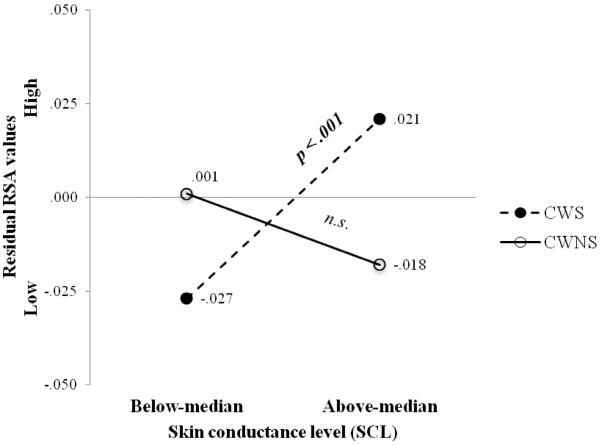
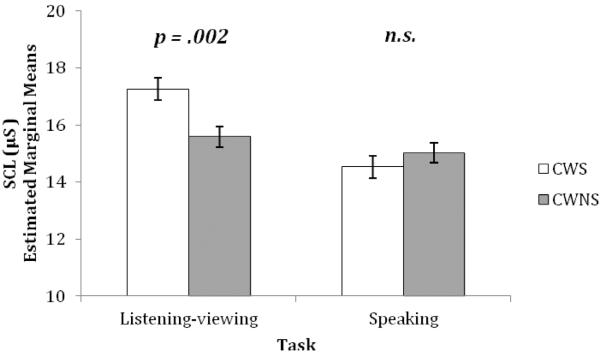
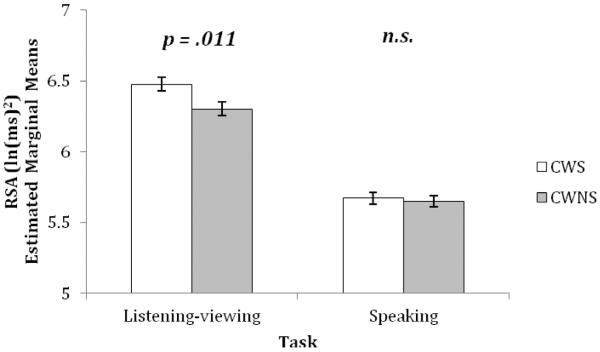
CWS, compared to CWNS, displayed lower amplitude RSA at baseline and higher SCL during a speaking task following the positive, compared to the negative, condition. During speaking, only CWS had a significant positive relation between RSA and SCL.
Conclusion
Present findings suggest that preschool-age CWS, when compared to their normally fluent peers, have a physiological state that is characterized by a greater vulnerability to emotional reactivity (i.e., lower RSA indexing less parasympathetic tone) and a greater mobilization of resources in support of emotional reactivity (i.e., higher SCL indexing more sympathetic activity) during positive conditions. Thus, while reducing stuttering to a pure physiological process is unwarranted, the present findings suggest that parasympathetic and sympathetic nervous system activity is involved. -
Subjects:
-
Keywords:
-
Source:J Fluency Disord. 2014; 0:12-31
-
Pubmed ID:25087166
-
Pubmed Central ID:PMC4150817
-
Document Type:
-
Funding:UL1 TR000445/TR/NCATS NIH HHSUnited States/ ; T32-CH18921/CH/OID CDC HHSUnited States/ ; UL1 TR000445-06/TR/NCATS NIH HHSUnited States/ ; R01 DC000523/DC/NIDCD NIH HHSUnited States/ ; UL1 RR024975/RR/NCRR NIH HHSUnited States/ ; 1 UL1 RR024975-01/RR/NCRR NIH HHSUnited States/ ; 5R01DC000523-17/DC/NIDCD NIH HHSUnited States/
-
Volume:0
-
Download URL:
-
File Type:
 [PDF - 471.63 KB]
 -
Collection(s):
-
Main Document Checksum:urn:sha256:0af4484539ec102b496ed01fe3c3b76f7c6f5f0de3689950696c039126321af6
Supporting Files


File Language:
English
 Was this page helpful?
 Found an issue?





CDC STACKS serves as an archival repository of CDC-published products including
scientific findings, journal articles, guidelines, recommendations, or other public health information authored or
co-authored by CDC or funded partners.
As a repository, CDC STACKS retains documents in their original published format to ensure public access to scientific information.
As a repository, CDC STACKS retains documents in their original published format to ensure public access to scientific information.
You May Also Like
COLLECTION
CDC Public Access