



Single-molecule real-time detection of telomerase extension activity
Supporting Files

-
Sep 29 2014
File Language:
English
Details
-
Alternative Title:Sci Rep
-
Personal Author:
-
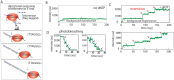
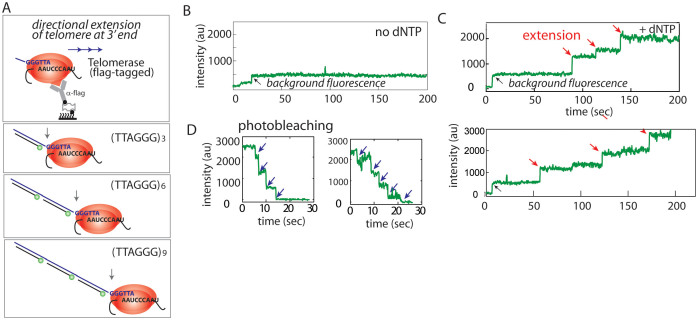
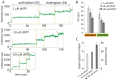
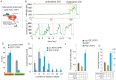
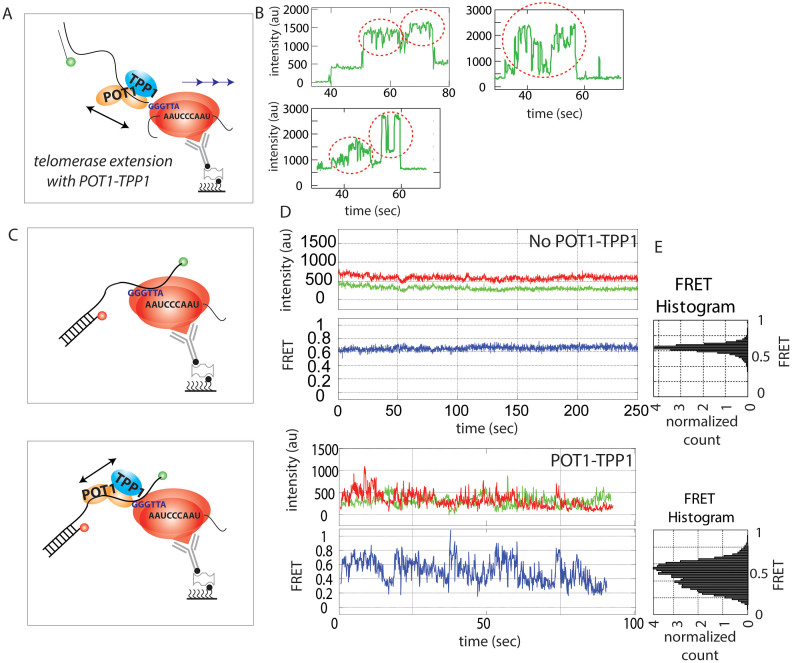
Description:The ends of eukaryotic chromosomes are capped by telomeres which consist of tandem G-rich DNA repeats stabilized by the shelterin protein complex. Telomeres shorten progressively in most normal cells due to the end replication problem. In more than 85% of cancers however, the telomere length is maintained by telomerase; a reverse transcriptase that adds telomeric TTAGGG repeats using its integral RNA template. The strong association between telomerase activity and malignancy in many cancers suggests that telomerase activity could serve as a diagnostic marker. We demonstrate single-molecule, real-time telomerase extension activity observed digitally as the telomeric repeats are added to a substrate. The human telomerase complex pulled down from mammalian cells displays extension activity dependent on dNTP concentration. In complex with the processivity factor, POT1-TPP1, telomerase adds repeats at an accelerated rate and yields longer products. Our assay provides a unique detection platform that enables the study of telomerase kinetics with single molecule resolution.
-
Subjects:
-
Source:Sci Rep. 2014; 4.
-
Pubmed ID:25263700
-
Pubmed Central ID:PMC4178293
-
Document Type:
-
Funding:
-
Volume:4
-
Download URL:
-
File Type:
 [PDF - 1.27 MB]
 -
Collection(s):
-
Main Document Checksum:urn:sha256:a228adfbfdf59f822e956bd9aa1c5b033da98f67f8fa255a2256468241764c1d
Supporting Files


File Language:
English
 Was this page helpful?
 Found an issue?




CDC STACKS serves as an archival repository of CDC-published products including
scientific findings, journal articles, guidelines, recommendations, or other public health information authored or
co-authored by CDC or funded partners.
As a repository, CDC STACKS retains documents in their original published format to ensure public access to scientific information.
As a repository, CDC STACKS retains documents in their original published format to ensure public access to scientific information.
You May Also Like
COLLECTION
CDC Public Access