



Aspirin Exposure Reveals Novel Genes Associated with Platelet Function and Cardiovascular Events
Supporting Files

-
Jul 03 2013
-
Details
-
Alternative Title:J Am Coll Cardiol
-
Personal Author:
-
Description:Objectives
To develop RNA profiles that could serve as novel biomarkers for the response to aspirin.
Background
Aspirin reduces death and myocardial infarction (MI) suggesting that aspirin interacts with biological pathways that may underlie these events.
Methods
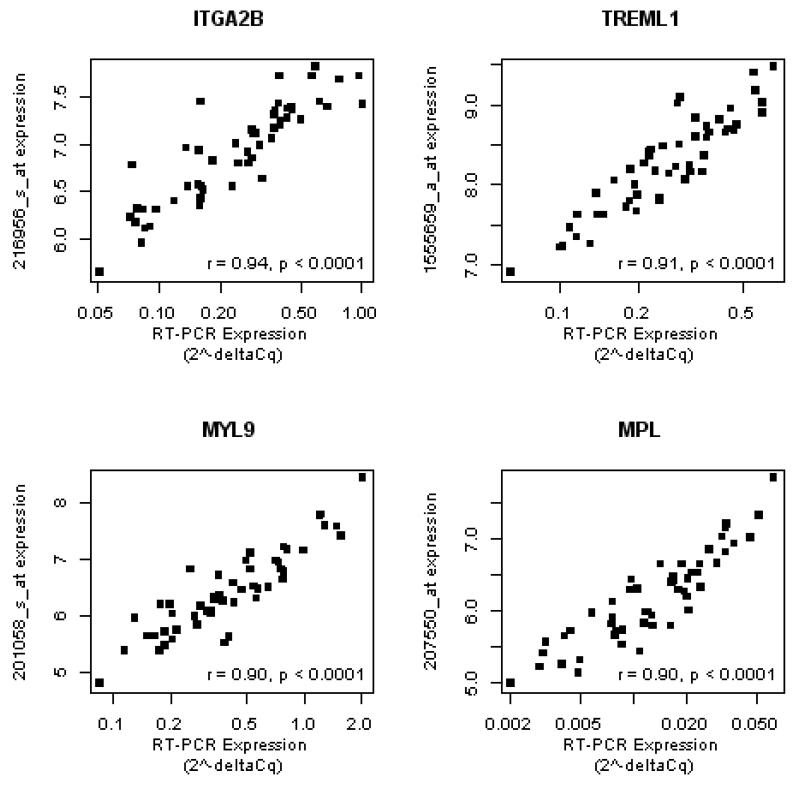
We administered aspirin, followed by whole blood RNA microarray profiling, in a discovery cohort of healthy volunteers (HV1,n=50), and two validation cohorts of volunteers (HV2,n=53) or outpatient cardiology patients (OPC, n=25). Platelet function was assessed by platelet function score (PFS; HV1/HV2) or VerifyNow Aspirin (OPC). Bayesian sparse factor analysis identified sets of coexpressed transcripts, which were examined for association with PFS in HV1 and validated in HV2 and OPC. Proteomic analysis confirmed the association of validated transcripts in platelet proteins. Validated gene sets were tested for association with death/MI in two patient cohorts (n=587, total) from RNA samples collected at cardiac catheterization.
Results
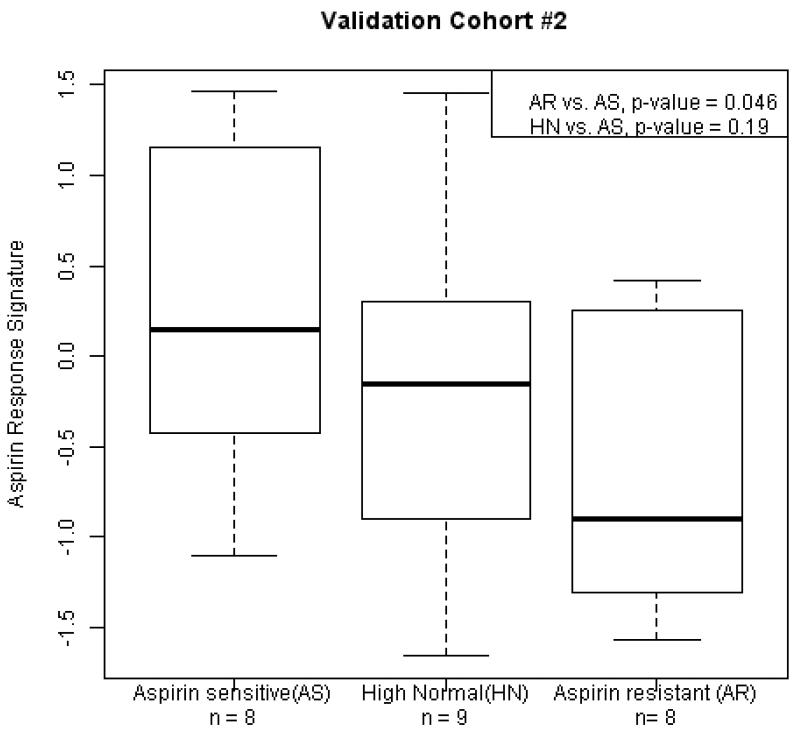
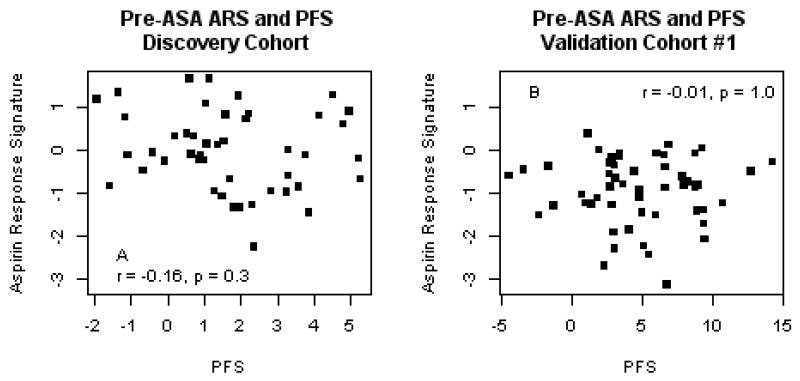
A set of 60 co-expressed genes named the “aspirin response signature” (ARS) was associated with PFS in HV1 (r = −0.31, p = 0.03), HV2 (r = −0.34, Bonferroni p = 0.03), and OPC (p = 0.046). Corresponding proteins for 17 ARS genes were identified in the platelet proteome, of which, six were associated with PFS. The ARS was associated with death/MI in both patient cohorts (odds ratio = 1.2, p = 0.01 and hazard ratio = 1.5, p = 0.001), independent of cardiovascular risk factors. Compared with traditional risk factors, reclassification (net reclassification index = 31 - 37%, p ≤ 0.0002) was improved by including the ARS or one of its genes, ITGA2B.
Conclusions
RNA profiles of platelet-specific genes are novel biomarkers for identifying those do not response adequately to aspirin and who are at risk for death/MI.
-
Subjects:
-
Source:J Am Coll Cardiol. 2013; 62(14):1267-1276.
-
Pubmed ID:23831034
-
Pubmed Central ID:PMC3786046
-
Document Type:
-
Funding:5RC1GM091083/GM/NIGMS NIH HHS/United States ; 5T32HL007101/HL/NHLBI NIH HHS/United States ; 5U01DD000014/DD/NCBDD CDC HHS/United States ; 5UL1RR024128/RR/NCRR NIH HHS/United States ; KL2 RR024127/RR/NCRR NIH HHS/United States ; RC1 GM091083/GM/NIGMS NIH HHS/United States ; T32 HL007101/HL/NHLBI NIH HHS/United States
-
Volume:62
-
Issue:14
-
Collection(s):
-
Main Document Checksum:urn:sha256:8c596ee9be24525093c9c21ba39c51b073eb193b996993916738795cda26218d
-
Download URL:
-
File Type:
 [PDF
- 847.21 KB
]
[PDF
- 847.21 KB
]
Supporting Files


 Was this page helpful?
 Found an issue?



CDC STACKS serves as an archival repository of CDC-published products including
scientific findings,
journal articles, guidelines, recommendations, or other public health information authored or
co-authored by CDC or funded partners.
As a repository, CDC STACKS retains documents in their original published format to ensure public access to scientific information.
As a repository, CDC STACKS retains documents in their original published format to ensure public access to scientific information.
You May Also Like
COLLECTION
CDC Public Access