


Ecodevelopmental and Intrapersonal Moderators of a Family Based Preventive Intervention for Hispanic Youth: A Latent Profile Analysis
Supporting Files

-
6 2013
-
File Language:
English
Details
-
Alternative Title:Prev Sci
-
Personal Author:
-
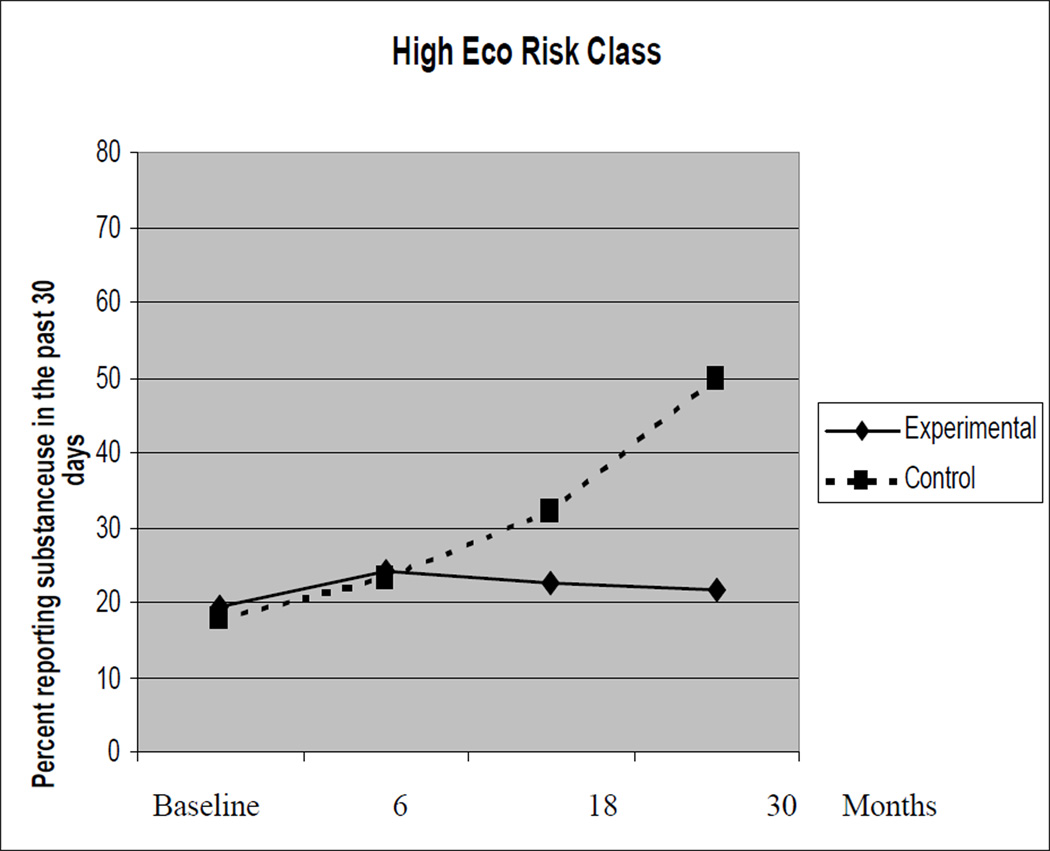
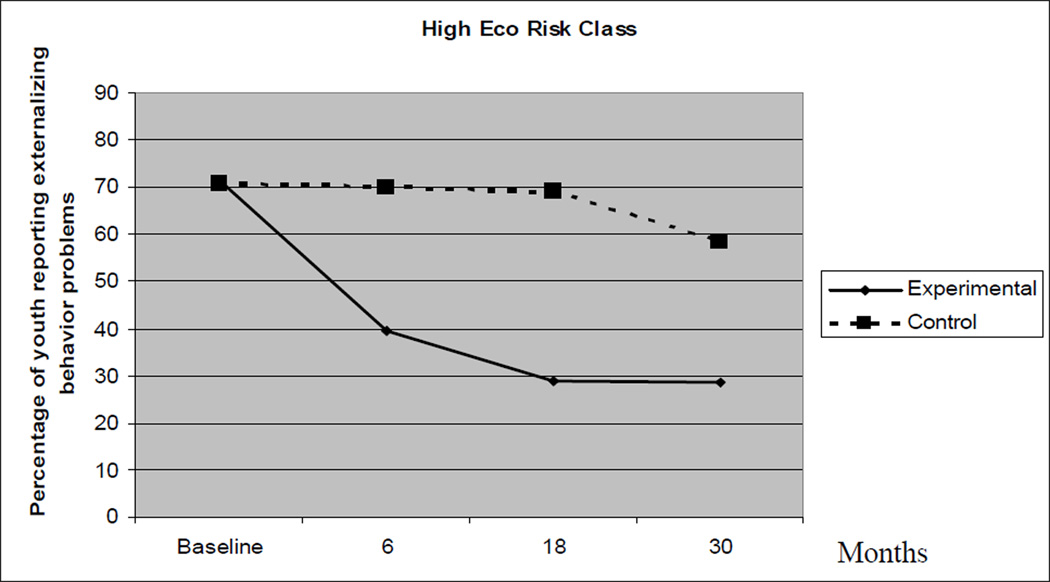
Description:Hispanic adolescents are disproportionately affected by externalizing disorders, substance use and HIV infection. Despite these health inequities, few interventions have been found to be efficacious for this population, and even fewer studies have examined whether the effects of such interventions vary as a function of ecodevelopmental and intrapersonal risk subgroups. The aim of this study was to determine whether and to what extent the effects of Familias Unidas, an evidence-based preventive intervention, vary by ecodevelopmental and intrapersonal risk subgroups. Data from 213 Hispanic adolescents (mean age = 13.8, SD = 0.76) who were enrolled in a randomized clinical trial evaluating the relative efficacy of Familias Unidas on externalizing disorders, substance use, and unprotected sexual behavior were analyzed. The results showed that Familias Unidas was efficacious over time, in terms of both externalizing disorders and substance use, for Hispanic youth with high family ecodevelopmental risk (e.g., poor parent-adolescent communication), but not with youth with moderate ecodevelopmental or low ecodevelopmental risk. The results suggest that classifying adolescents based on their family ecodevelopmental risk may be an especially effective strategy for examining moderators of family-based preventive interventions such as Familias Unidas. Moreover, these results suggest that Familias Unidas should potentially be targeted toward youth with high family ecodevelopmental risk. The utility of the methods presented in this article to other prevention scientists, including genetic, neurobiological and environmental scientists, is discussed.
-
Subjects:
-
Keywords:
-
Source:Prev Sci. 14(3):290-299
-
Pubmed ID:23408280
-
Pubmed Central ID:PMC3633650
-
Document Type:
-
Funding:R01DA025192/DA/NIDA NIH HHSUnited States/ ; U01PS0000671/PS/NCHHSTP CDC HHSUnited States/ ; R01 DA025192/DA/NIDA NIH HHSUnited States/ ; R01 DA017462/DA/NIDA NIH HHSUnited States/ ; U01 PS000671/PS/NCHHSTP CDC HHSUnited States/ ; P30 DA027828/DA/NIDA NIH HHSUnited States/ ; 1R01DA025192/DA/NIDA NIH HHSUnited States/ ; R01DA025192-01A1S1/DA/NIDA NIH HHSUnited States/ ; 1R01DA025894/DA/NIDA NIH HHSUnited States/ ; R01 DA025894/DA/NIDA NIH HHSUnited States/
-
Volume:14
-
Issue:3
-
Collection(s):
-
Main Document Checksum:urn:sha256:37e7e4c7b53c3292ce8bf79b68c55a1cdf14a26df702ca1cd929580dd326dbbb
-
Download URL:
-
File Type:
 [PDF
- 582.57 KB
]
[PDF
- 582.57 KB
]
Supporting Files


File Language:
English
ON THIS PAGE


CDC STACKS serves as an archival repository of CDC-published products including
scientific findings,
journal articles, guidelines, recommendations, or other public health information authored or
co-authored by CDC or funded partners.
As a repository, CDC STACKS retains documents in their original published format to ensure public access to scientific information.
As a repository, CDC STACKS retains documents in their original published format to ensure public access to scientific information.
You May Also Like
COLLECTION
CDC Public Access