



Improving Heart Healthy Lifestyles Among Participants in a Salud Para Su Corazón Promotores Model: The Mexican Pilot Study, 2009–2012
Supporting Files
Public Domain

-
Mar 12 2015
File Language:
English
Details
-
Journal Article:Preventing Chronic Disease (PCD)
-
Personal Author:
-
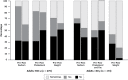
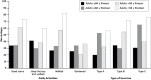
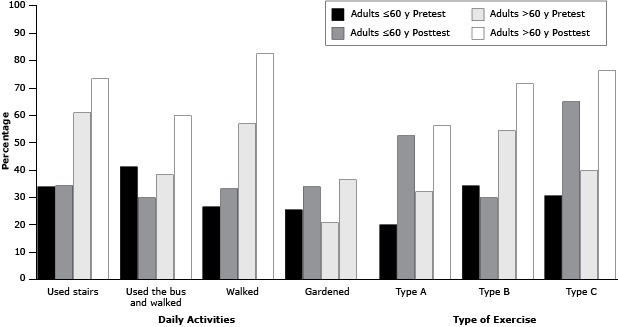
Description:Introduction ; In Mexico, cardiovascular disease and its risk factors are growing problems and major public health concerns. The objective of this study was to implement cardiovascular health promotion and disease prevention activities of the Salud para su Corazón model in a high-risk, impoverished, urban community in Mexico City. ; Methods ; We used a pretest–posttest (baseline to 12-week follow-up) design without a control group. Material from Salud para su Corazón was validated and delivered by promotores (community health workers) to community members from 6 geographic areas. Two validated, self-administered questionnaires that assessed participants’ knowledge and behaviors relating to heart health were administered. We used t tests and χ2 tests to evaluate pretest and posttest differences, by age group (≤60 and >60 years), for participants’ 3 heart-healthy habits, 3 types of physical activity, performance skills, and anthropometric and clinical measurements. ; Results ; A total of 452 (82%) adult participants completed the program. Heart-healthy habits from pretest to posttest varied by age group. “Taking action” to modify lifestyle behaviors increased among adults aged 60 or younger from 31.5% to 63.0% (P < .001) and among adults older than 60 from 30.0% to 45.0% (P < .001). Positive responses for cholesterol and fat consumption reduction were seen among participants 60 or younger (P = .03). Among those older than 60, salt reduction and weight control increased (P = .008). Mean blood glucose concentration among adults older than 60 decreased postintervention (P = .03). ; Conclusion ; Significant improvements in some heart-healthy habits were seen among adult participants. The model has potential to improve heart-healthy habits and facilitate behavioral change among high-risk adults.
-
Subjects:
- Original Research
- Adult
- Aged
- Anthropometry
- Body Mass Index
- Cardiovascular Diseases
- Community-Based Participatory Research
- Educational Status
- Female
- Health Behavior
- Health Promotion
- Humans
- Life Style
- Male
- Middle Aged
- Patient Education as Topic
- Personal Satisfaction
- Pilot Projects
- Poverty Areas
- Risk Factors
- Self Report
- Socioeconomic Factors
- Surveys and Questionnaires
- Treatment Outcome
- Urban Population
-
Source:Prev Chronic Dis. 12.
-
DOI:
-
ISSN:1545-1151
-
Document Type:
-
Place as Subject:
-
Location:
-
Volume:12
-
Download URL:
-
File Type:
 [PDF - 360.47 KB]
 -
Collection(s):
-
Main Document Checksum:urn:sha-512:b005c20296ab0fdc57492d98dfaf93a5a759bb3ffe4bbd1ce477e1d25497db2139b050f1b705e3d0f67d2f7ea5b715586ba4bc4d320952191ce0f1f1bcfb4d93
Supporting Files


File Language:
English
 Was this page helpful?
 Found an issue?


CDC STACKS serves as an archival repository of CDC-published products including
scientific findings, journal articles, guidelines, recommendations, or other public health information authored or
co-authored by CDC or funded partners.
As a repository, CDC STACKS retains documents in their original published format to ensure public access to scientific information.
As a repository, CDC STACKS retains documents in their original published format to ensure public access to scientific information.
You May Also Like
COLLECTION
Preventing Chronic Disease