


Influenza A Outbreak in an Ambulatory Stem Cell Transplant Center
Supporting Files
Public Domain

-
Aug 07 2014
-
File Language:
English
Details
-
Alternative Title:Open Forum Infect Dis
-
Personal Author:
-
Description:Background
In the era of cost-consciousness regarding healthcare , provision of medical services in an outpatient setting has become increasingly attractive. We report an influenza outbreak in an ambulatory stem cell transplant center in 2013 that highlights unique identification and infection control challenges in this setting.
Methods
Nasopharyngeal swabs were performed on patients with suspected influenza-like illnesses (ILI), defined by subjective fever or measured temperature of ≥37.7°C (≥100°F) with cough or sore throat during July 25, 2013 through August 7, 2013. In addition, testing was triggered by an elevated C-reactive protein (CRP). Specimens were analyzed by using eSensor Respiratory Viral Panel. Clinical and epidemiologic information was collected in real time, and frequencies were calculated on demographics, baseline clinical parameters, treatment methods, comorbidities, and symptoms of affected persons.
Results
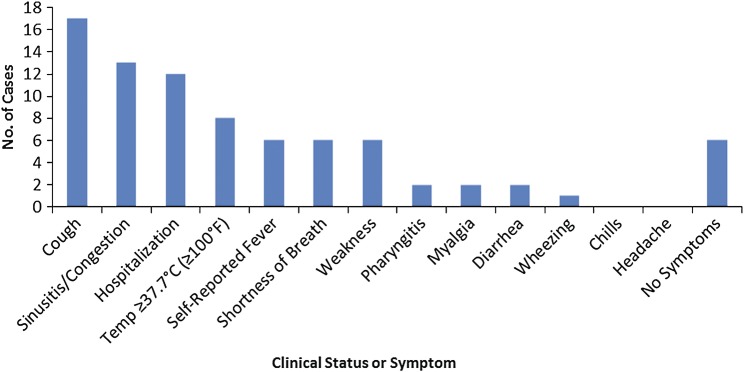
Thirty-one patients had influenza A (H3N2) infection during July 25, 2013 through August 7, 2013. Only 7 patients (23%) met the Centers for Disease Control and Prevention and Council of State and Territorial Epidemiologists ILI case definition. Twenty-five patients (81%) had received ≥1 transplant, with 13 (42%) having occurred within 1 year before the outbreak. Twenty-five patients (81%) had received B-cell active chemotherapy <60 days before influenza diagnosis, 6 (19%) were neutropenic, and 25 (81%) lymphopenic. Among clinical and laboratory markers analyzed, abnormal CRP was the most sensitive screening tool for influenza. Twelve (39%) patients were hospitalized (median stay, 10 days; range, 2–20). No deaths occurred.
Conclusions
Immunocompromised hosts with influenza have atypical presentations. Existing surveillance case definitions might be insufficient to reliably identify influenza outbreaks in such patients.
-
Subjects:
-
Source:Open Forum Infect Dis. 2014; 1(2).
-
Document Type:
-
Volume:1
-
Issue:2
-
Collection(s):
-
Main Document Checksum:urn:sha256:e3ddc1b739aa79ec7ac4d847d9953269b12bb2b39c476b276bfd62484110249f
-
Download URL:
-
File Type:
 [PDF
- 254.05 KB
]
[PDF
- 254.05 KB
]
Supporting Files


File Language:
English
ON THIS PAGE



CDC STACKS serves as an archival repository of CDC-published products including
scientific findings,
journal articles, guidelines, recommendations, or other public health information authored or
co-authored by CDC or funded partners.
As a repository, CDC STACKS retains documents in their original published format to ensure public access to scientific information.
As a repository, CDC STACKS retains documents in their original published format to ensure public access to scientific information.
You May Also Like
COLLECTION
CDC Public Access