


IFNγ/IL-10 Co-producing Cells Dominate the CD4 Response to Malaria in Highly Exposed Children
Supporting Files

-
Jan 09 2014
-
File Language:
English
Details
-
Alternative Title:PLoS Pathog
-
Personal Author:
-
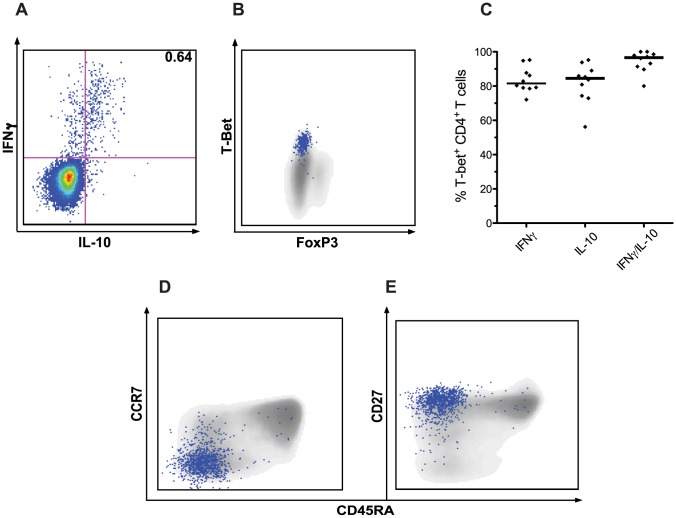
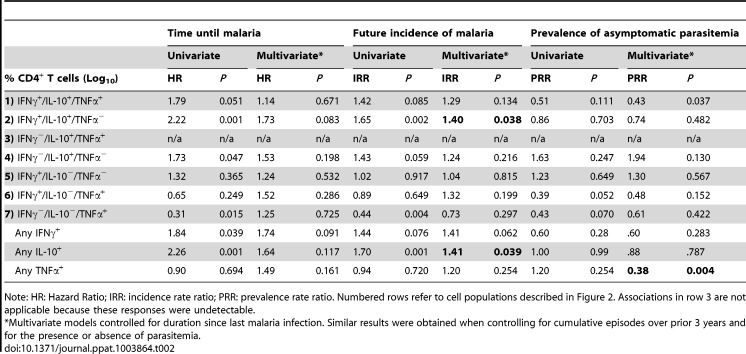
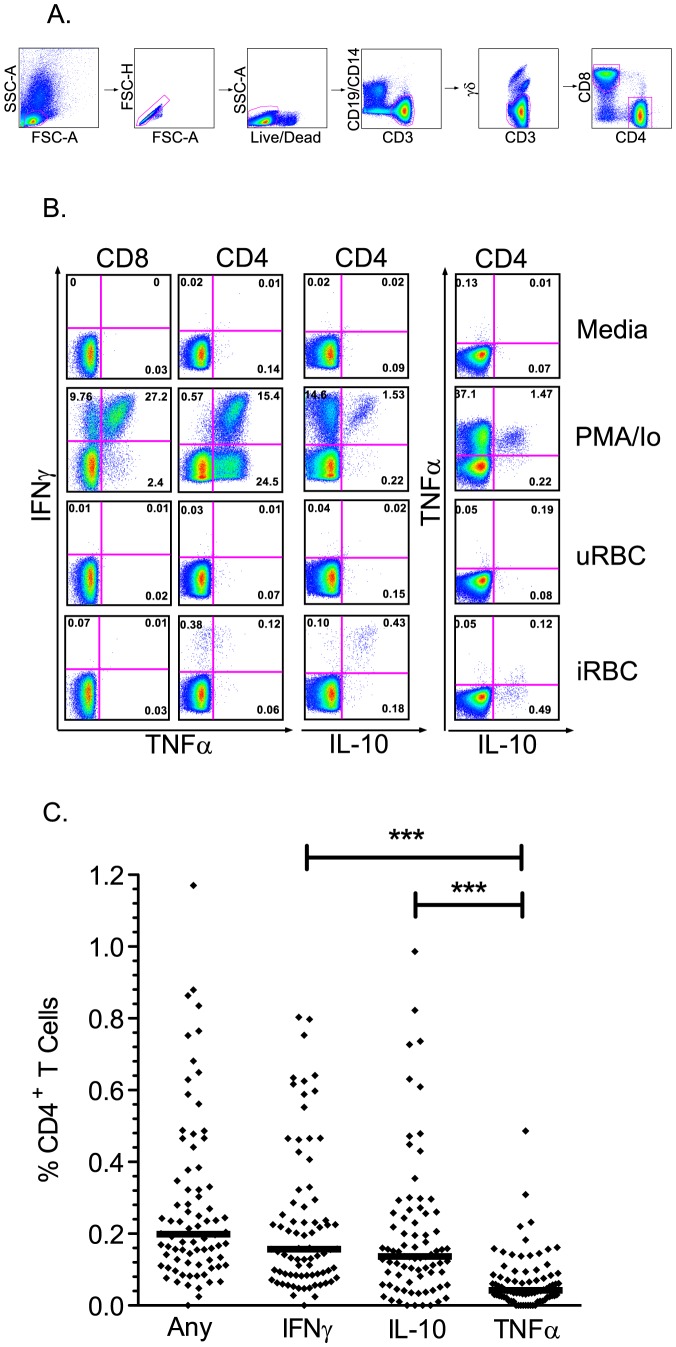
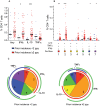
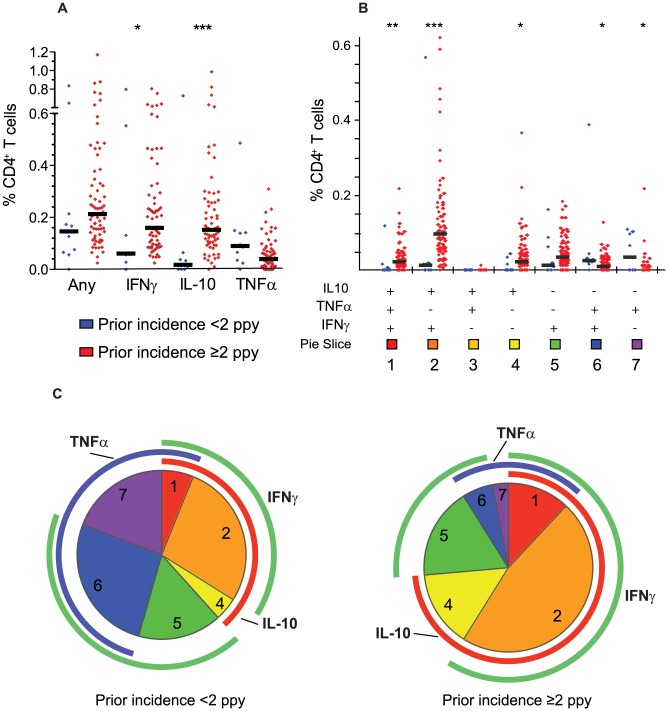
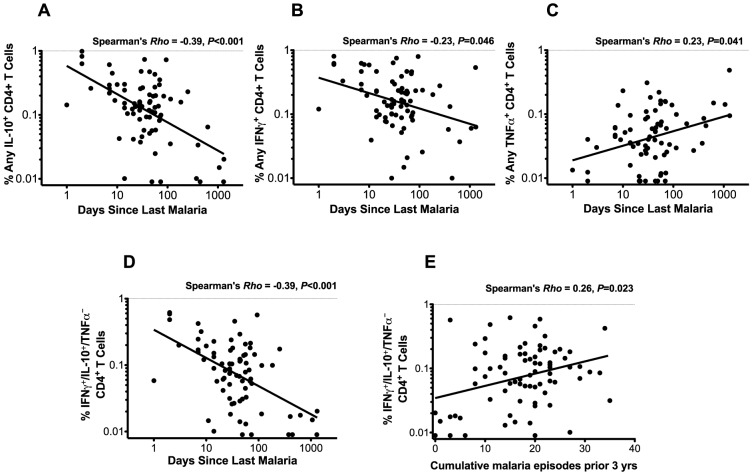
Description:Although evidence suggests that T cells are critical for immunity to malaria, reliable T cell correlates of exposure to and protection from malaria among children living in endemic areas are lacking. We used multiparameter flow cytometry to perform a detailed functional characterization of malaria-specific T cells in 78 four-year-old children enrolled in a longitudinal cohort study in Tororo, Uganda, a highly malaria-endemic region. More than 1800 episodes of malaria were observed in this cohort, with no cases of severe malaria. We quantified production of IFNγ, TNFα, and IL-10 (alone or in combination) by malaria-specific T cells, and analyzed the relationship of this response to past and future malaria incidence. CD4(+) T cell responses were measurable in nearly all children, with the majority of children having CD4(+) T cells producing both IFNγ and IL-10 in response to malaria-infected red blood cells. Frequencies of IFNγ/IL10 co-producing CD4(+) T cells, which express the Th1 transcription factor T-bet, were significantly higher in children with ≥2 prior episodes/year compared to children with <2 episodes/year (P<0.001) and inversely correlated with duration since malaria (Rho = -0.39, P<0.001). Notably, frequencies of IFNγ/IL10 co-producing cells were not associated with protection from future malaria after controlling for prior malaria incidence. In contrast, children with <2 prior episodes/year were significantly more likely to exhibit antigen-specific production of TNFα without IL-10 (P = 0.003). While TNFα-producing CD4(+) T cells were not independently associated with future protection, the absence of cells producing this inflammatory cytokine was associated with the phenotype of asymptomatic infection. Together these data indicate that the functional phenotype of the malaria-specific T cell response is heavily influenced by malaria exposure intensity, with IFNγ/IL10 co-producing CD4(+) T cells dominating this response among highly exposed children. These CD4(+) T cells may play important modulatory roles in the development of antimalarial immunity.
-
Subjects:
-
Source:PLoS Pathog. 2014; 10(1).
-
Document Type:
-
Funding:K23 AI100949/AI/NIAID NIH HHS/United States ; P30AI027763/AI/NIAID NIH HHS/United States ; R01AI093615/AI/NIAID NIH HHS/United States ; U19 AI089674/AI/NIAID NIH HHS/United States ; U19AI089674/AI/NIAID NIH HHS/United States ; U62P024421/PHS HHS/United States ; UL1 TR000004/TR/NCATS NIH HHS/United States
-
Place as Subject:
-
Volume:10
-
Issue:1
-
Collection(s):
-
Main Document Checksum:urn:sha256:9fb56ecd28a508d4c9c975835644dd8c3a877ccfa6344c141c1b304f61d8260f
-
Download URL:
-
File Type:
 [PDF
- 1.35 MB
]
[PDF
- 1.35 MB
]
Supporting Files


File Language:
English
ON THIS PAGE




CDC STACKS serves as an archival repository of CDC-published products including
scientific findings,
journal articles, guidelines, recommendations, or other public health information authored or
co-authored by CDC or funded partners.
As a repository, CDC STACKS retains documents in their original published format to ensure public access to scientific information.
As a repository, CDC STACKS retains documents in their original published format to ensure public access to scientific information.
You May Also Like
COLLECTION
CDC Public Access