


Iodine Status in Turkish Populations and Exposure to Iodide Uptake Inhibitors
Supporting Files
Public Domain

-
Feb 05 2014
-
Details
-
Alternative Title:PLoS One
-
Personal Author:
-
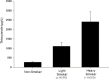
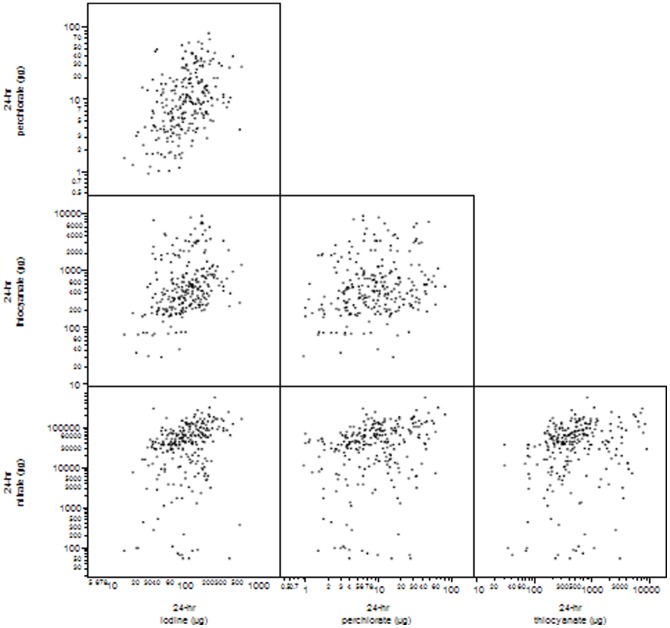
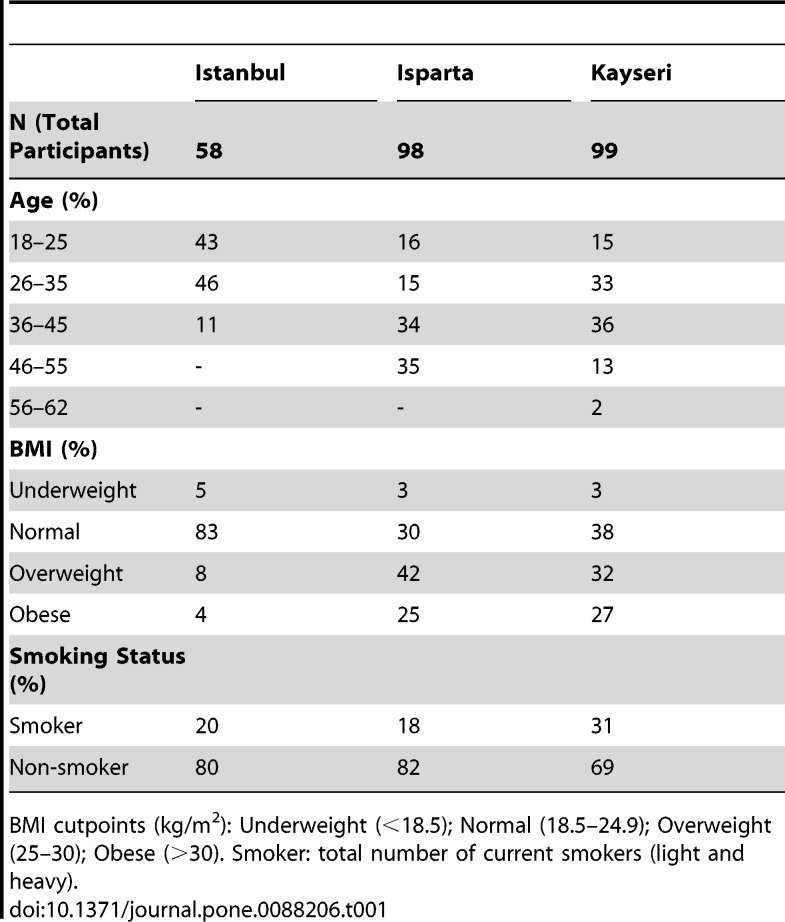
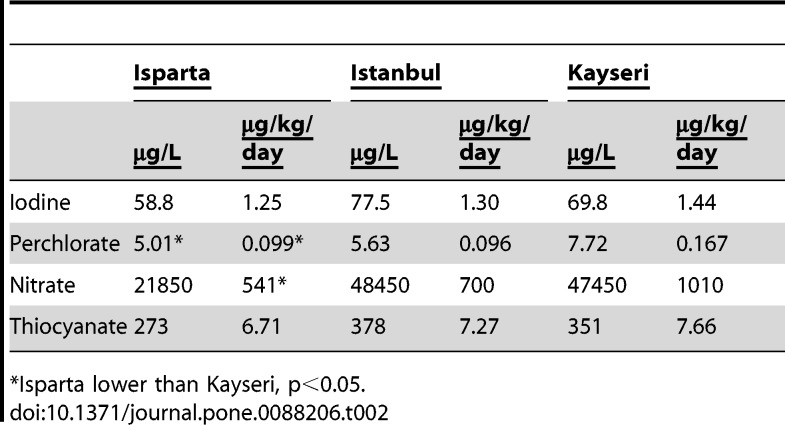
Description:Perchlorate, nitrate, and thiocyanate are competitive inhibitors of the sodium iodide symporter of the thyroid membrane. These inhibitors can decrease iodine uptake by the symporter into the thyroid gland and may disrupt thyroid function. This study assesses iodine status and exposure to iodide uptake inhibitors of non-pregnant and non-lactating adult women living in three different cities in Turkey (Istanbul, Isparta and Kayseri). We measured iodine and iodide uptake inhibitors in 24-hr urines collected from study participants (N = 255). All three study populations were mildly iodine deficient, with median urinary iodine (UI) levels of 77.5 µg/L in Istanbul, 58.8 µg/L in Isparta, and 69.8 µg/L in Kayseri. Perchlorate doses were higher in the study population (median 0.13 µg/kg/day), compared with a reference population (median 0.059 µg/kg/day), but lower than the U.S. EPA reference dose (0.7 µg/kg/day). Urinary thiocyanate levels increased with increasing exposure to tobacco smoke, with non-smokers (268 µg/L) significantly lower than light smokers (1110 µg/L), who were significantly lower than heavy smokers (2410 µg/L). This pilot study provides novel data indicating that study participants were moderately iodine deficient and had higher intakes of the iodide uptake inhibitor perchlorate compared with a reference population. Further investigation is needed to characterize the thyroid impact resulting from iodine deficiency coupled with exposure to iodide uptake inhibitors such as perchlorate, thiocyanate and nitrate.
-
Subjects:
-
Source:PLoS One. 2014; 9(2).
-
Document Type:
-
Volume:9
-
Issue:2
-
Collection(s):
-
Main Document Checksum:urn:sha256:e24414d13ad90a02cd45d10d6dd3e3f14bc19b607f4b48591c221380a27314c8
-
Download URL:
-
File Type:
 [PDF
- 1.09 MB
]
[PDF
- 1.09 MB
]
Supporting Files


ON THIS PAGE






CDC STACKS serves as an archival repository of CDC-published products including
scientific findings,
journal articles, guidelines, recommendations, or other public health information authored or
co-authored by CDC or funded partners.
As a repository, CDC STACKS retains documents in their original published format to ensure public access to scientific information.
As a repository, CDC STACKS retains documents in their original published format to ensure public access to scientific information.
You May Also Like
COLLECTION
CDC Public Access