


Annual Report to the Nation on the Status of Cancer, 1975–2009, Featuring the Burden and Trends in Human Papillomavirus (HPV)–Associated Cancers and HPV Vaccination Coverage Levels
Supporting Files
Public Domain

-
Jan 07 2013
-
File Language:
English
Details
-
Alternative Title:J Natl Cancer Inst
-
Personal Author:Jemal, Ahmedin ; Simard, Edgar P. ; Dorell, Christina ; Noone, Anne-Michelle ; Markowitz, Lauri E. ; Kohler, Betsy ; Eheman, Christie ; Saraiya, Mona ; Bandi, Priti ; Saslow, Debbie ; Cronin, Kathleen A. ; Watson, Meg ; Schiffman, Mark ; Henley, S. Jane ; Schymura, Maria J. ; Anderson, Robert N. ; Yankey, David ; Edwards, Brenda K.
-
Description:Background
The American Cancer Society (ACS), the Centers for Disease Control and Prevention (CDC), the National Cancer Institute (NCI), and the North American Association of Central Cancer Registries (NAACCR) collaborate annually to provide updates on cancer incidence and death rates and trends in these outcomes for the United States. This year’s report includes incidence trends for human papillomavirus (HPV)–associated cancers and HPV vaccination (recommended for adolescents aged 11–12 years).
Methods
Data on cancer incidence were obtained from the CDC, NCI, and NAACCR, and data on mortality were obtained from the CDC. Long- (1975/1992–2009) and short-term (2000–2009) trends in age-standardized incidence and death rates for all cancers combined and for the leading cancers among men and among women were examined by joinpoint analysis. Prevalence of HPV vaccination coverage during 2008 and 2010 and of Papanicolaou (Pap) testing during 2010 were obtained from national surveys.
Results
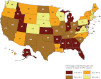
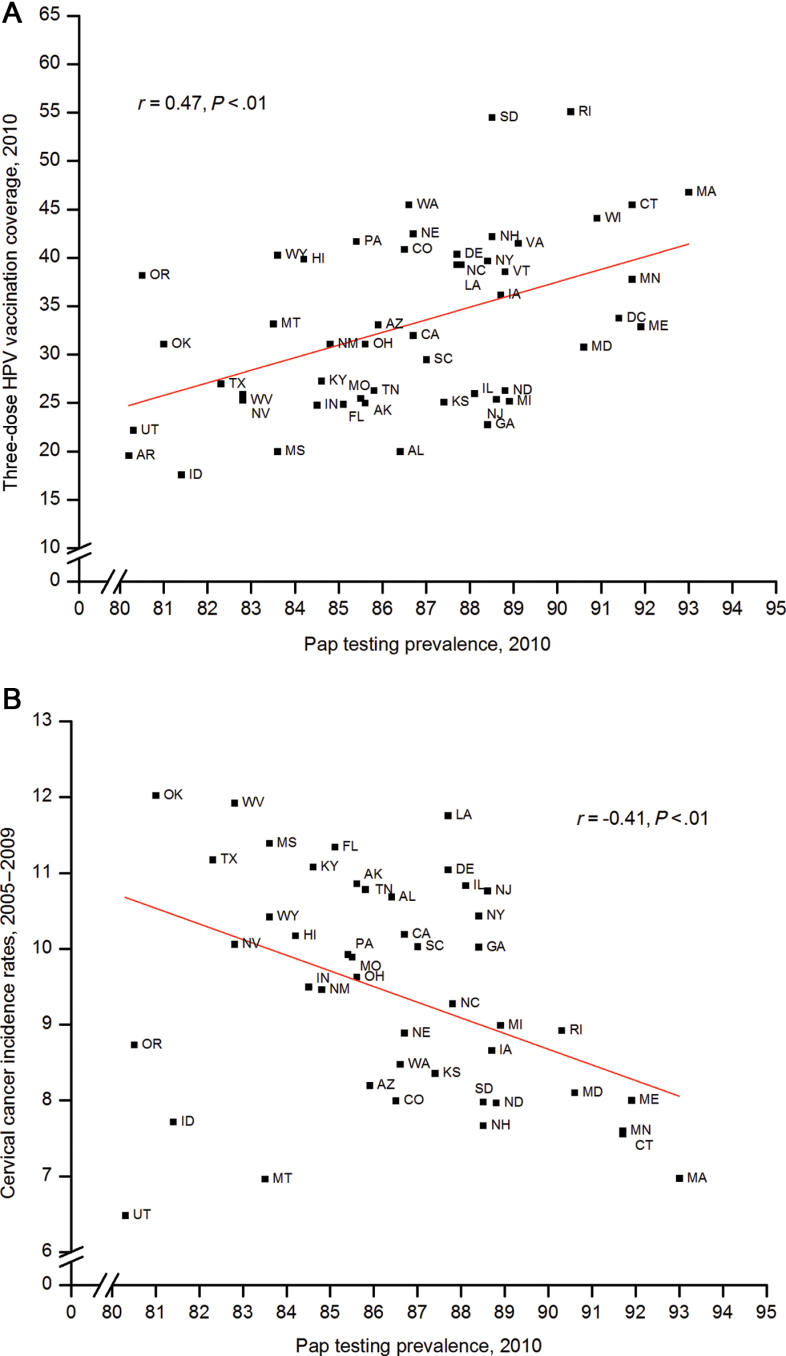
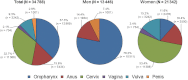
Death rates continued to decline for all cancers combined for men and women of all major racial and ethnic groups and for most major cancer sites; rates for both sexes combined decreased by 1.5% per year from 2000 to 2009. Overall incidence rates decreased in men but stabilized in women. Incidence rates increased for two HPV-associated cancers (oropharynx, anus) and some cancers not associated with HPV (eg, liver, kidney, thyroid). Nationally, 32.0% (95% confidence interval [CI] = 30.3% to 33.6%) of girls aged 13 to 17 years in 2010 had received three doses of the HPV vaccine, and coverage was statistically significantly lower among the uninsured (14.1%, 95% CI = 9.4% to 20.6%) and in some Southern states (eg, 20.0% in Alabama [95% CI = 13.9% to 27.9%] and Mississippi [95% CI = 13.8% to 28.2%]), where cervical cancer rates were highest and recent Pap testing prevalence was the lowest.
Conclusions
The overall trends in declining cancer death rates continue. However, increases in incidence rates for some HPV-associated cancers and low vaccination coverage among adolescents underscore the need for additional prevention efforts for HPV-associated cancers, including efforts to increase vaccination coverage.
-
Subjects:
-
Source:J Natl Cancer Inst. 2013; 105(3):175-201.
-
Document Type:
-
Name as Subject:
-
Place as Subject:
-
Volume:105
-
Issue:3
-
Collection(s):
-
Main Document Checksum:urn:sha256:b4720d60257fb74ab710e9231bdad5c2cd802501362002c401dfc586b55ba860
-
Download URL:
-
File Type:
 [PDF
- 5.10 MB
]
[PDF
- 5.10 MB
]
Supporting Files
-
html


File Language:
English
ON THIS PAGE






CDC STACKS serves as an archival repository of CDC-published products including
scientific findings,
journal articles, guidelines, recommendations, or other public health information authored or
co-authored by CDC or funded partners.
As a repository, CDC STACKS retains documents in their original published format to ensure public access to scientific information.
As a repository, CDC STACKS retains documents in their original published format to ensure public access to scientific information.
You May Also Like
COLLECTION
CDC Public Access