


Cryptosporidium parvum IId family: clonal population and dispersal from Western Asia to other geographical regions
Supporting Files
Public Domain

-
Feb 27 2014
-
File Language:
English
Details
-
Alternative Title:Sci Rep
-
Personal Author:
-
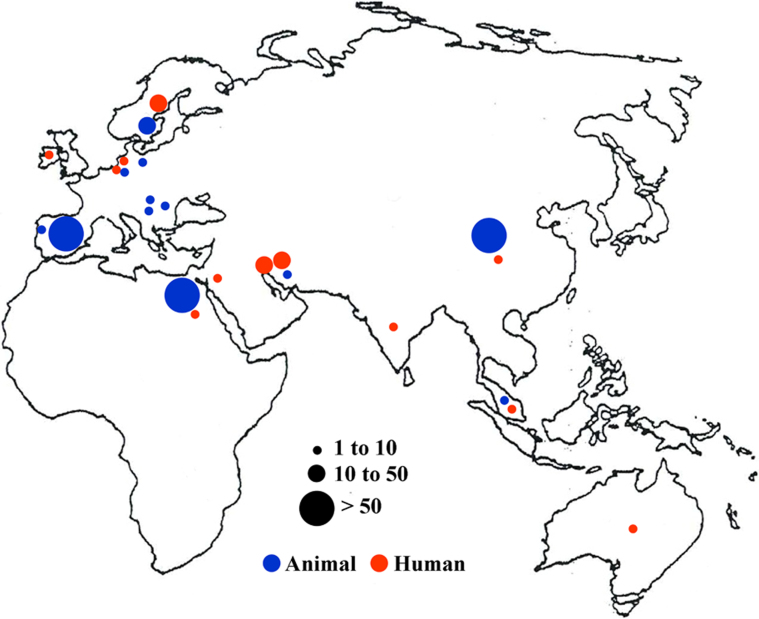
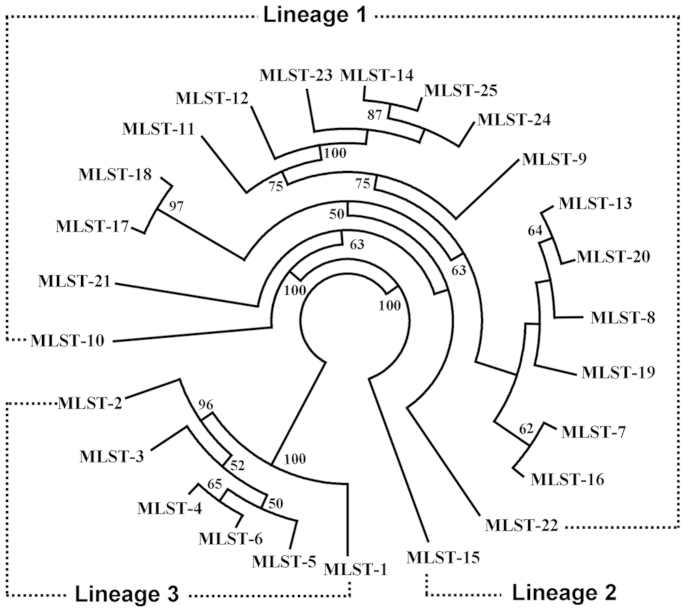
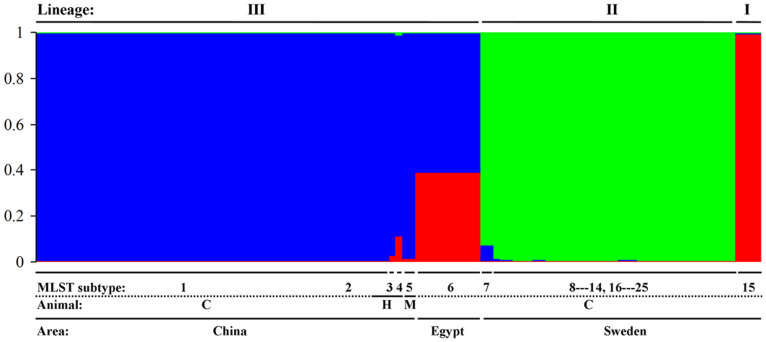
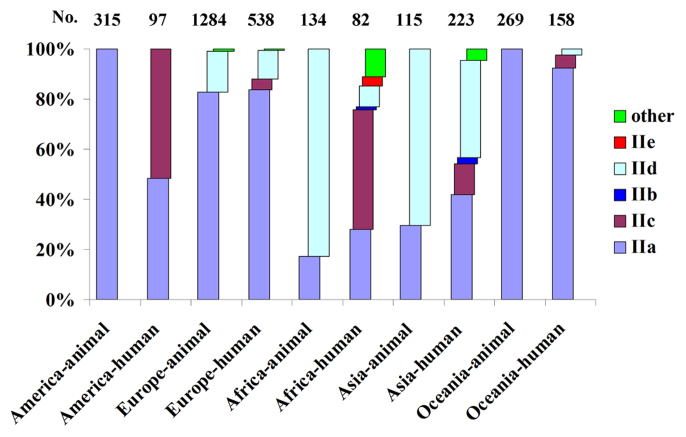
Description:In this study, 111 Cryptosporidium parvum IId isolates from several species of animals in China, Sweden, and Egypt were subtyped by multilocus sequence typing (MLST). One to eleven subtypes were detected at each of the 12 microsatellite, minisatellite, and single nucleotide polymorphism (SNP) loci, forming 25 MLST subtypes. Host-adaptation and significant geographical segregation were both observed in the MLST subtypes. A clonal population structure was seen in C. parvum IId isolates from China and Sweden. Three ancestral lineages and the same RPGR sequence were shared by these isolates examined. Therefore, the present genetic observations including the higher nucleotide diversity of C. parvum IId GP60 sequences in Western Asia, as well as the unique distribution of IId subtypes (almost exclusively found in Asia, Europe, and Egypt) and in combination with the domestication history of cattle, sheep, and goats, indicated that C. parvum IId subtypes were probably dispersed from Western Asia to other geographical regions. More population genetic structure studies involving various C. parvum subtype families using high-resolution tools are needed to better elucidate the origin and dissemination of C. parvum in the world.
-
Subjects:
-
Source:Sci Rep. 2014; 4.
-
Document Type:
-
Place as Subject:
-
Volume:4
-
Collection(s):
-
Main Document Checksum:urn:sha256:68cc5a9733fef14a030cf30a2acee8924c216ce87e9c21f58289f4fa6cc0402f
-
Download URL:
-
File Type:
 [PDF
- 533.45 KB
]
[PDF
- 533.45 KB
]
Supporting Files


File Language:
English
ON THIS PAGE

CDC STACKS serves as an archival repository of CDC-published products including
scientific findings,
journal articles, guidelines, recommendations, or other public health information authored or
co-authored by CDC or funded partners.
As a repository, CDC STACKS retains documents in their original published format to ensure public access to scientific information.
As a repository, CDC STACKS retains documents in their original published format to ensure public access to scientific information.
You May Also Like
COLLECTION
CDC Public Access