


Refining Historical Limits Method to Improve Disease Cluster Detection, New York City, New York, USA
Supporting Files
Public Domain

-
Feb 2015
-
File Language:
English
Details
-
Alternative Title:Emerg Infect Dis
-
Personal Author:
-
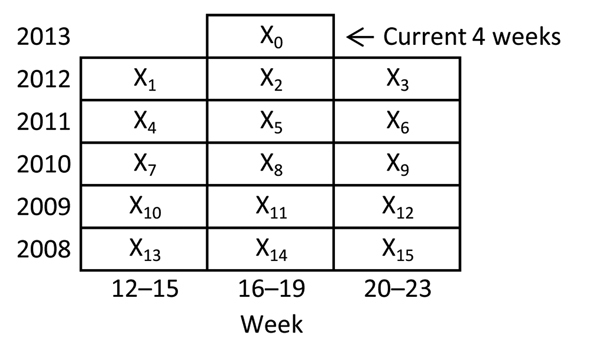
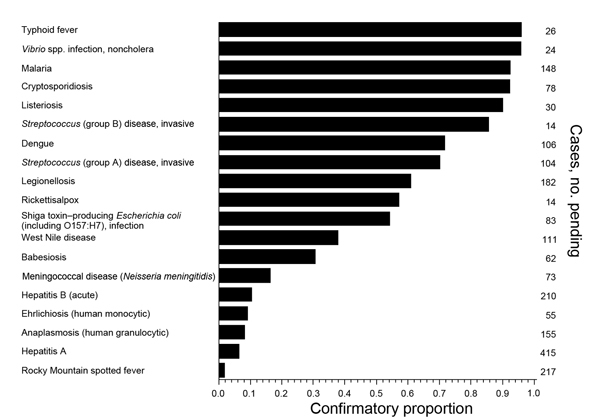
Description:Since the early 2000s, the Bureau of Communicable Disease of the New York City Department of Health and Mental Hygiene has analyzed reportable infectious disease data weekly by using the historical limits method to detect unusual clusters that could represent outbreaks. This method typically produced too many signals for each to be investigated with available resources while possibly failing to signal during true disease outbreaks. We made method refinements that improved the consistency of case inclusion criteria and accounted for data lags and trends and aberrations in historical data. During a 12-week period in 2013, we prospectively assessed these refinements using actual surveillance data. The refined method yielded 74 signals, a 45% decrease from what the original method would have produced. Fewer and less biased signals included a true citywide increase in legionellosis and a localized campylobacteriosis cluster subsequently linked to live-poultry markets. Future evaluations using simulated data could complement this descriptive assessment.
-
Subjects:
-
Source:Emerg Infect Dis. 21(2):265-272.
-
Document Type:
-
Place as Subject:
-
Volume:21
-
Issue:2
-
Collection(s):
-
Main Document Checksum:urn:sha256:8c5cd1c3f204b1dd10c74f93195cf3138162dac91d6126baca62a22d503b9d23
-
Download URL:
-
File Type:
 [PDF
- 700.08 KB
]
[PDF
- 700.08 KB
]
Supporting Files


File Language:
English
ON THIS PAGE



CDC STACKS serves as an archival repository of CDC-published products including
scientific findings,
journal articles, guidelines, recommendations, or other public health information authored or
co-authored by CDC or funded partners.
As a repository, CDC STACKS retains documents in their original published format to ensure public access to scientific information.
As a repository, CDC STACKS retains documents in their original published format to ensure public access to scientific information.
You May Also Like
COLLECTION
Emerging Infectious Diseases