


Development of an Electronic Medical Record Based Alert for Risk of HIV Treatment Failure in a Low-Resource Setting
Supporting Files

-
Nov 12 2014
-
File Language:
English
Details
-
Alternative Title:PLoS One
-
Personal Author:
-
Description:Background
The adoption of electronic medical record systems in resource-limited settings can help clinicians monitor patients' adherence to HIV antiretroviral therapy (ART) and identify patients at risk of future ART failure, allowing resources to be targeted to those most at risk.
Methods
Among adult patients enrolled on ART from 2005–2013 at two large, public-sector hospitals in Haiti, ART failure was assessed after 6–12 months on treatment, based on the World Health Organization's immunologic and clinical criteria. We identified models for predicting ART failure based on ART adherence measures and other patient characteristics. We assessed performance of candidate models using area under the receiver operating curve, and validated results using a randomly-split data sample. The selected prediction model was used to generate a risk score, and its ability to differentiate ART failure risk over a 42-month follow-up period was tested using stratified Kaplan Meier survival curves.
Results
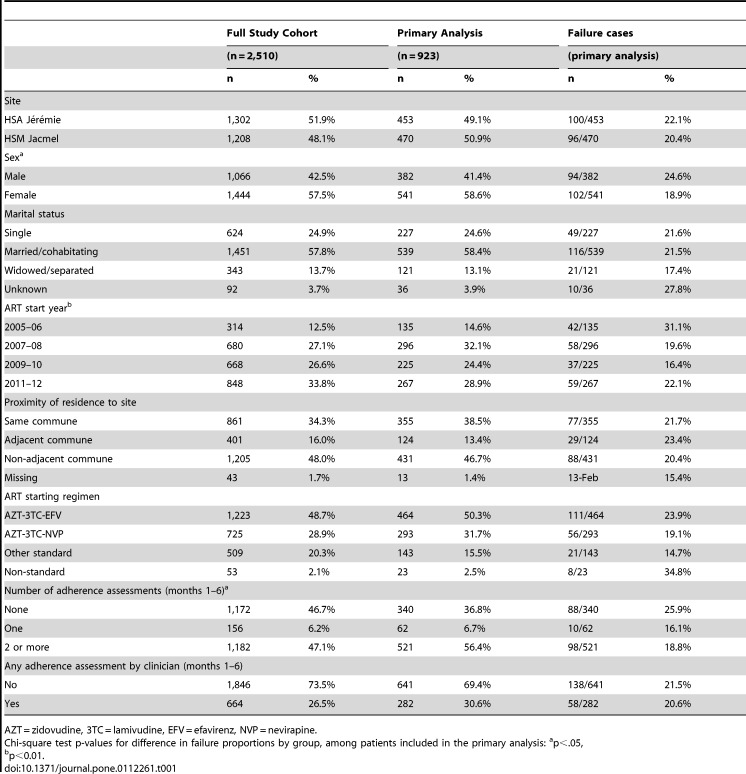
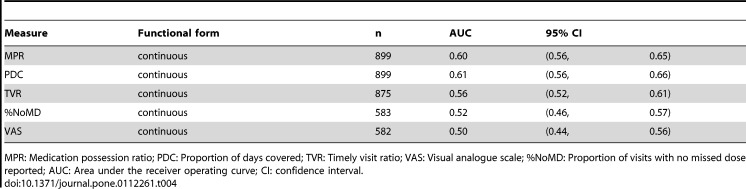
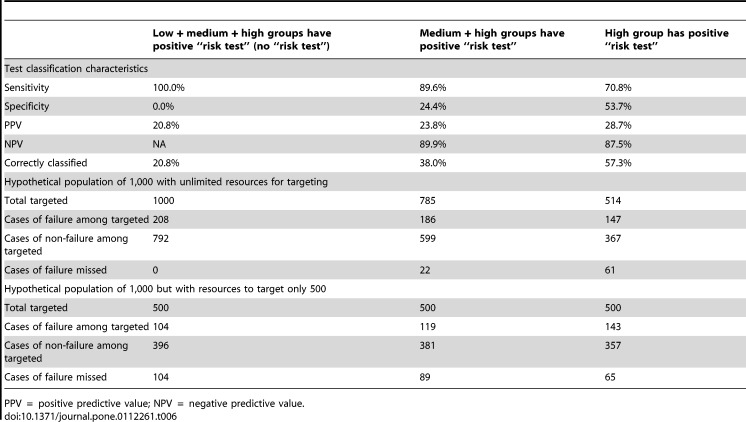
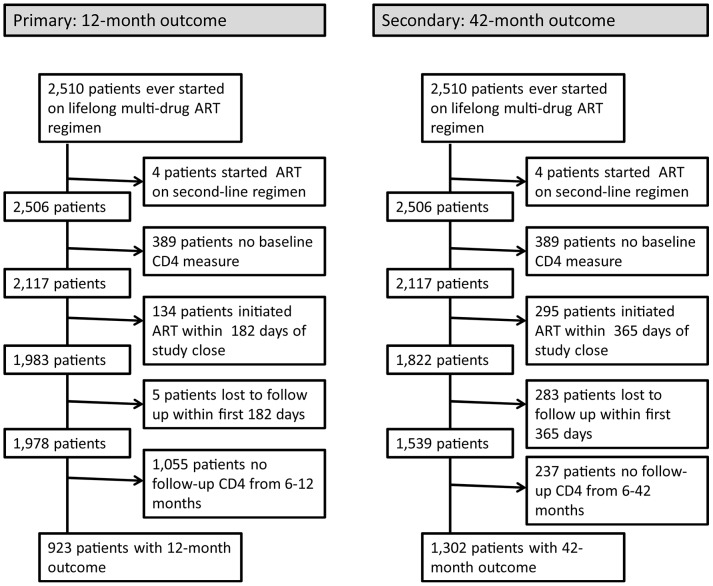
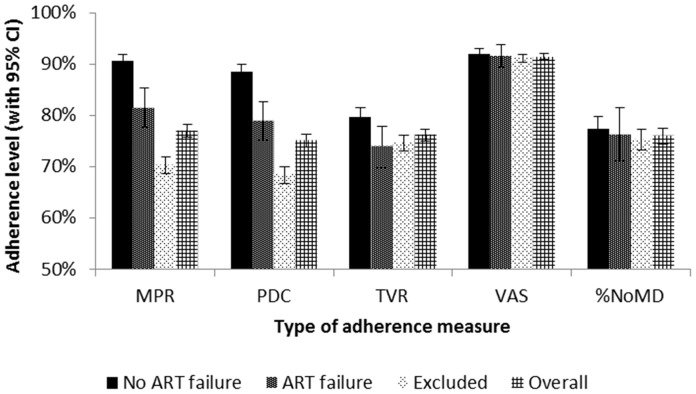
Among 923 patients with CD4 results available during the period 6–12 months after ART initiation, 196 (21.2%) met ART failure criteria. The pharmacy-based proportion of days covered (PDC) measure performed best among five possible ART adherence measures at predicting ART failure. Average PDC during the first 6 months on ART was 79.0% among cases of ART failure and 88.6% among cases of non-failure (p<0.01). When additional information including sex, baseline CD4, and duration of enrollment in HIV care prior to ART initiation were added to PDC, the risk score differentiated between those who did and did not meet failure criteria over 42 months following ART initiation.
Conclusions
Pharmacy data are most useful for new ART adherence alerts within iSanté. Such alerts offer potential to help clinicians identify patients at high risk of ART failure so that they can be targeted with adherence support interventions, before ART failure occurs.
-
Subjects:
-
Source:PLoS One. 2014; 9(11).
-
DOI:
-
Pubmed ID:25390044
-
Pubmed Central ID:PMC4229190
-
Document Type:
-
Funding:
-
Name as Subject:
-
Volume:9
-
Issue:11
-
Collection(s):
-
Main Document Checksum:urn:sha-512:4ff48db7167baa2fb7d68375fdf012df630d94bb568943d3f69af5c373b892f59a5cecfc3dc7826177ccf793036f2af13042f5cf4bb798b212228541b6dce684
-
Download URL:
-
File Type:
 [PDF
- 874.98 KB
]
[PDF
- 874.98 KB
]
Supporting Files


File Language:
English
ON THIS PAGE









CDC STACKS serves as an archival repository of CDC-published products including
scientific findings,
journal articles, guidelines, recommendations, or other public health information authored or
co-authored by CDC or funded partners.
As a repository, CDC STACKS retains documents in their original published format to ensure public access to scientific information.
As a repository, CDC STACKS retains documents in their original published format to ensure public access to scientific information.
You May Also Like
COLLECTION
CDC Public Access