


Glycosylphosphatidylinositol Anchors of Plasmodium falciparum
Supporting Files

-
Dec 4 2000
-
File Language:
English
Details
-
Alternative Title:J Exp Med
-
Personal Author:
-
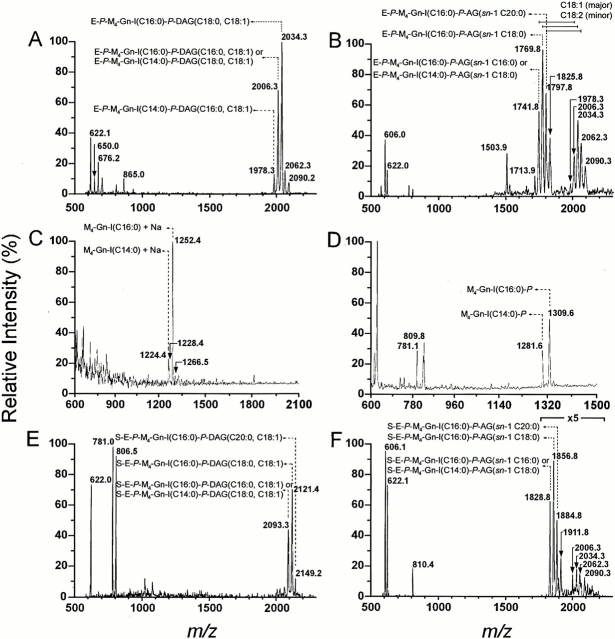
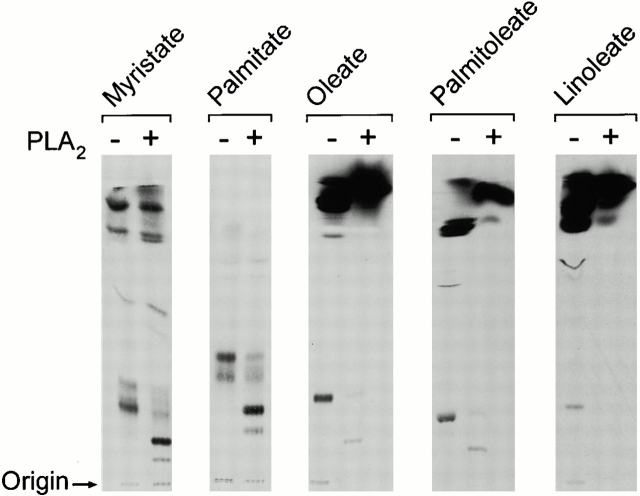
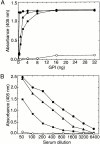
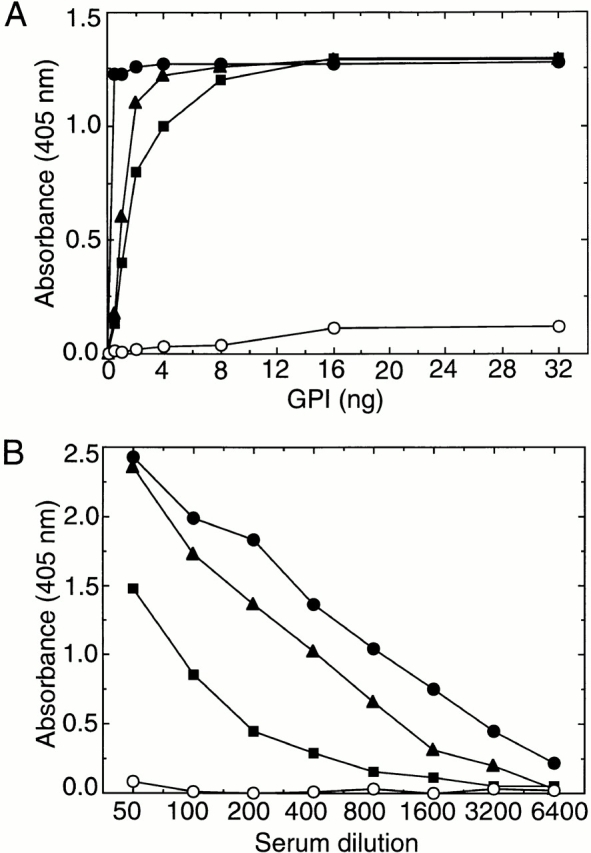
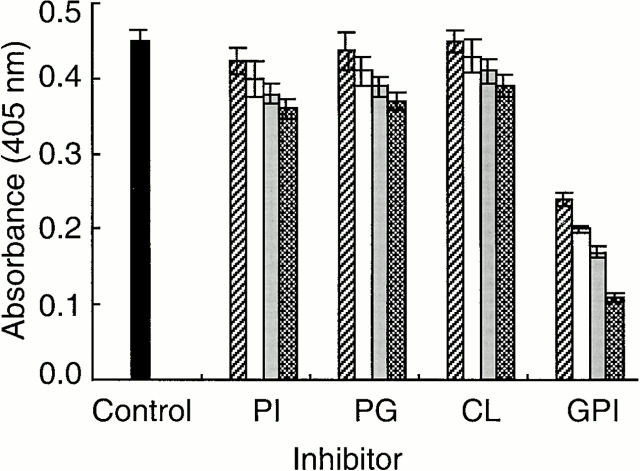
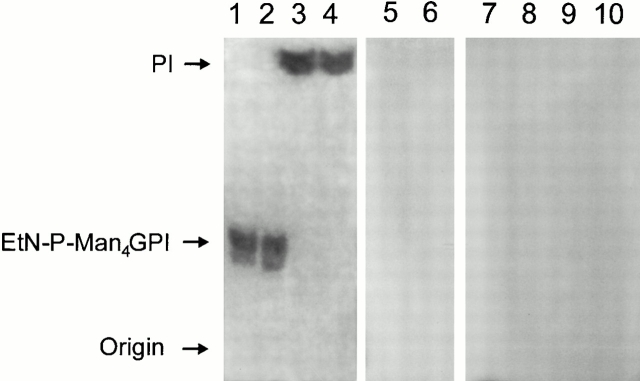
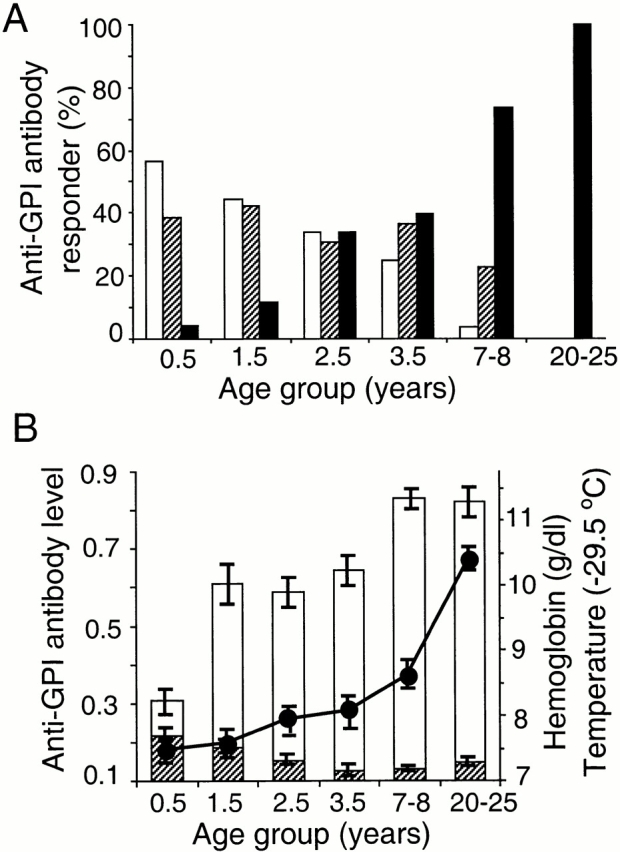
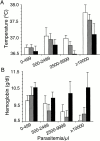
Description:Induction of proinflammatory cytokine responses by glycosylphosphatidylinositols (GPIs) of intraerythrocytic Plasmodium falciparum is believed to contribute to malaria pathogenesis. In this study, we purified the GPIs of P. falciparum to homogeneity and determined their structures by biochemical degradations and mass spectrometry. The parasite GPIs differ from those of the host in that they contain palmitic (major) and myristic (minor) acids at C-2 of inositol, predominantly C18:0 and C18:1 at sn-1 and sn-2, respectively, and do not contain additional phosphoethanolamine substitution in their core glycan structures. The purified parasite GPIs can induce tumor necrosis factor alpha release from macrophages. We also report a new finding that adults who have resistance to clinical malaria contain high levels of persistent anti-GPI antibodies, whereas susceptible children lack or have low levels of short-lived antibody response. Individuals who were not exposed to the malaria parasite completely lack anti-GPI antibodies. Absence of a persistent anti-GPI antibody response correlated with malaria-specific anemia and fever, suggesting that anti-GPI antibodies provide protection against clinical malaria. The antibodies are mainly directed against the acylated phosphoinositol portion of GPIs. These results are likely to be valuable in studies aimed at the evaluation of chemically defined structures for toxicity versus immunogenicity with implications for the development of GPI-based therapies or vaccines.
-
Subjects:
-
Source:J Exp Med. 2000; 192(11):1563-1576.
-
Document Type:
-
Funding:
-
Volume:192
-
Issue:11
-
Collection(s):
-
Main Document Checksum:urn:sha256:f26d0718364fa57e639659d4be34fc4a9aaaa1cac244b9dd7d437e695b30736a
-
Download URL:
-
File Type:
 [PDF
- 381.79 KB
]
[PDF
- 381.79 KB
]
Supporting Files


File Language:
English
ON THIS PAGE









CDC STACKS serves as an archival repository of CDC-published products including
scientific findings,
journal articles, guidelines, recommendations, or other public health information authored or
co-authored by CDC or funded partners.
As a repository, CDC STACKS retains documents in their original published format to ensure public access to scientific information.
As a repository, CDC STACKS retains documents in their original published format to ensure public access to scientific information.
You May Also Like
COLLECTION
CDC Public Access