



Pandemic (H1N1) 2009 Infection in Patients with Hematologic Malignancy
Supporting Files
Public Domain

-
Dec 2010
File Language:
English
Details
-
Alternative Title:Emerg Infect Dis
-
Personal Author:
-
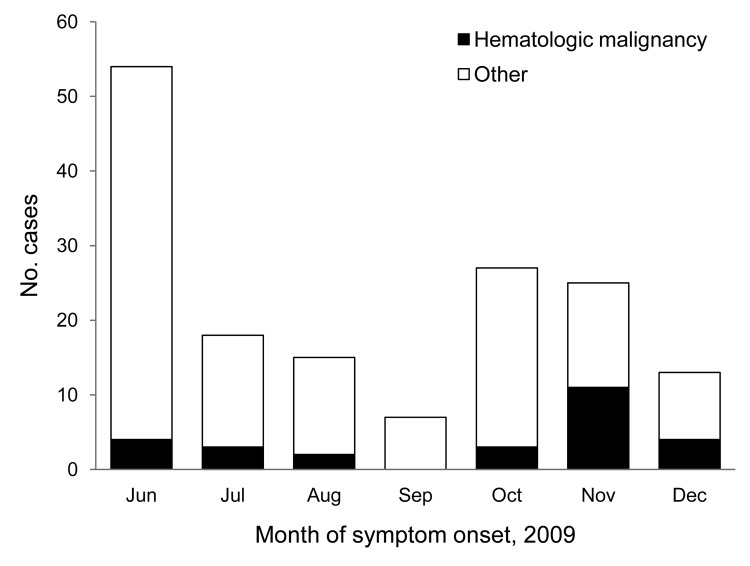
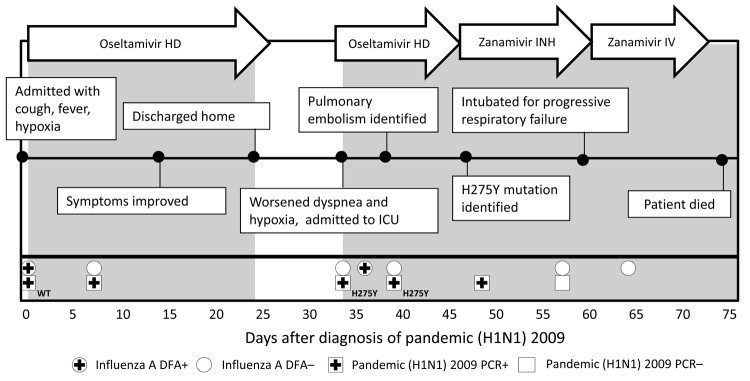
Description:To assess outcomes of patients with hematologic malignancy and pandemic (H1N1) 2009 infection, we reviewed cases during June-December 2009 at the University of California San Francisco Medical Center. Seventeen (63%) and 10 (37%) patients had upper respiratory tract infection (URTI) and lower respiratory tract infection (LRTI), respectively. Cough (85%) and fever (70%) were the most common signs; 19% of patients had nausea, vomiting, or diarrhea. Sixty-five percent of URTI patients were outpatients; 35% recovered without antiviral therapy. All LRTI patients were hospitalized; half required intensive care unit admission. Complications included acute respiratory distress syndrome, pneumomediastinum, myocarditis, and development of oseltamivir-resistant virus; 3 patients died. Of the 3 patients with nosocomial pandemic (H1N1) 2009, 2 died. Pandemic (H1N1) 2009 may cause serious illness in patients with hematologic malignancy, primarily those with LRTI. Rigorous infection control, improved techniques for diagnosing respiratory disease, and early antiviral therapy can prevent nosocomial transmission and optimize patient care.
-
Subjects:
-
Source:Emerg Infect Dis. 16(12):1910-1917.
-
Document Type:
-
Place as Subject:
-
Volume:16
-
Issue:12
-
Download URL:
-
File Type:
 [PDF - 235.52 KB]
 -
Collection(s):
-
Main Document Checksum:urn:sha256:b7e71c77b03310b23ff12957152500b4e795c00de1228b9363a55ae097307574
Supporting Files


File Language:
English
 Was this page helpful?
 Found an issue?

CDC STACKS serves as an archival repository of CDC-published products including
scientific findings, journal articles, guidelines, recommendations, or other public health information authored or
co-authored by CDC or funded partners.
As a repository, CDC STACKS retains documents in their original published format to ensure public access to scientific information.
As a repository, CDC STACKS retains documents in their original published format to ensure public access to scientific information.
You May Also Like
COLLECTION
Emerging Infectious Diseases