



Mortality Risk Factors for Pandemic Influenza on New Zealand Troop Ship, 1918
Supporting Files
Public Domain

-
Dec 2010
File Language:
English
Details
-
Journal Article:Emerg Infect Dis
-
Personal Author:
-
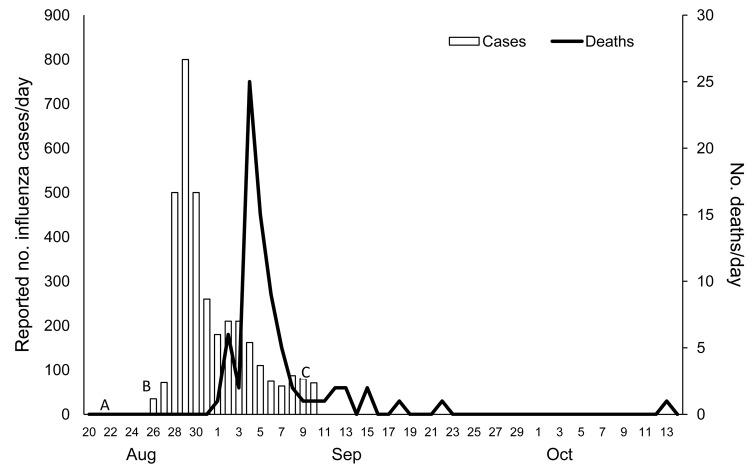
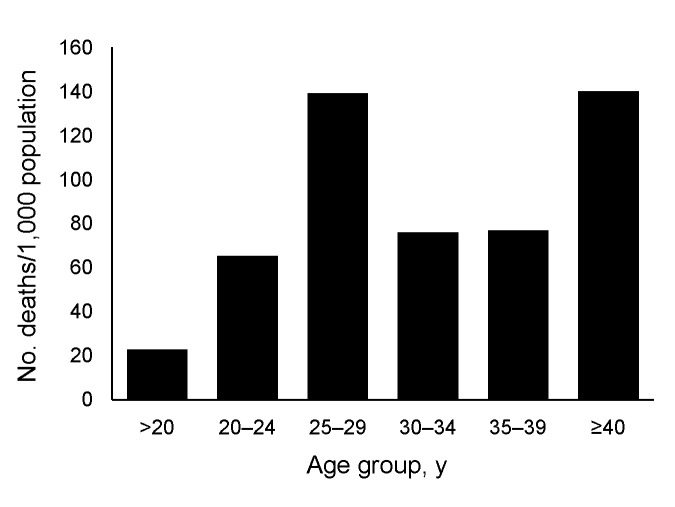
Description:We describe the epidemiology and risk factors for death in an outbreak of pandemic influenza on a troop ship. Mortality and descriptive data for military personnel on His Majesty's New Zealand Transport troop ship Tahiti in July 1918 were analyzed, along with archival information. Mortality risk was increased among persons 25-34 years of age. Accommodations in cabins rather than sleeping in hammocks in other areas were also associated with increased mortality risk (rate ratio 4.28, 95% confidence interval 2.69-6.81). Assignment to a particular military unit, the field artillery (probably housed in cabins), also made a significant difference (adjusted odds ratio in logistic regression 3.04, 95% confidence interval 1.59-5.82). There were no significant differences by assigned rurality (rural residence) or socioeconomic status. Results suggest that the virulent nature of the 1918 influenza strain, a crowded environment, and inadequate isolation measures contributed to the high influenza mortality rate onboard this ship.
-
Subjects:
-
Source:Emerg Infect Dis. 16(12):1931-1937.
-
Document Type:
-
Genre:
-
Place as Subject:
-
Volume:16
-
Issue:12
-
Download URL:
-
File Type:
 [PDF - 304.86 KB]
 -
Collection(s):
-
Main Document Checksum:urn:sha-512:1ed5dc37f57d52e049abb50a3f6090d8f9cdfd999f5a47f4532fd1bfd1e9c8c6018fe39706429e552f0e2635b01df780795e4f117bf3db9c121727e279970b5e
Supporting Files


File Language:
English
 Was this page helpful?
 Found an issue?





CDC STACKS serves as an archival repository of CDC-published products including
scientific findings, journal articles, guidelines, recommendations, or other public health information authored or
co-authored by CDC or funded partners.
As a repository, CDC STACKS retains documents in their original published format to ensure public access to scientific information.
As a repository, CDC STACKS retains documents in their original published format to ensure public access to scientific information.
You May Also Like
COLLECTION
Emerging Infectious Diseases