



Environmental Sampling for Avian Influenza Virus A (H5N1) in Live-Bird Markets, Indonesia
Supporting Files

-
Dec 2010
File Language:
English
Details
-
Alternative Title:Emerg Infect Dis
-
Personal Author:
-
Corporate Authors:
-
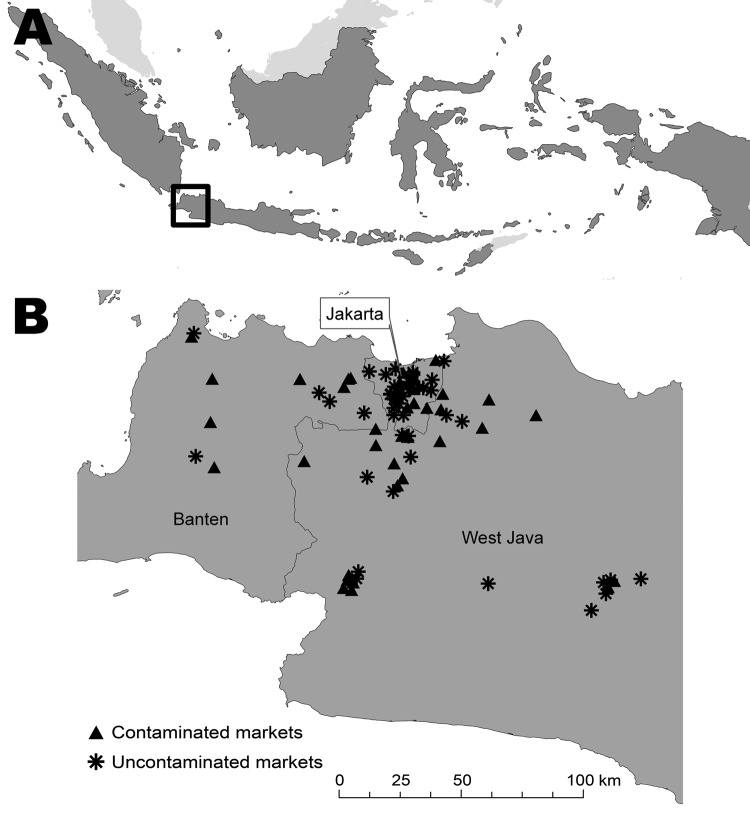
Description:To identify environmental sites commonly contaminated by avian influenza virus A (H5N1) in live-bird markets in Indonesia, we investigated 83 markets in 3 provinces in Indonesia. At each market, samples were collected from up to 27 poultry-related sites to assess the extent of contamination. Samples were tested by using real-time reverse transcription-PCR and virus isolation. A questionnaire was used to ascertain types of birds in the market, general infrastructure, and work practices. Thirty-nine (47%) markets showed contamination with avian influenza virus in ≥ 1 of the sites sampled. Risk factors were slaughtering birds in the market and being located in West Java province. Protective factors included daily removal of waste and zoning that segregated poultry-related work flow areas. These results can aid in the design of evidence-based programs concerning environmental sanitation, food safety, and surveillance to reduce the risk for avian influenza virus A (H5N1) transmission in live-bird markets.
-
Subjects:
-
Source:Emerg Infect Dis. 16(12):1889-1895.
-
Document Type:
-
Funding:
-
Place as Subject:
-
Location:
-
Volume:16
-
Issue:12
-
Download URL:
-
File Type:
 [PDF - 184.00 KB]
 -
Collection(s):
-
Main Document Checksum:urn:sha256:a6df2de7e7bf814c1db58365d59ad1bbaf76be6ec90f805ee13687bf64c94696
Supporting Files


File Language:
English
 Was this page helpful?
 Found an issue?

CDC STACKS serves as an archival repository of CDC-published products including
scientific findings, journal articles, guidelines, recommendations, or other public health information authored or
co-authored by CDC or funded partners.
As a repository, CDC STACKS retains documents in their original published format to ensure public access to scientific information.
As a repository, CDC STACKS retains documents in their original published format to ensure public access to scientific information.
You May Also Like
COLLECTION
Emerging Infectious Diseases