



Geographic Distribution of Hantaviruses Associated with Neotomine and Sigmodontine Rodents, Mexico
Supporting Files

-
2012/04/01
-
Series: Emerging Infectious Diseases
File Language:
English
Details
-
Journal Article:Emerging Infectious Diseases
-
Personal Author:
-
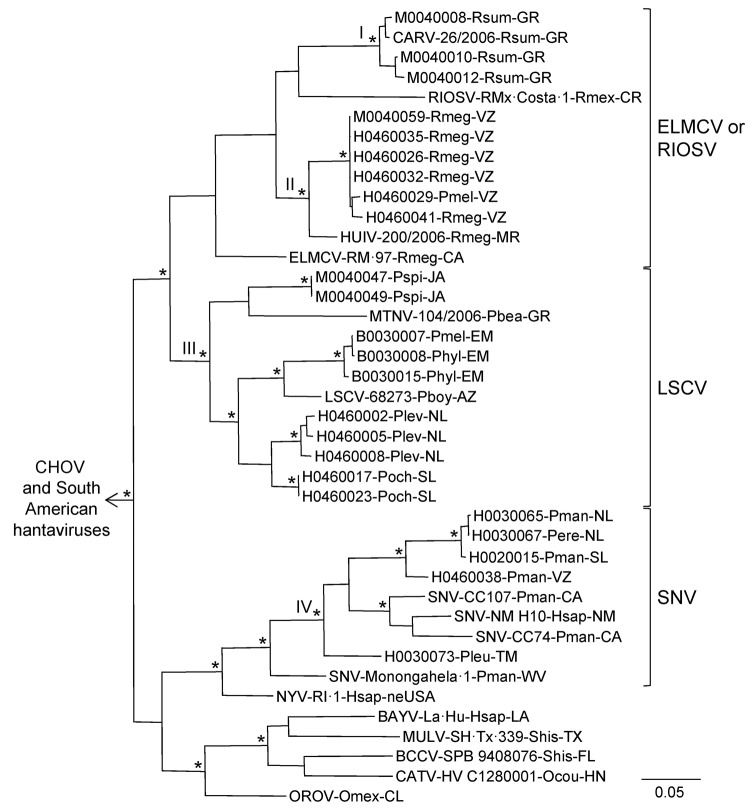
Description:To increase our knowledge of the geographic distribution of hantaviruses associated with neotomine or sigmodontine rodents in Mexico, we tested 876 cricetid rodents captured in 18 Mexican states (representing at least 44 species in the subfamily Neotominae and 10 species in the subfamily Sigmodontinae) for anti-hantavirus IgG. We found antibodies against hantavirus in 35 (4.0%) rodents. Nucleotide sequence data from 5 antibody-positive rodents indicated that Sin Nombre virus (the major cause of hantavirus pulmonary syndrome HPS in the United States) is enzootic in the Mexican states of Nuevo León, San Luis Potosí, Tamaulipas, and Veracruz. However, HPS has not been reported from these states, which suggests that in northeastern Mexico, HPS has been confused with other rapidly progressive, life-threatening respiratory diseases. Analyses of nucleotide sequence data from 19 other antibody-positive rodents indicated that El Moro Canyon virus and Limestone Canyon virus are geographically widely distributed in Mexico.
-
Subjects:
-
Keywords:
-
Series:
-
DOI:
-
ISSN:1080-6059 (digital) ; 1080-6040 (print)
-
Pubmed ID:22469569
-
Document Type:
-
Funding:
-
Genre:
-
Rights:Public Domain
-
Topic:
-
Volume:18
-
Issue:4
-
Citation:Emerg Infect Dis. 18(4):571-576.
-
Download URL:
-
File Type:
 [PDF - 192.01 KB]
 -
Collection(s):
-
Main Document Checksum:urn:sha-512:2f07f0c57b54105aa74972465adfe1458bc0d9050511e773d38ed3441efd06a6834375019087c1f6e49d1c3f7419f7f08ad386ff4fc8e1833d2572aa4d108584
Supporting Files


File Language:
English
 Was this page helpful?
 Found an issue?



CDC STACKS serves as an archival repository of CDC-published products including
scientific findings, journal articles, guidelines, recommendations, or other public health information authored or
co-authored by CDC or funded partners.
As a repository, CDC STACKS retains documents in their original published format to ensure public access to scientific information.
As a repository, CDC STACKS retains documents in their original published format to ensure public access to scientific information.
You May Also Like
COLLECTION
Emerging Infectious Diseases