



Ocozocoautla de Espinosa Virus and Hemorrhagic Fever, Mexico
Supporting Files

-
Mar 2012
File Language:
English
Details
-
Alternative Title:Emerg Infect Dis
-
Personal Author:
-
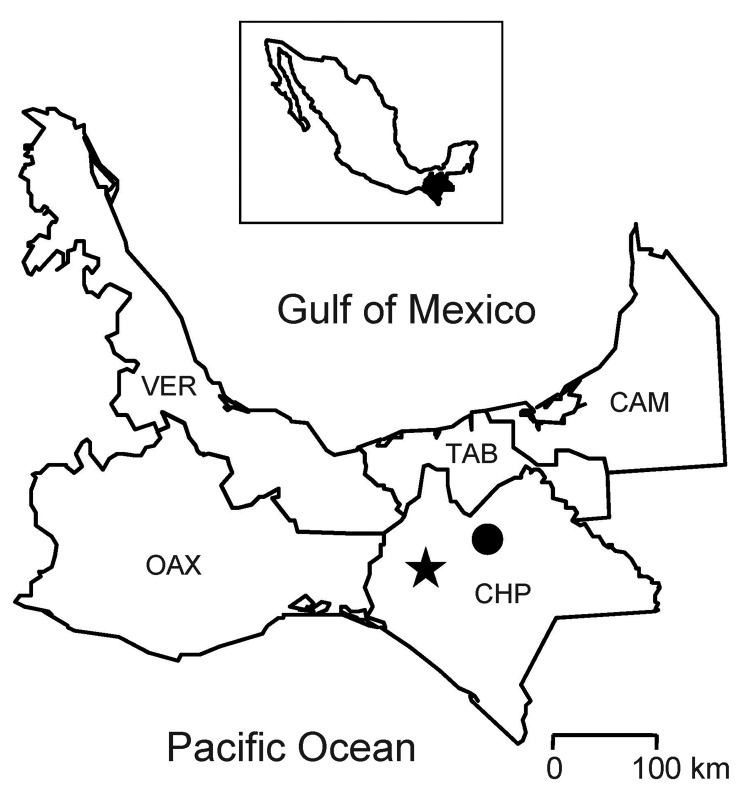
Description:Arenavirus RNA was isolated from Mexican deer mice (Peromyscus mexicanus) captured near the site of a 1967 epidemic of hemorrhagic fever in southern Mexico. Analyses of nucleotide and amino acid sequence data indicated that the deer mice were infected with a novel Tacaribe serocomplex virus (proposed name Ocozocoautla de Espinosa virus), which is phylogenetically closely related to Tacaribe serocomplex viruses that cause hemorrhagic fever in humans in South America.
-
Subjects:
-
Source:Emerg Infect Dis. 18(3):401-405.
-
Document Type:
-
Funding:
-
Volume:18
-
Issue:3
-
Download URL:
-
File Type:
 [PDF - 225.14 KB]
 -
Collection(s):
-
Main Document Checksum:urn:sha256:8c7460d8901f58fbb4140532d31bcbf0ddd0f13869871f5e506a20e5a7a7b7b0
Supporting Files


File Language:
English
 Was this page helpful?
 Found an issue?




CDC STACKS serves as an archival repository of CDC-published products including
scientific findings, journal articles, guidelines, recommendations, or other public health information authored or
co-authored by CDC or funded partners.
As a repository, CDC STACKS retains documents in their original published format to ensure public access to scientific information.
As a repository, CDC STACKS retains documents in their original published format to ensure public access to scientific information.
You May Also Like
COLLECTION
Emerging Infectious Diseases