


Bats as Reservoir Hosts of Human Bacterial Pathogen, Bartonella mayotimonensis
Supporting Files
Public Domain

-
Jun 2014
-
Details
-
Alternative Title:Emerg Infect Dis
-
Personal Author:
-
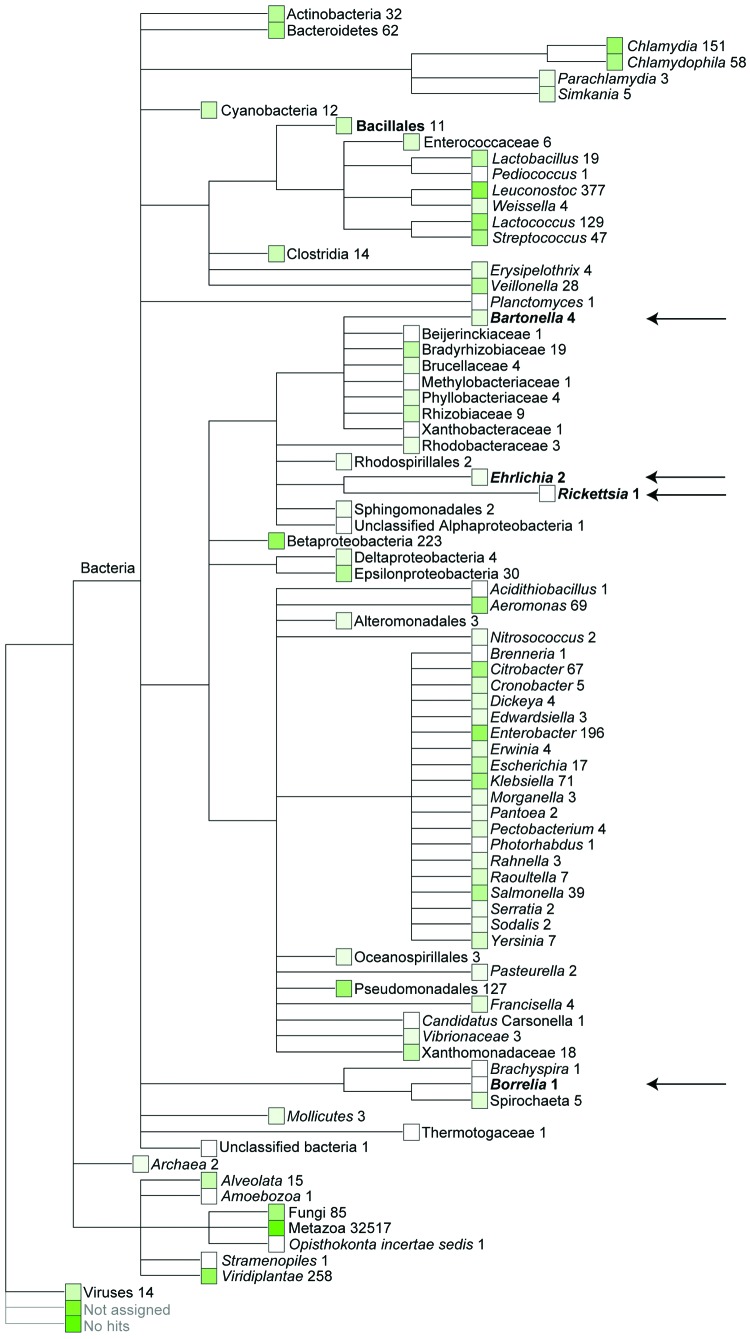
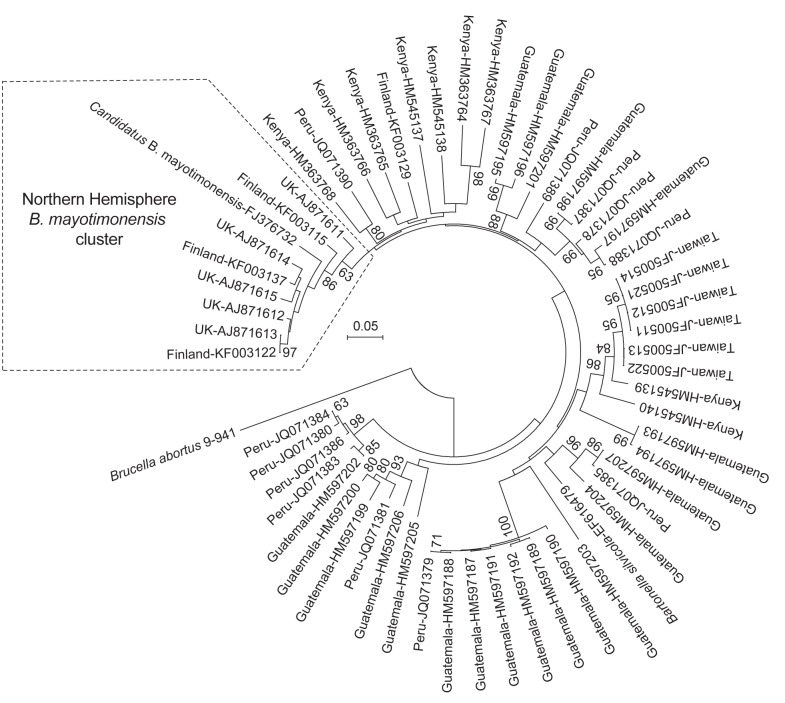
Description:A plethora of pathogenic viruses colonize bats. However, bat bacterial flora and its zoonotic threat remain ill defined. In a study initially conducted as a quantitative metagenomic analysis of the fecal bacterial flora of the Daubenton's bat in Finland, we unexpectedly detected DNA of several hemotrophic and ectoparasite-transmitted bacterial genera, including Bartonella. Bartonella spp. also were either detected or isolated from the peripheral blood of Daubenton's, northern, and whiskered bats and were detected in the ectoparasites of Daubenton's, northern, and Brandt's bats. The blood isolates belong to the Candidatus-status species B. mayotimonensis, a recently identified etiologic agent of endocarditis in humans, and a new Bartonella species (B. naantaliensis sp. nov.). Phylogenetic analysis of bat-colonizing Bartonella spp. throughout the world demonstrates a distinct B. mayotimonensis cluster in the Northern Hemisphere. The findings of this field study highlight bats as potent reservoirs of human bacterial pathogens.
-
Subjects:
-
Source:Emerg Infect Dis. 20(6):960-967.
-
Document Type:
-
Volume:20
-
Issue:6
-
Collection(s):
-
Main Document Checksum:urn:sha256:b1a9b589a497921ad9ce0bf86afd4201c1e1e0c74d7ea1741203bd83a0dc7def
-
Download URL:
-
File Type:
 [PDF
- 818.27 KB
]
[PDF
- 818.27 KB
]
Supporting Files


ON THIS PAGE



CDC STACKS serves as an archival repository of CDC-published products including
scientific findings,
journal articles, guidelines, recommendations, or other public health information authored or
co-authored by CDC or funded partners.
As a repository, CDC STACKS retains documents in their original published format to ensure public access to scientific information.
As a repository, CDC STACKS retains documents in their original published format to ensure public access to scientific information.
You May Also Like
COLLECTION
Emerging Infectious Diseases