


Light-Mediated Kinetic Control Reveals the Temporal Effect of the Raf/MEK/ERK Pathway in PC12 Cell Neurite Outgrowth
Supporting Files

-
Mar 25 2014
-
File Language:
English
Details
-
Alternative Title:PLoS One
-
Personal Author:
-
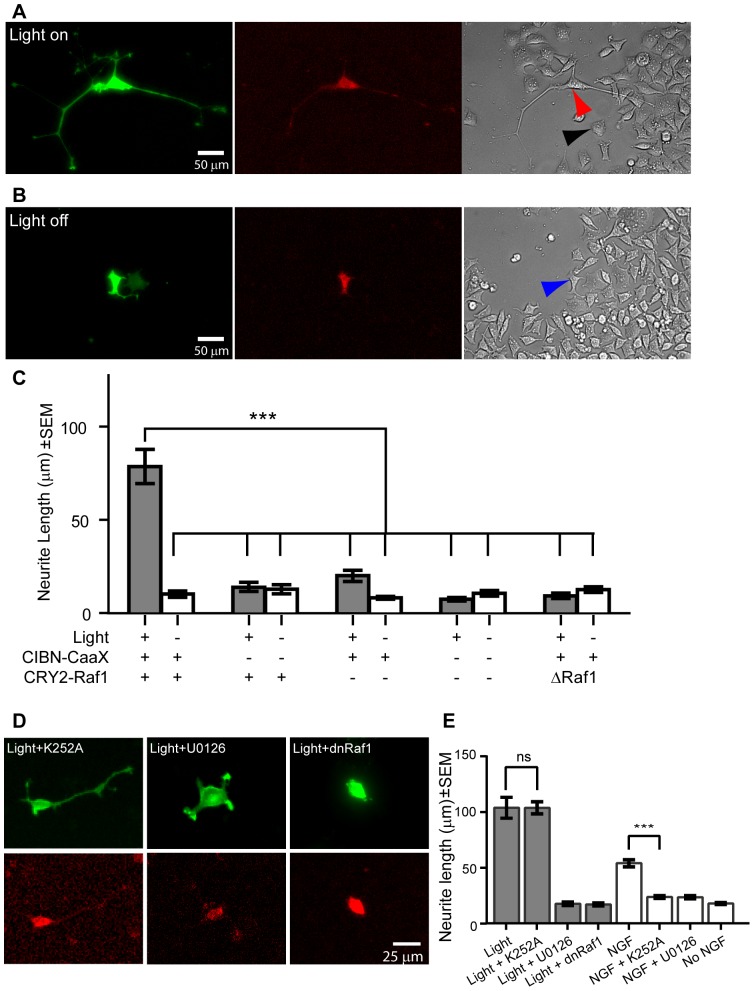
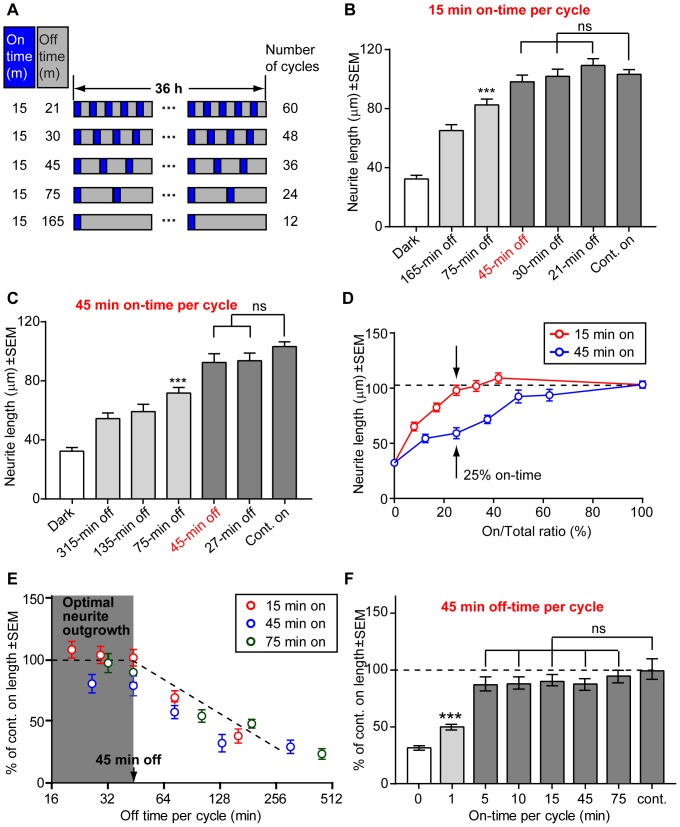
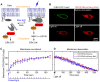
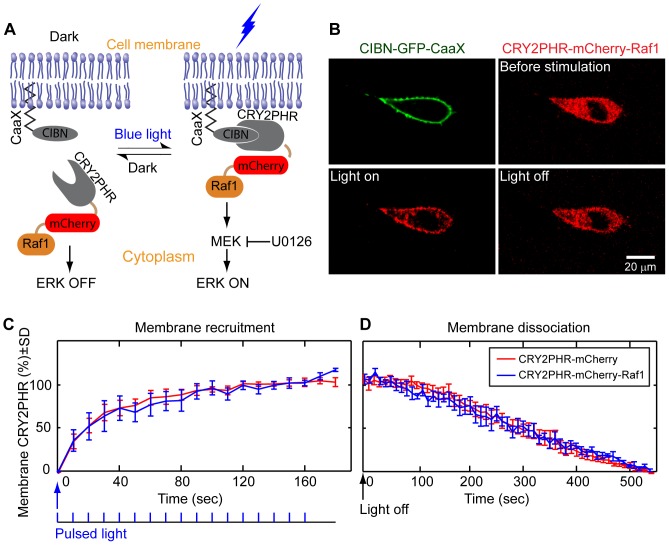
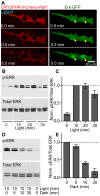
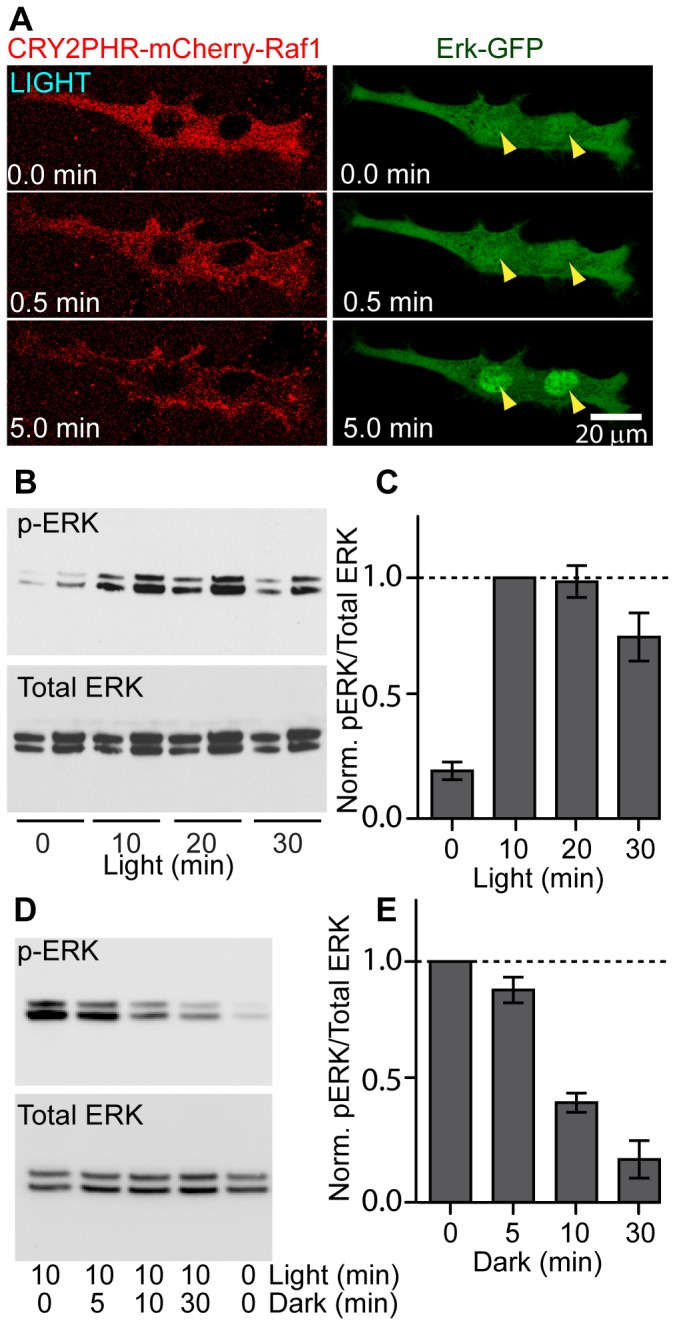
Description:It has been proposed that differential activation kinetics allows cells to use a common set of signaling pathways to specify distinct cellular outcomes. For example, nerve growth factor (NGF) and epidermal growth factor (EGF) induce different activation kinetics of the Raf/MEK/ERK signaling pathway and result in differentiation and proliferation, respectively. However, a direct and quantitative linkage between the temporal profile of Raf/MEK/ERK activation and the cellular outputs has not been established due to a lack of means to precisely perturb its signaling kinetics. Here, we construct a light-gated protein-protein interaction system to regulate the activation pattern of the Raf/MEK/ERK signaling pathway. Light-induced activation of the Raf/MEK/ERK cascade leads to significant neurite outgrowth in rat PC12 pheochromocytoma cell lines in the absence of growth factors. Compared with NGF stimulation, light stimulation induces longer but fewer neurites. Intermittent on/off illumination reveals that cells achieve maximum neurite outgrowth if the off-time duration per cycle is shorter than 45 min. Overall, light-mediated kinetic control enables precise dissection of the temporal dimension within the intracellular signal transduction network.
-
Subjects:
-
Source:PLoS One. 2014; 9(3).
-
Pubmed ID:24667437
-
Pubmed Central ID:PMC3965503
-
Document Type:
-
Funding:
-
Volume:9
-
Issue:3
-
Collection(s):
-
Main Document Checksum:urn:sha256:00010abb02df853243b542aa96db21eae6bf2d8e6ff9678ec9b744725b933944
-
Download URL:
-
File Type:
 [PDF
- 3.86 MB
]
[PDF
- 3.86 MB
]
Supporting Files


File Language:
English
ON THIS PAGE



CDC STACKS serves as an archival repository of CDC-published products including
scientific findings,
journal articles, guidelines, recommendations, or other public health information authored or
co-authored by CDC or funded partners.
As a repository, CDC STACKS retains documents in their original published format to ensure public access to scientific information.
As a repository, CDC STACKS retains documents in their original published format to ensure public access to scientific information.
You May Also Like
COLLECTION
CDC Public Access