



Characterization of influenza virus sialic acid receptors in minor poultry species
Supporting Files

-
Dec 09 2010
Details
-
Alternative Title:Virol J
-
Personal Author:
-
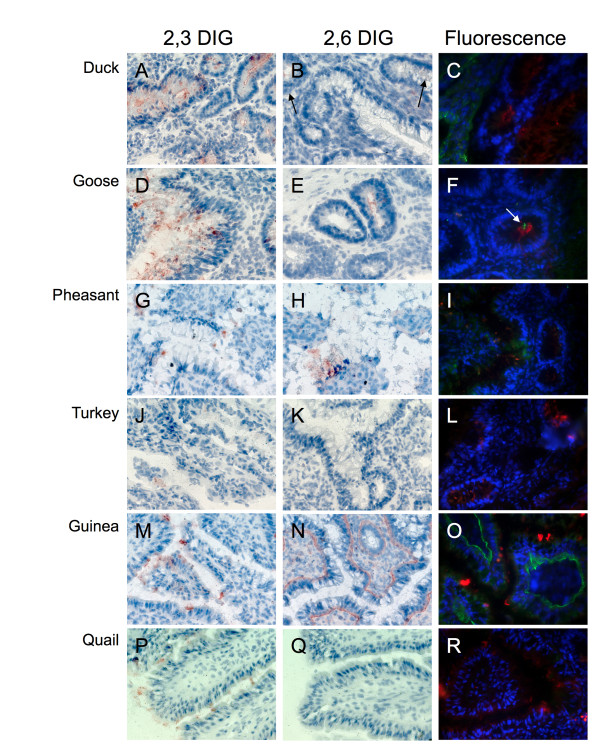
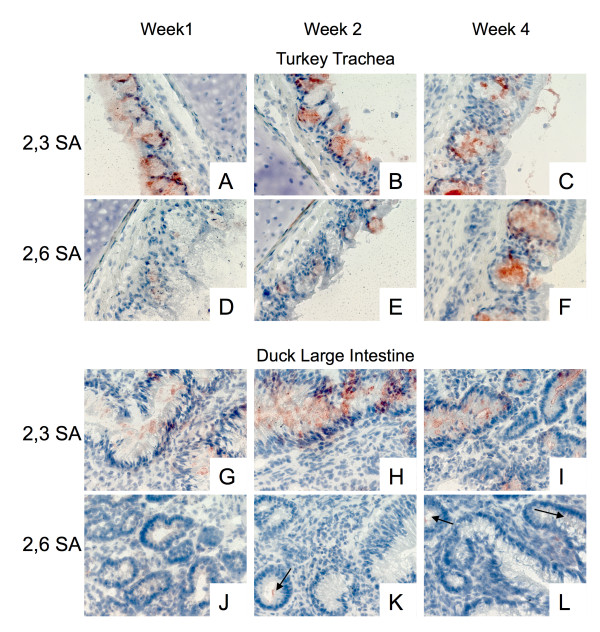
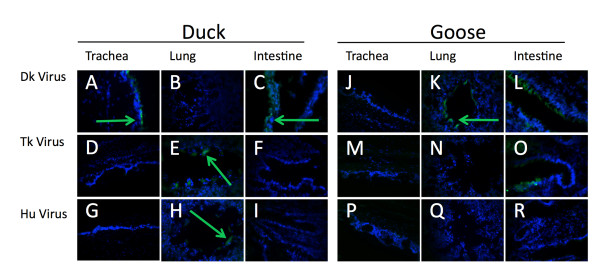
Description:It is commonly accepted that avian influenza viruses (AIVs) bind to terminal α2,3 sialic acid (SA) residues whereas human influenza viruses bind to α2,6 SA residues. By a series of amino acid changes on the HA surface protein, AIVs can switch receptor specificity and recognize α2,6 SA positive cells, including human respiratory epithelial cells. Animal species, like pigs and Japanese quail, that contain both α2,3 and α2,6 SA become ideal environments for receptor switching. Here, we describe the SA patterns and distributions in 6 common minor domestic poultry species: Peking duck, Toulouse geese, Chinese ring-neck pheasant, white midget turkey, bobwhite quail, and pearl guinea fowl. Lectins specific to α2,3 and α2,6 SA (Maakia amurensis agglutinin and Sambuca nigra agglutinin, respectively) were used to detect SA by an alkaline phosphotase-based method and a fluorescent-based method. Differences in SA moieties and their ability to bind influenza viruses were visualized by fluorescent labeling of 4 different H3N2 influenza viruses known to be specific for one receptor or the other. The geese and ducks showed α2,3 SA throughout the respiratory tract and marginal α2,6 SA only in the colon. The four other avian species showed both α2,3 and α2,6 SA in the respiratory tract and the intestines. Furthermore, the turkey respiratory tract showed a positive correlation between age and α2,6 SA levels. The fact that these birds have both avian and human flu receptors, combined with their common presence in backyard farms and live bird markets worldwide, mark them as potential mixing bowl species and necessitates improved surveillance and additional research about the role of these birds in influenza host switching.
-
Subjects:
-
Source:Virol J. 2010; 7:365.
-
Pubmed ID:21143937
-
Pubmed Central ID:PMC3022680
-
Document Type:
-
Funding:
-
Volume:7
-
Download URL:
-
File Type:
 [PDF - 8.94 MB]
 -
Collection(s):
-
Main Document Checksum:urn:sha256:98f35f189b94ceab05bbc5acf5af7ace5b478b2072505f051dcf71c0dd291585
Supporting Files


 Was this page helpful?
 Found an issue?







CDC STACKS serves as an archival repository of CDC-published products including
scientific findings, journal articles, guidelines, recommendations, or other public health information authored or
co-authored by CDC or funded partners.
As a repository, CDC STACKS retains documents in their original published format to ensure public access to scientific information.
As a repository, CDC STACKS retains documents in their original published format to ensure public access to scientific information.
You May Also Like
COLLECTION
CDC Public Access