


Aging enhances serum cytokine response but not task-induced grip strength declines in a rat model of work-related musculoskeletal disorders
Supporting Files

-
Mar 29 2011
-
File Language:
English
Details
-
Alternative Title:BMC Musculoskelet Disord
-
Personal Author:
-
Description:Background
We previously reported early tissue injury, increased serum and tissue inflammatory cytokines and decreased grip in young rats performing a moderate demand repetitive task. The tissue cytokine response was transient, the serum response and decreased grip were still evident by 8 weeks. Thus, here, we examined their levels at 12 weeks in young rats. Since aging is known to enhance serum cytokine levels, we also examined aged rats.
Methods
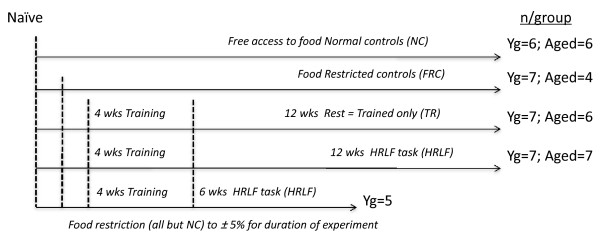
Aged and young rats, 14 mo and 2.5 mo of age at onset, respectfully, were trained 15 min/day for 4 weeks, and then performed a high repetition, low force (HRLF) reaching and grasping task for 2 hours/day, for 12 weeks. Serum was assayed for 6 cytokines: IL-1alpha, IL-6, IFN-gamma, TNF-alpha, MIP2, IL-10. Grip strength was assayed, since we have previously shown an inverse correlation between grip strength and serum inflammatory cytokines. Results were compared to naïve (grip), and normal, food-restricted and trained-only controls.
Results
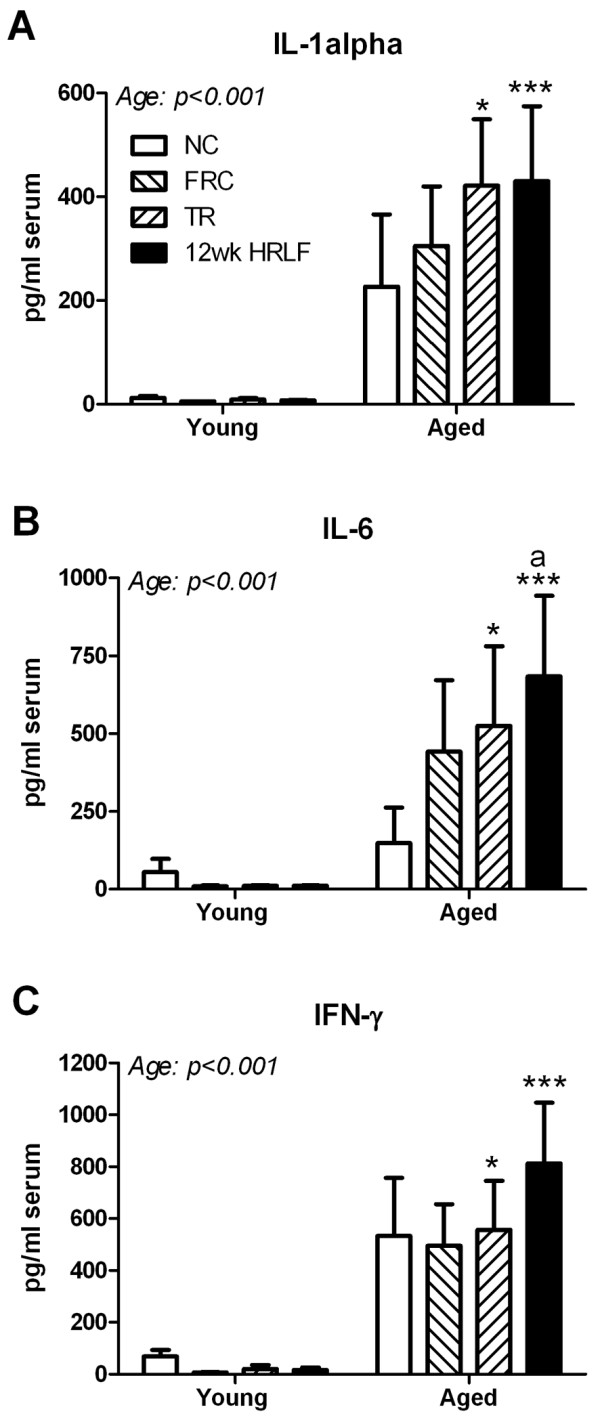
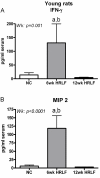
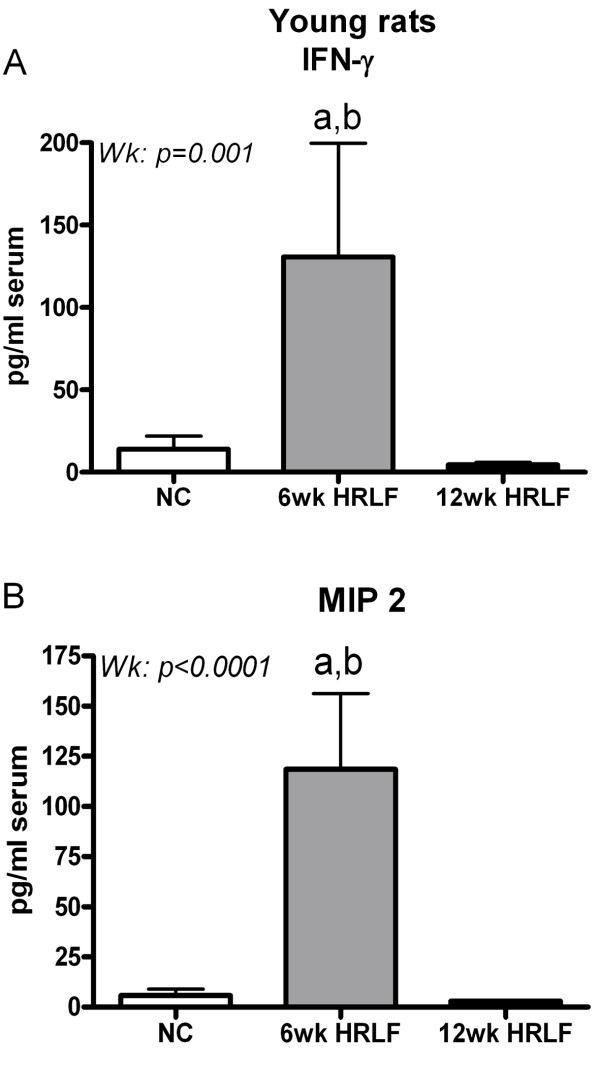
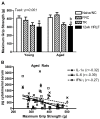
Serum cytokines were higher overall in aged than young rats, with increases in IL-1alpha, IFN-gamma and IL-6 in aged Trained and 12-week HRLF rats, compared to young Trained and HRLF rats (p < 0.05 and p < 0.001, respectively, each). IL-6 was also increased in aged 12-week HRLF versus aged normal controls (p < 0.05). Serum IFN-gamma and MIP2 levels were also increased in young 6-week HRLF rats, but no cytokines were above baseline levels in young 12-week HRLF rats. Grip strength declined in both young and aged 12-week HRLF rats, compared to naïve and normal controls (p < 0.05 each), but these declines correlated only with IL-6 levels in aged rats (r = -0.39).
Conclusion
Aging enhanced a serum cytokine response in general, a response that was even greater with repetitive task performance. Grip strength was adversely affected by task performance in both age groups, but was apparently influenced by factors other than serum cytokine levels in young rats.
-
Subjects:
-
Source:BMC Musculoskelet Disord. 2011; 12:63.
-
Pubmed ID:21447183
-
Pubmed Central ID:PMC3072947
-
Document Type:
-
Funding:
-
Volume:12
-
Collection(s):
-
Main Document Checksum:urn:sha256:f6541df4a4992617bac57c1c2f3be5a77a44a9ce1b0e0b20f2c4f720692f513a
-
Download URL:
-
File Type:
 [PDF
- 1.11 MB
]
[PDF
- 1.11 MB
]
Supporting Files


File Language:
English
ON THIS PAGE


CDC STACKS serves as an archival repository of CDC-published products including
scientific findings,
journal articles, guidelines, recommendations, or other public health information authored or
co-authored by CDC or funded partners.
As a repository, CDC STACKS retains documents in their original published format to ensure public access to scientific information.
As a repository, CDC STACKS retains documents in their original published format to ensure public access to scientific information.
You May Also Like
COLLECTION
CDC Public Access