


The effects of oral clefts on hospital use throughout the lifespan
Supporting Files

-
Mar 09 2012
-
File Language:
English
Details
-
Alternative Title:BMC Health Serv Res
-
Personal Author:
-
Description:Background
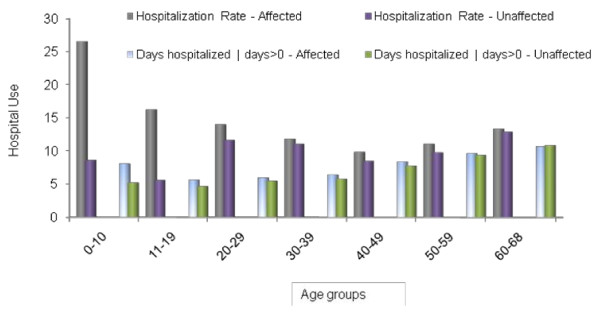
Oral clefts are one of the most common birth defects worldwide. They require multiple healthcare interventions and add significant burden on the health and quality of life of affected individuals. However, not much is known about the long term effects of oral clefts on health and healthcare use of affected individuals. In this study, we evaluate the effects of oral clefts on hospital use throughout the lifespan.
Methods
We estimate two-part regression models for hospital admission and length of stay for several age groups up to 68 years of age. The study employs unique secondary population-based data from several administrative inpatient, civil registration, demographic and labor market databases for 7,670 individuals born with oral clefts between 1936 and 2002 in Denmark, and 220,113 individuals without oral clefts from a 5% random sample of the total birth population from 1936 to 2002.
Results
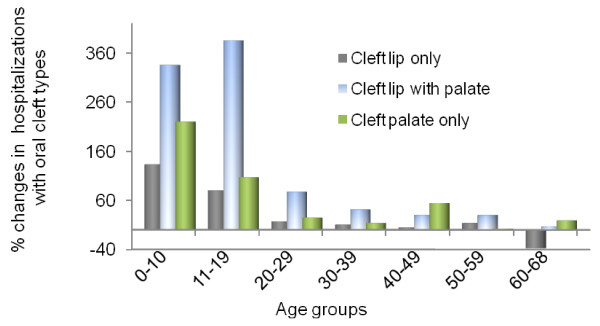
Oral clefts significantly increase hospital use for most ages below 60 years by up to 233% for children ages 0-10 years and 16% for middle age adults. The more severe cleft forms (cleft lip with palate) have significantly larger effects on hospitalizations than less severe forms.
Conclusions
The results suggest that individuals with oral clefts have higher hospitalization risks than the general population throughout most of the lifespan.
-
Subjects:
-
Source:BMC Health Serv Res. 2012; 12:58.
-
Pubmed ID:22405490
-
Pubmed Central ID:PMC3350419
-
Document Type:
-
Funding:
-
Place as Subject:
-
Volume:12
-
Collection(s):
-
Main Document Checksum:urn:sha256:4add26624cc96c9e84b09da0add49a2fcad9ca0947dffbaa87f5e5330f7d5a1a
-
Download URL:
-
File Type:
 [PDF
- 389.32 KB
]
[PDF
- 389.32 KB
]
Supporting Files


File Language:
English
ON THIS PAGE



CDC STACKS serves as an archival repository of CDC-published products including
scientific findings,
journal articles, guidelines, recommendations, or other public health information authored or
co-authored by CDC or funded partners.
As a repository, CDC STACKS retains documents in their original published format to ensure public access to scientific information.
As a repository, CDC STACKS retains documents in their original published format to ensure public access to scientific information.
You May Also Like
COLLECTION
CDC Public Access