


Mutations in Planar Cell Polarity Gene SCRIB Are Associated with Spina Bifida
Supporting Files

-
Jul 26 2013
-
File Language:
English
Details
-
Alternative Title:PLoS One
-
Personal Author:
-
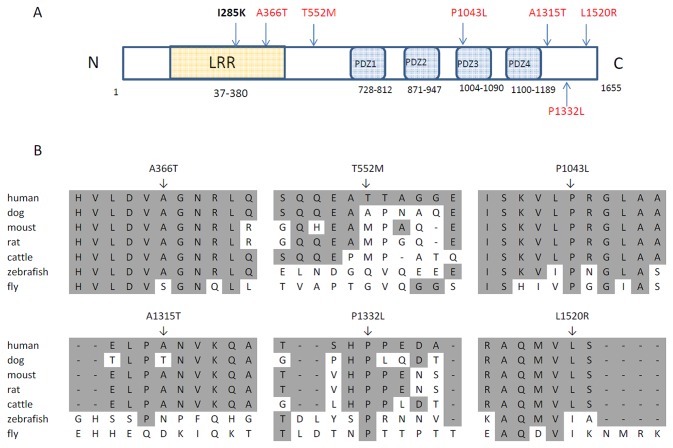
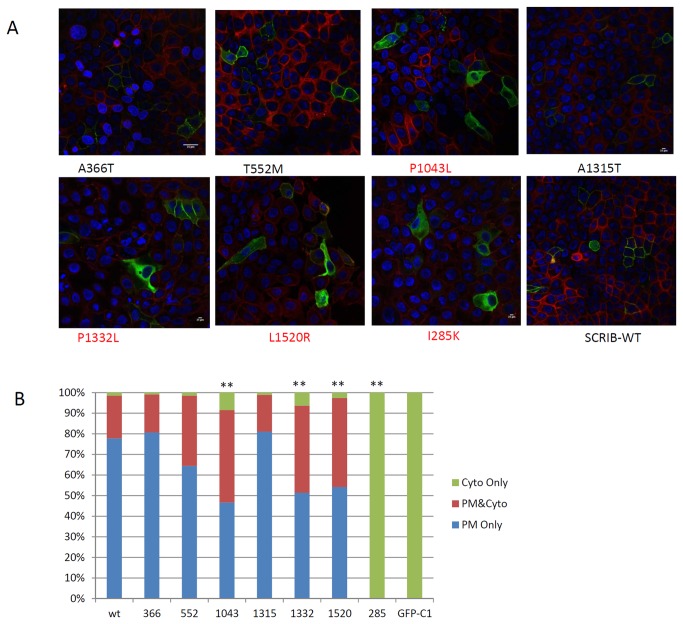
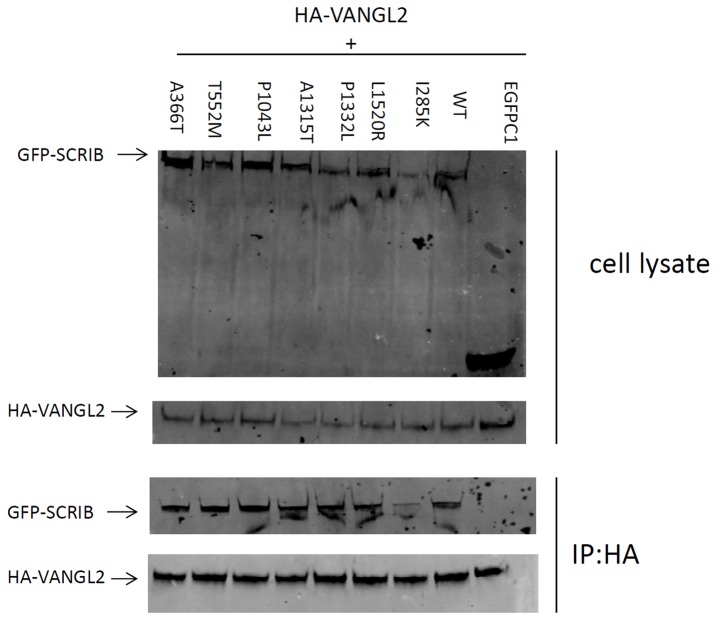
Description:Neural tube defects (NTDs) (OMIM #182940) including anencephaly, spina bifida and craniorachischisis, are severe congenital malformations that affect 0.5-1 in 1,000 live births in the United States, with varying prevalence around the world. Mutations in planar cell polarity (PCP) genes are believed to cause a variety of NTDs in both mice and humans. SCRIB is a PCP-associated gene. Mice that are homozygous for the Scrib p.I285K and circletail (Crc) mutations, present with the most severe form of NTDs, namely craniorachischisis. A recent study reported that mutations in SCRIB were associated with craniorachischisis in humans, but whether SCRIB mutations contribute to increased spina bifida risk is still unknown. We sequenced the SCRIB gene in 192 infants with spina bifida and 190 healthy controls. Among the spina bifida patients, we identified five novel missense mutations that were predicted-to-be-deleterious by the PolyPhen software. Of these five mutations, three of them (p.P1043L, p.P1332L, p.L1520R) significantly affected the subcellular localization of SCRIB. In addition, we demonstrated that the craniorachischisis mouse line-90 mutation I285K, also affected SCRIB subcellular localization. In contrast, only one novel missense mutation (p.A1257T) was detected in control samples, and it was predicted to be benign. This study demonstrated that rare deleterious mutations of SCRIB may contribute to the multifactorial risk for human spina bifida.
-
Subjects:
-
Source:PLoS One. 2013; 8(7).
-
Pubmed ID:23922697
-
Pubmed Central ID:PMC3724847
-
Document Type:
-
Funding:
-
Volume:8
-
Issue:7
-
Collection(s):
-
Main Document Checksum:urn:sha256:d41cd7a1614c1aa1e61950ed74836a43b06101950b98a69a91c01c410921aee9
-
Download URL:
-
File Type:
 [PDF
- 1.11 MB
]
[PDF
- 1.11 MB
]
Supporting Files


File Language:
English
ON THIS PAGE


CDC STACKS serves as an archival repository of CDC-published products including
scientific findings,
journal articles, guidelines, recommendations, or other public health information authored or
co-authored by CDC or funded partners.
As a repository, CDC STACKS retains documents in their original published format to ensure public access to scientific information.
As a repository, CDC STACKS retains documents in their original published format to ensure public access to scientific information.
You May Also Like
COLLECTION
CDC Public Access